Problem
A license is only worth something if everyone can trust it, and ours couldn't yet be trusted.
What a licensor set on a listing didn’t always match what the system allowed, so a remix could reach a store the license didn’t cover. Once a remix was remixed again, it got hard to tell who the original rights holders were and who should be paid. And setting up a listing, with its contributors, splits and terms, was easy to get wrong.
That mattered for three reasons. A release that breaks its license is a legal problem for vers1ons. Original artists only list their songs if they know they’ll be credited and paid down the chain. And the license is what we sell: if it isn’t true, there’s nothing to sell.
Three parts
A remix contest where no one leaves a loser
- ready · press run, or hover any part of the system
What I did
I built Drops end to end: a remix contest where no one leaves as a loser.
Most remix contests run on a form and a Dropbox link. Stems leak, entries have no license, and the winning remix can’t be released because nobody cleared the rights. In a drop, the license is the entry fee. The artist is paid for every license sold, and every producer leaves with a remix they’re licensed to release to socials and stores, with no legal back-and-forth between teams.
I wrote the spec, designed the pages and built the backend. Each entry is saved as its own work that points back to the original, and the purchase issues a real rights grant, so a winning remix can go straight to distribution. The windows to submit, judge and release are enforced on the server, at purchase, at submission and at release. On top of that come the lifecycle emails, from the invite to the winners, and a judging page where the host plays, stars and picks entries.
The flow, step by step
11 steps, one screen at a time.
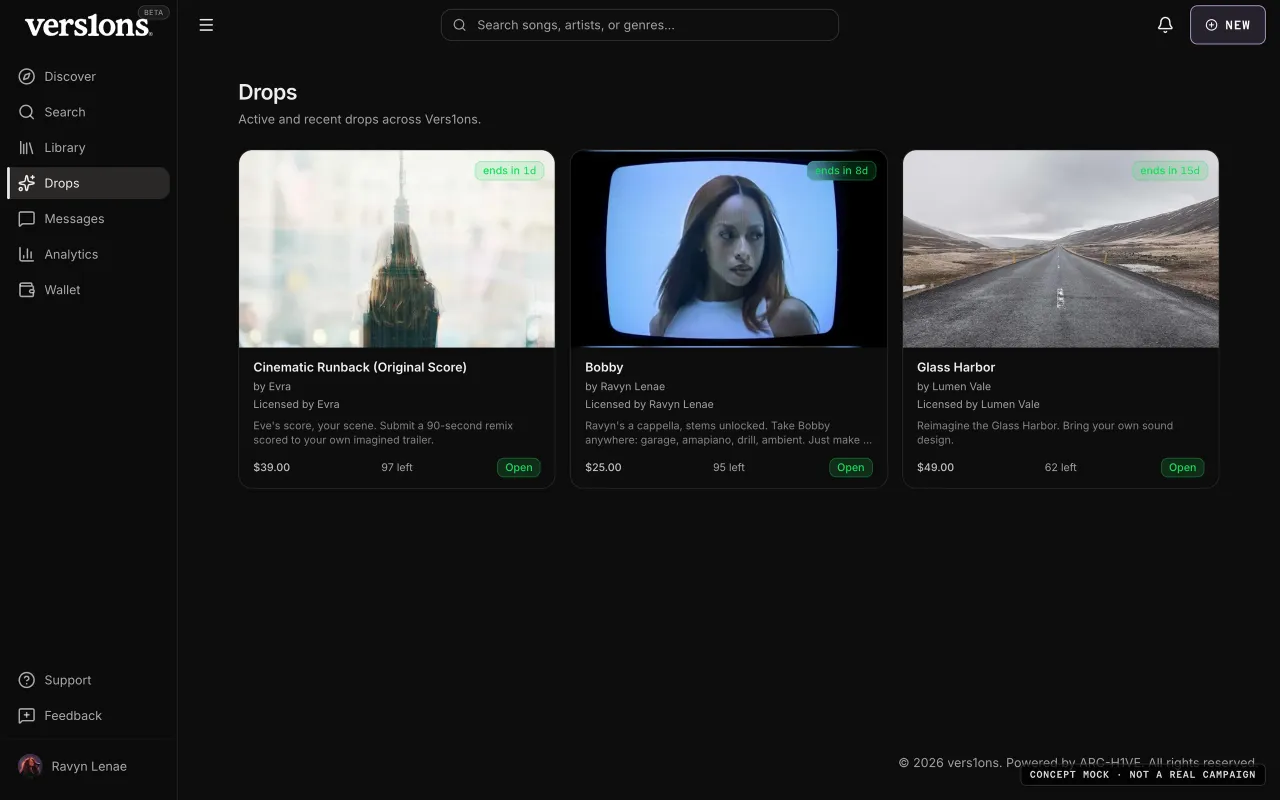
01DropsEvery open remix contest in one place, with its price and how long it has left. 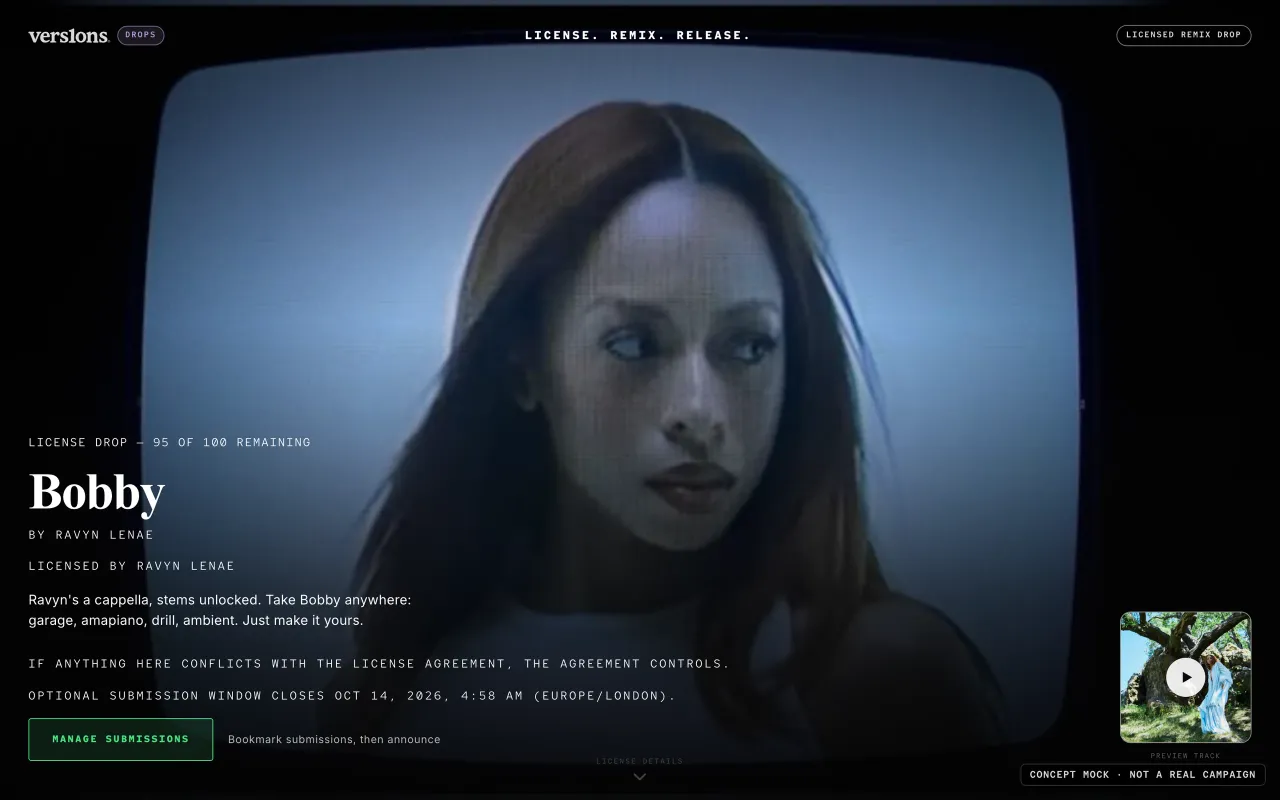
02The public pageAnyone can open a drop, no account needed. It shows what a real license gets you, and it's the way in: sign up, buy the license, enter. Easier than doing it illegally. 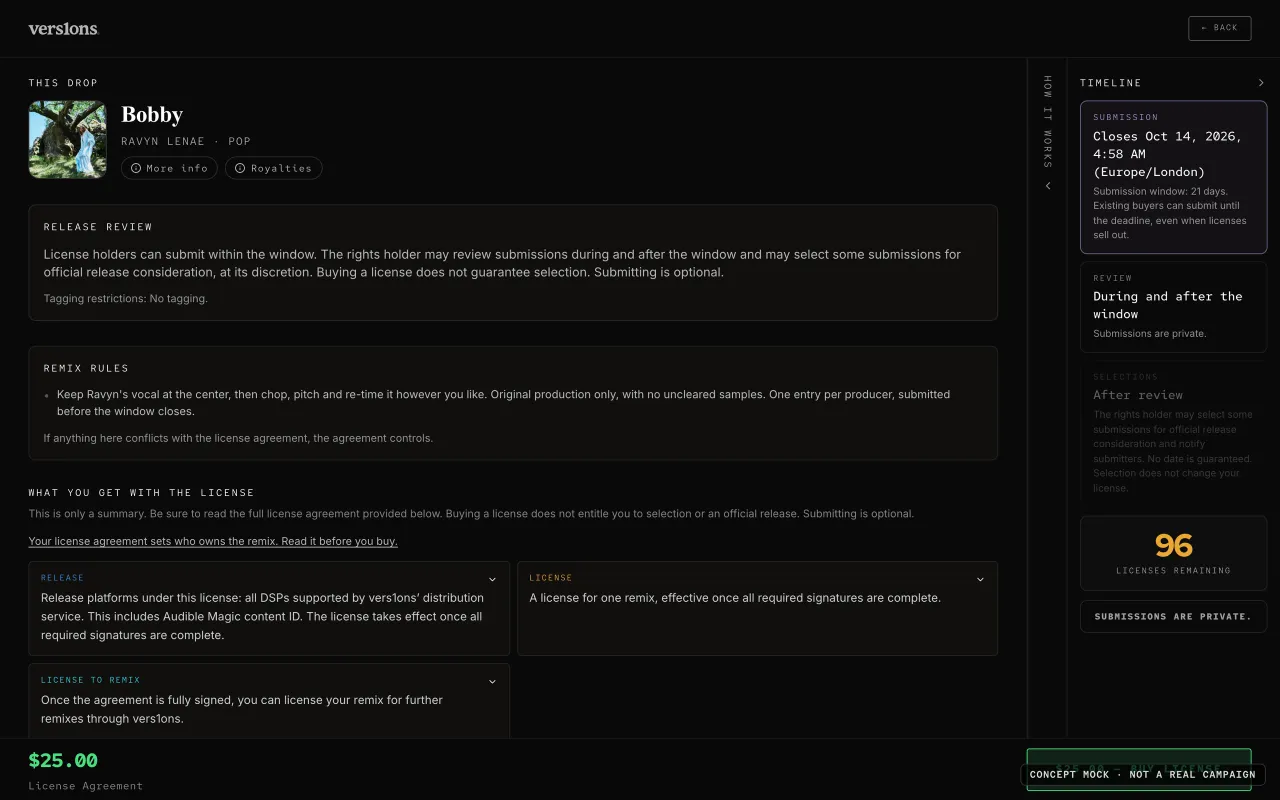
03The rules, in publicFurther down, anyone can read the rules, what the license gives them and the timeline, before they ever sign up. 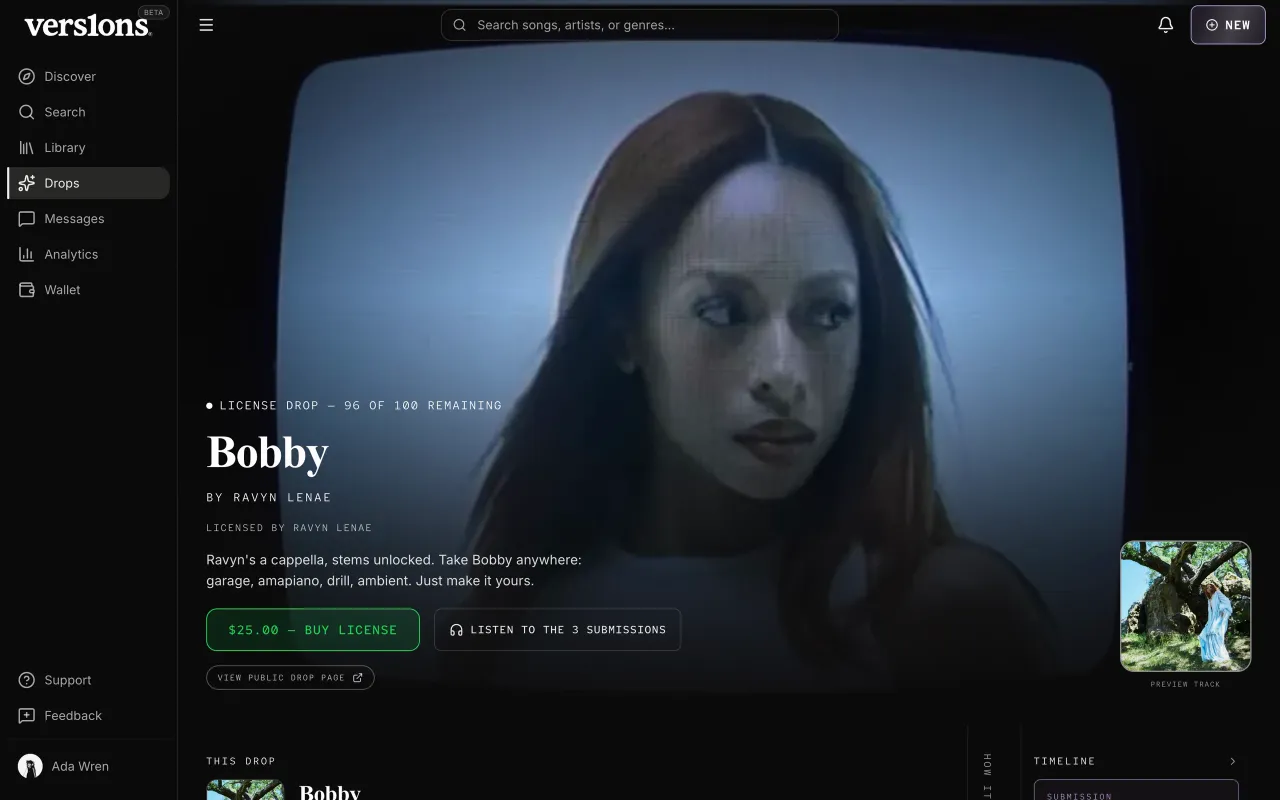
04In the appWith an account, the same drop lives inside vers1ons, next to everything else you can license. 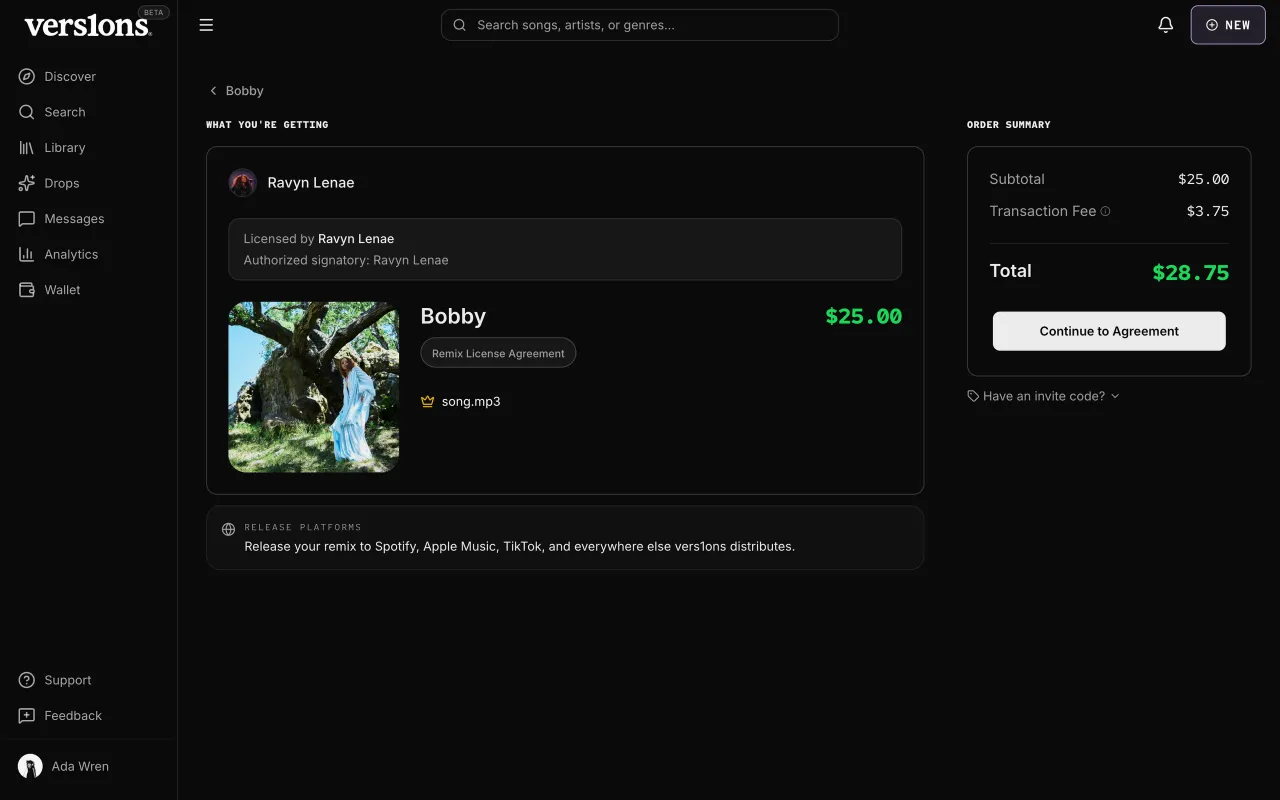
05Order summaryWho is licensing it, who signs for them, and the total, before anything else. 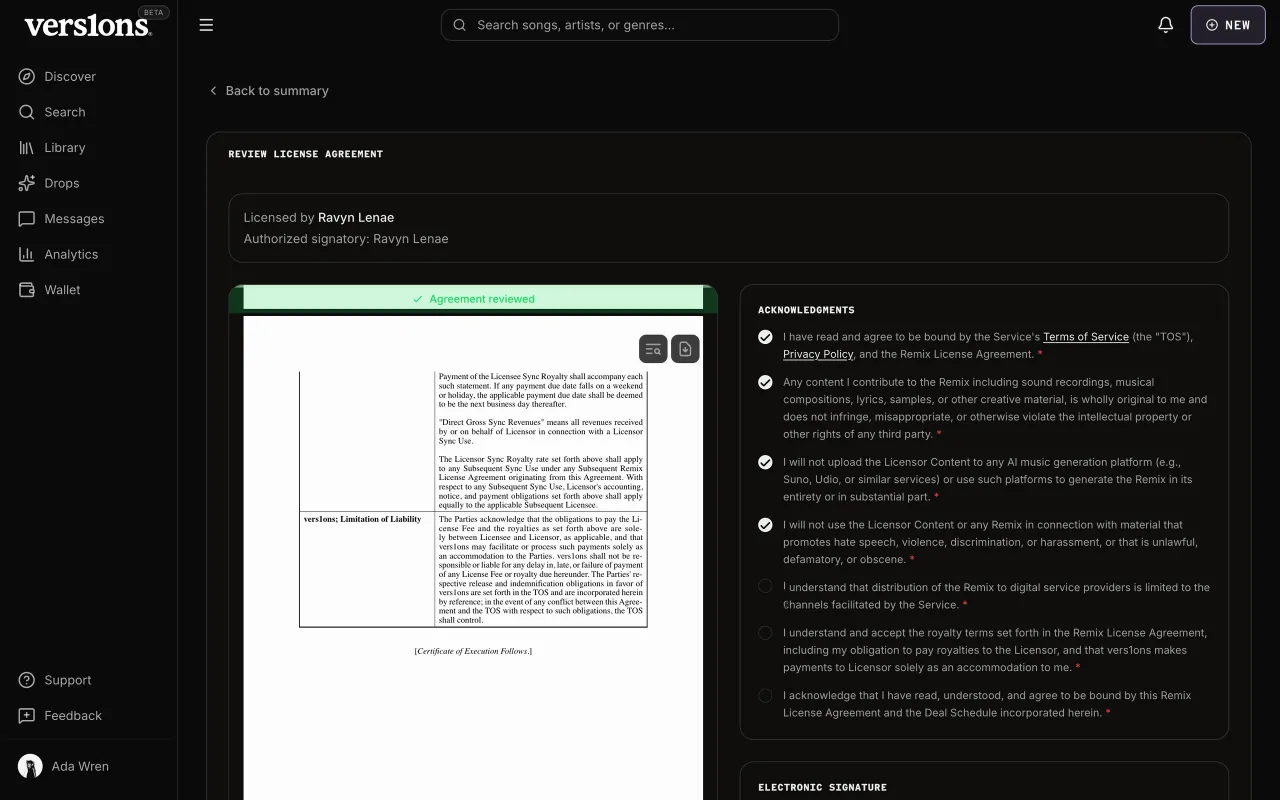
06Sign the agreementThe buyer scrolls the whole agreement, checks each acknowledgement and signs. Payment only opens after that. 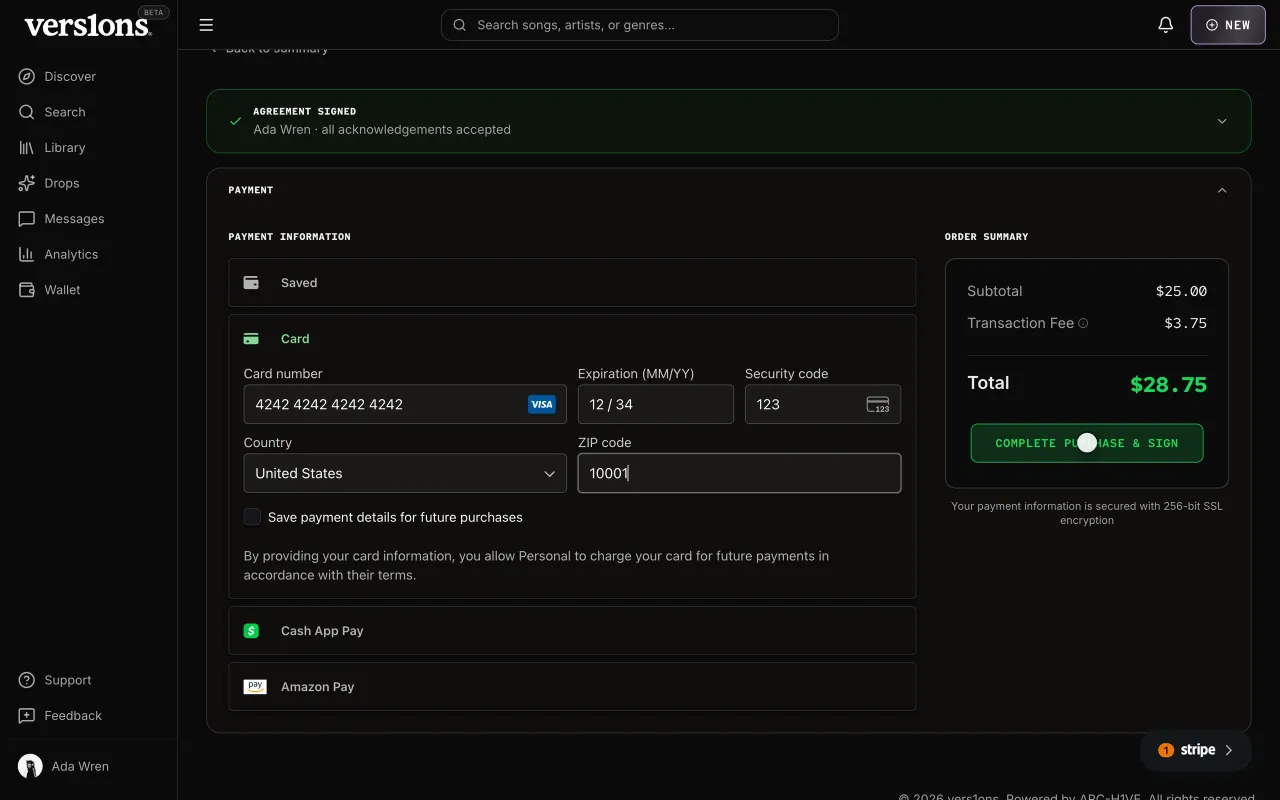
07PayCard, wallet or platform credit. The signed agreement stays pinned above it. 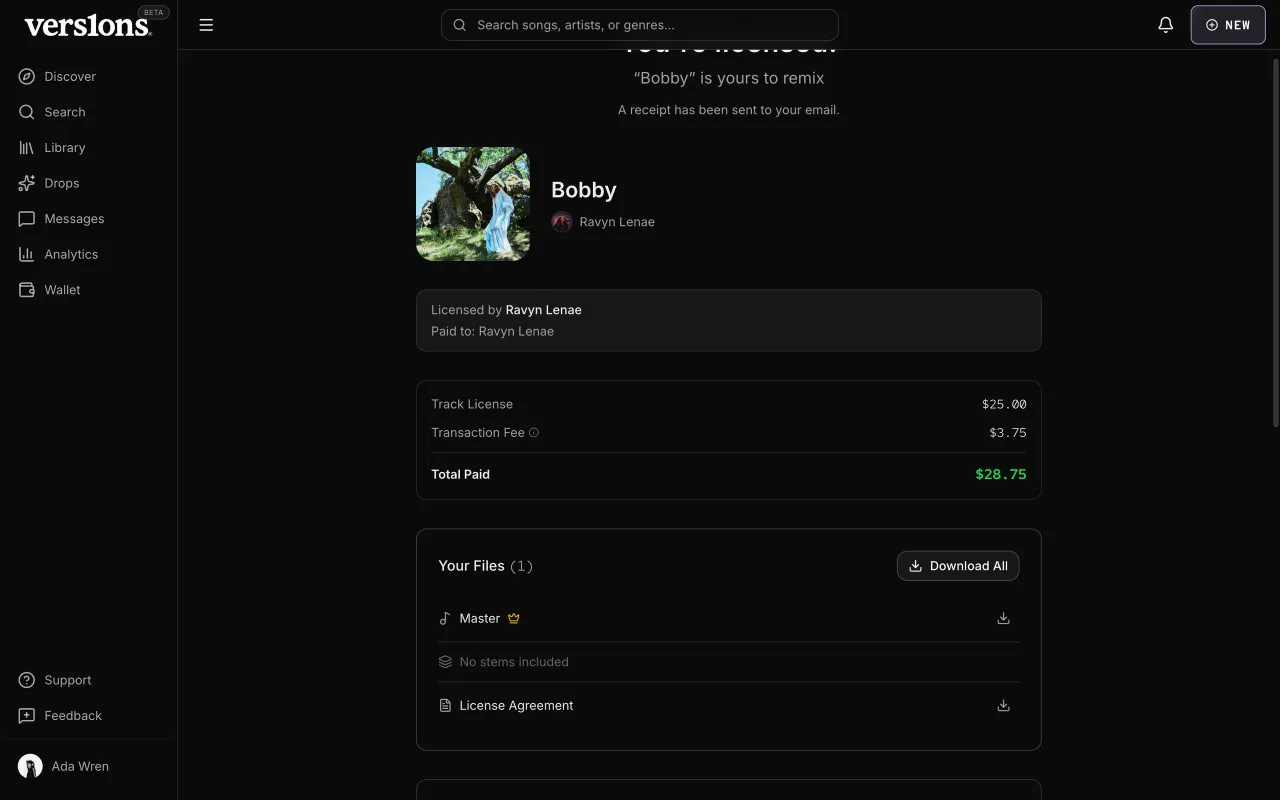
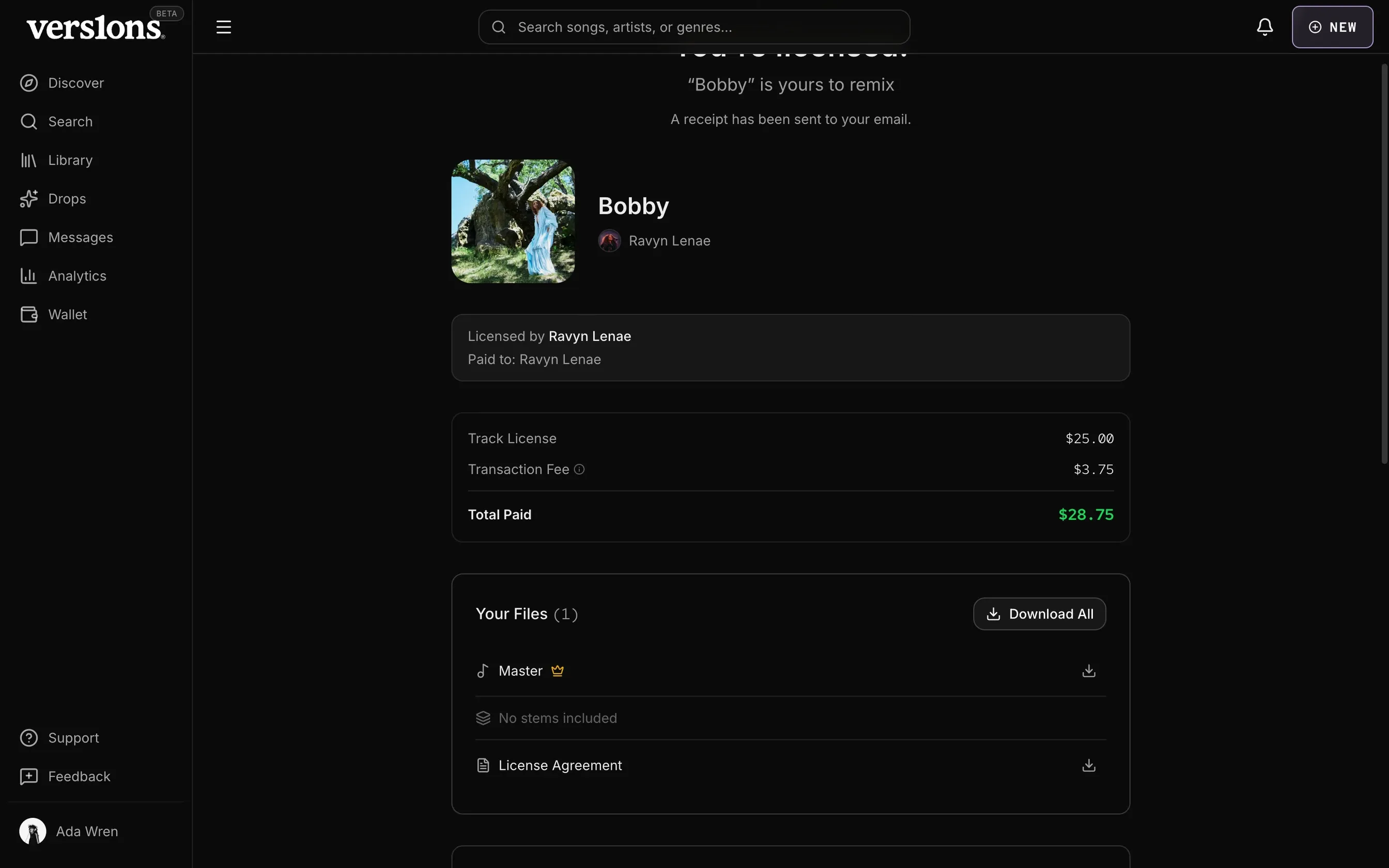
08LicensedThe stems and the signed agreement, ready to download. The license is real from here. 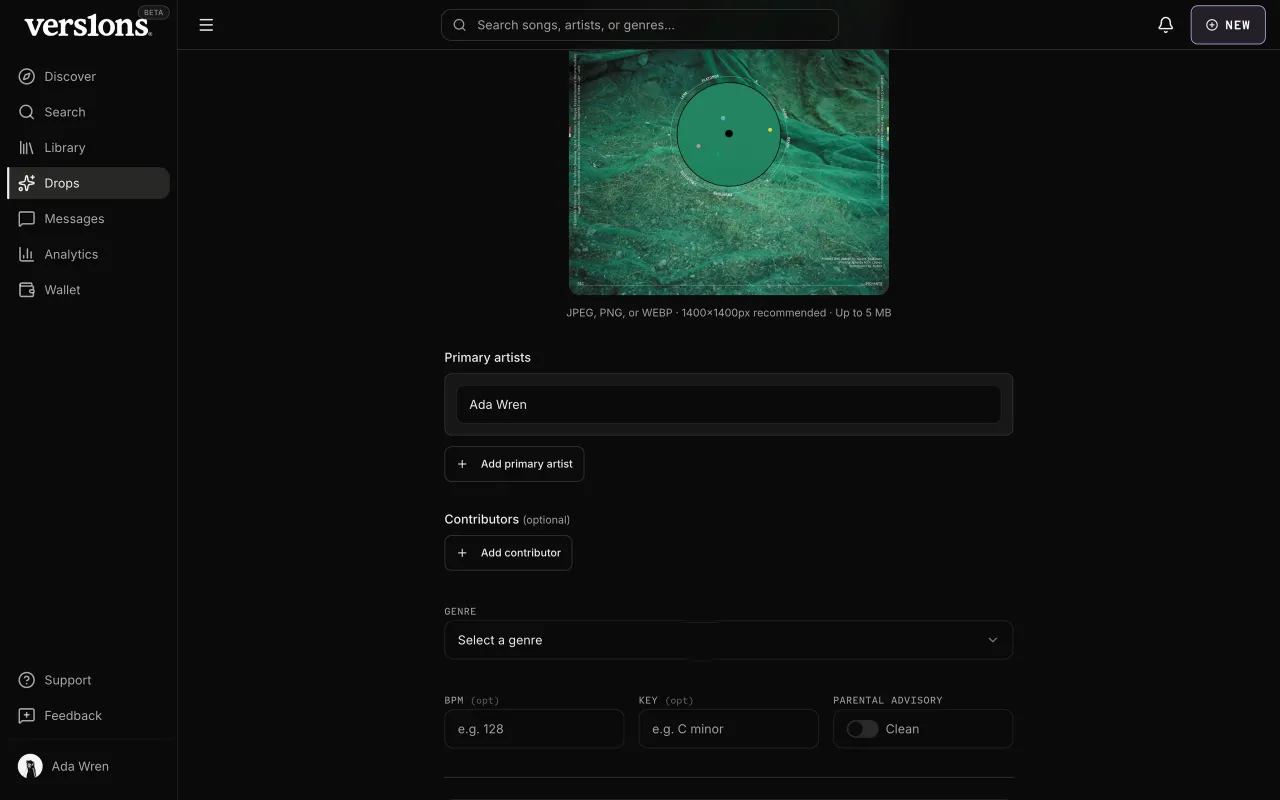
09Submit the remixThe remix goes in with its own cover and credits. It's saved as a new work that points back to the original. 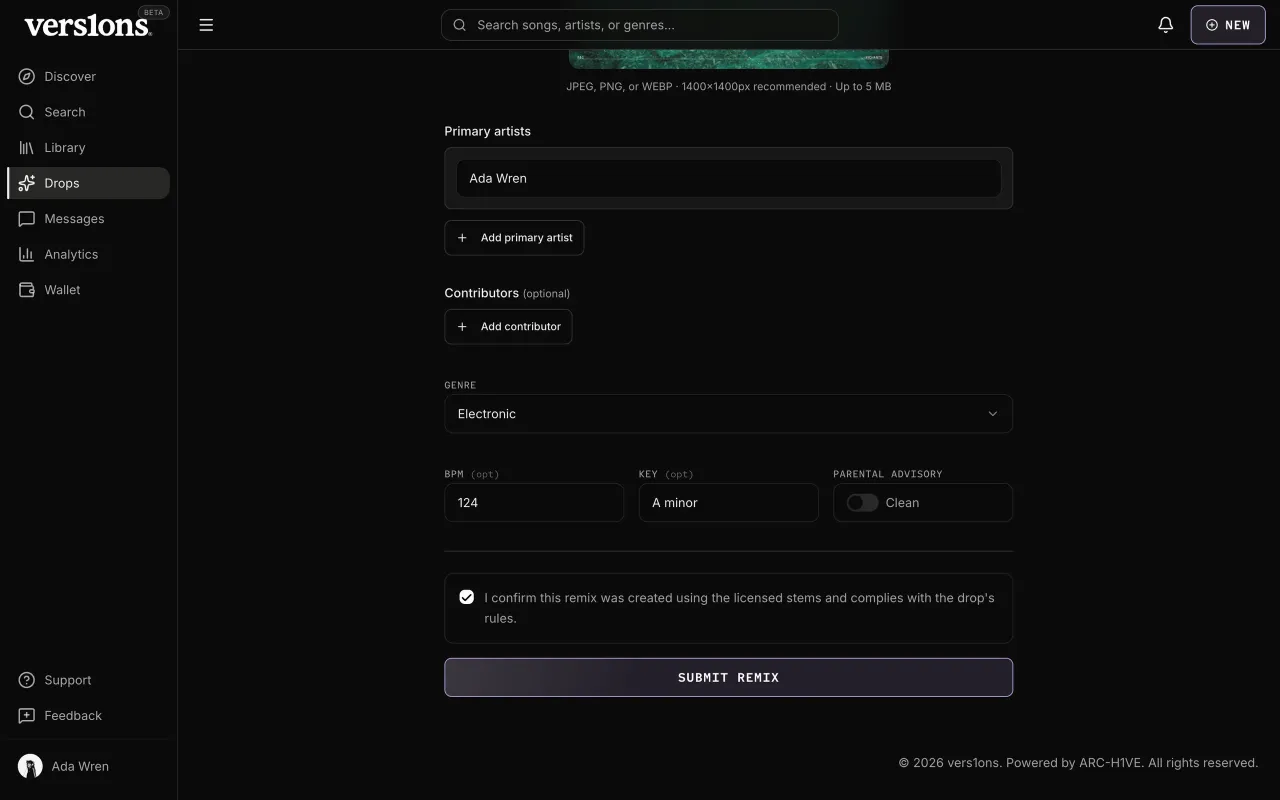
10Ready to enterThe entrant confirms it was made from the licensed stems and follows the drop's rules. 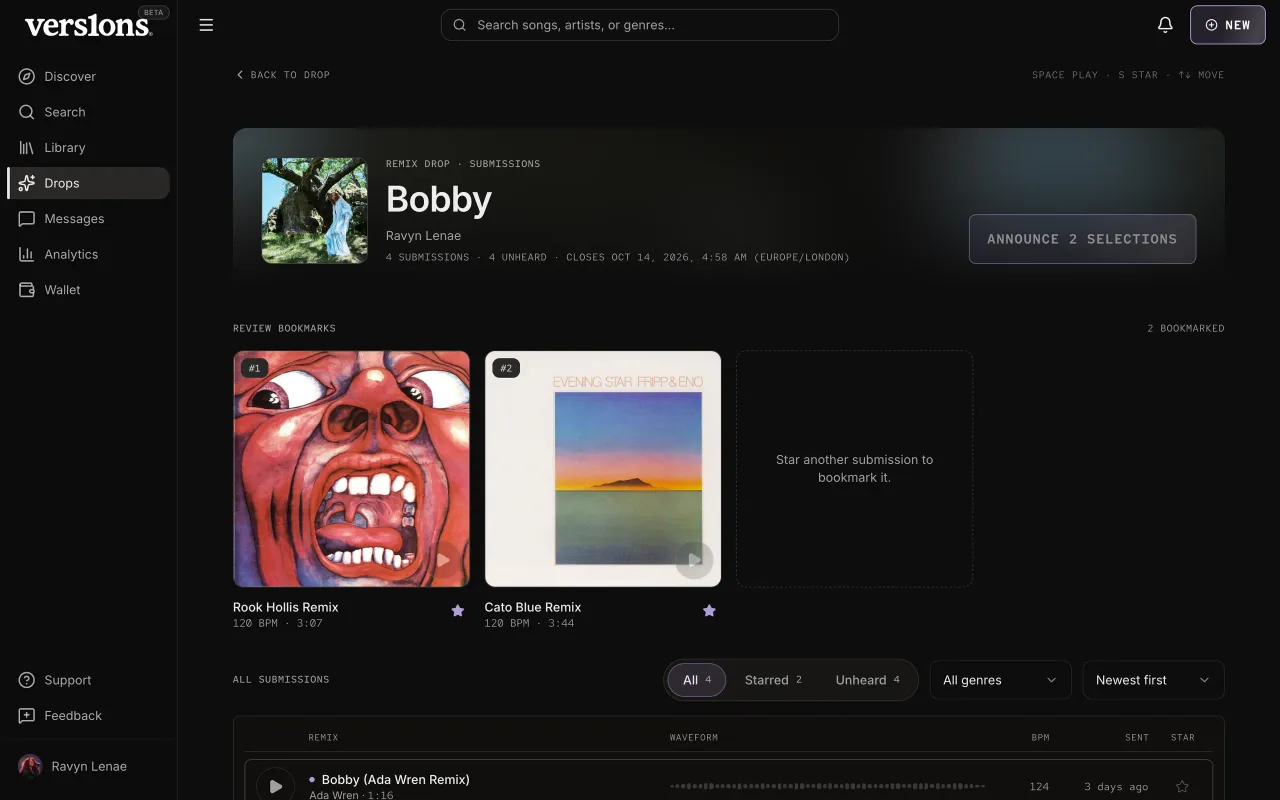
11JudgingThe host plays, stars and bookmarks entries, sees which they haven't heard yet, then announces the winners.
Mobile design
The same flow on a phone. Click any screen to see it full size.The same flow on a phone. Each screen links to it at full size.
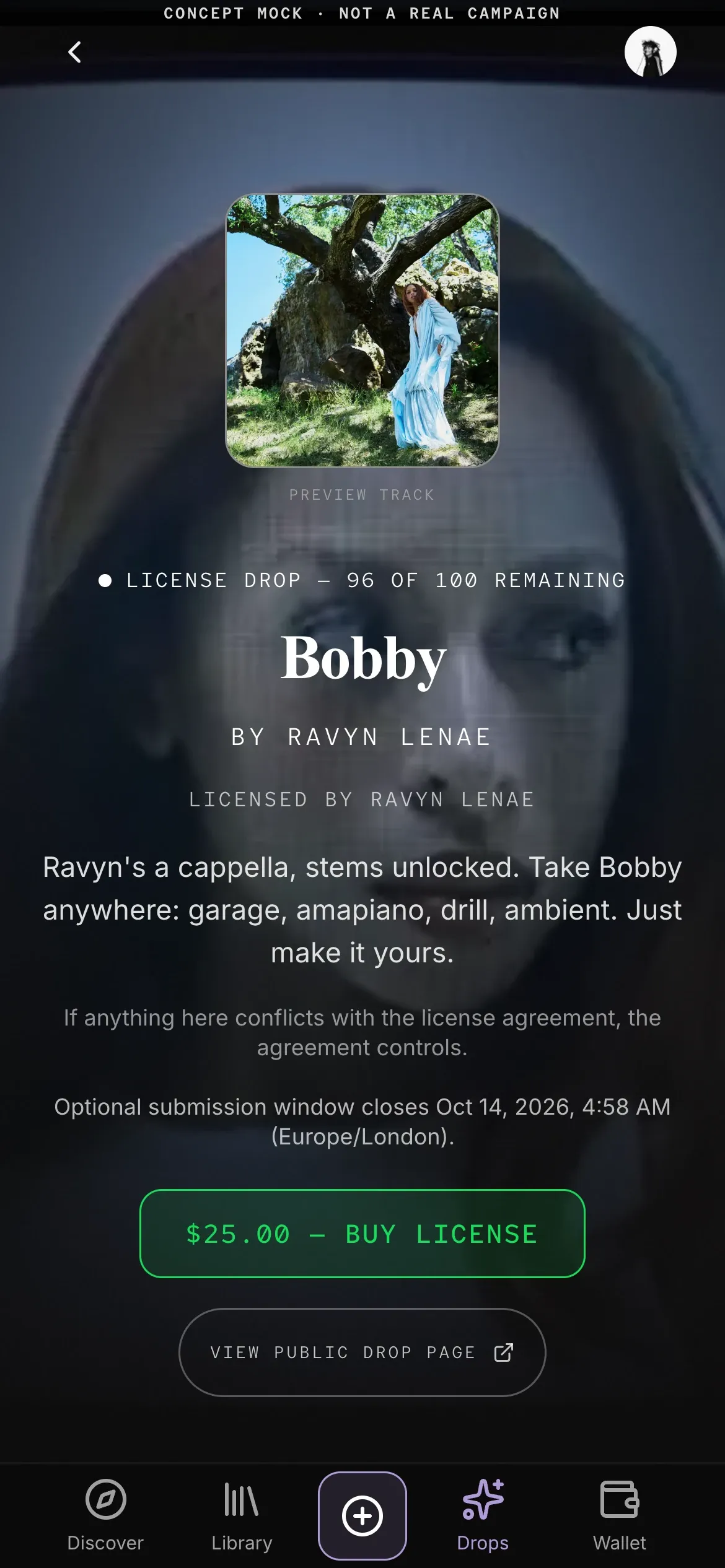 (opens full size)
01Stems unlocked; the license is the ticket in. 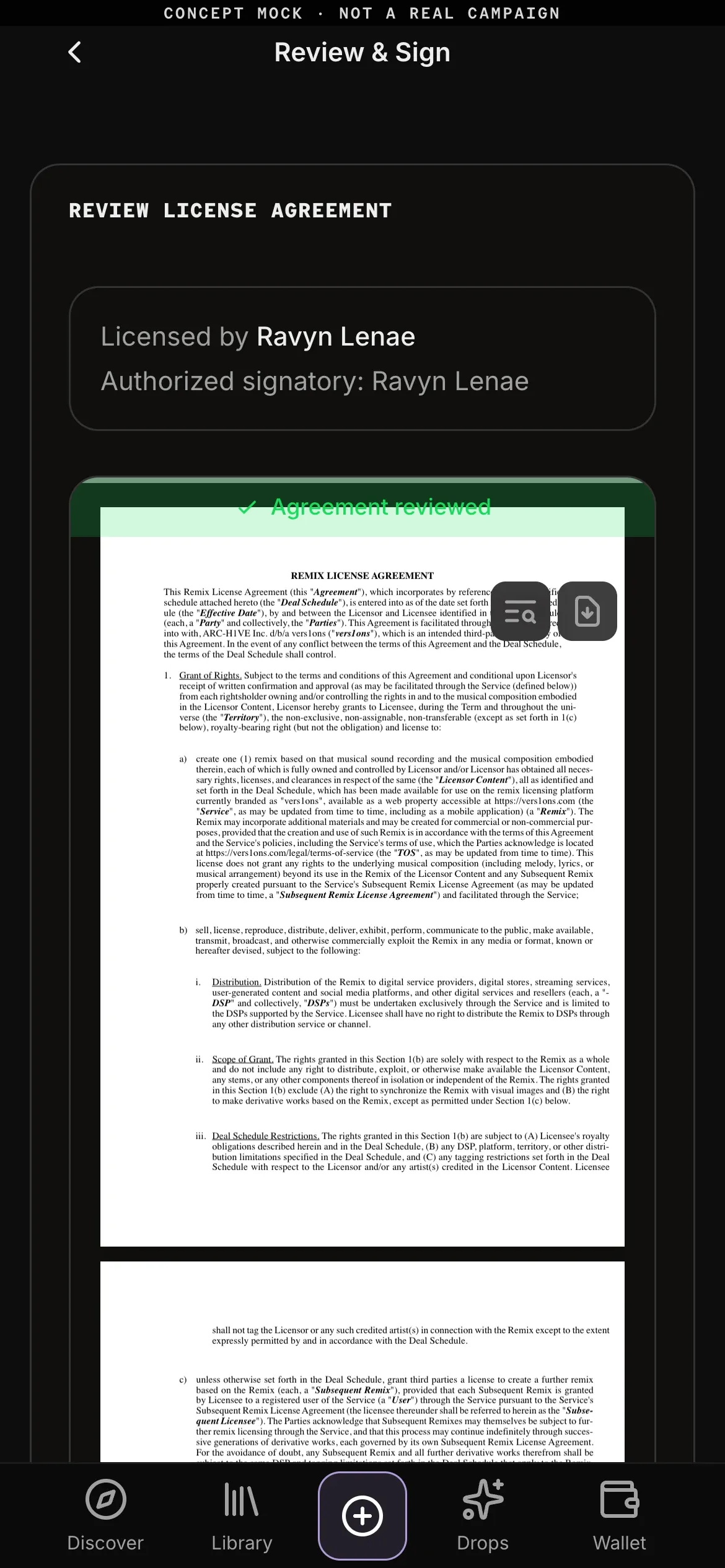 (opens full size)
02The agreement is read before it can be signed. 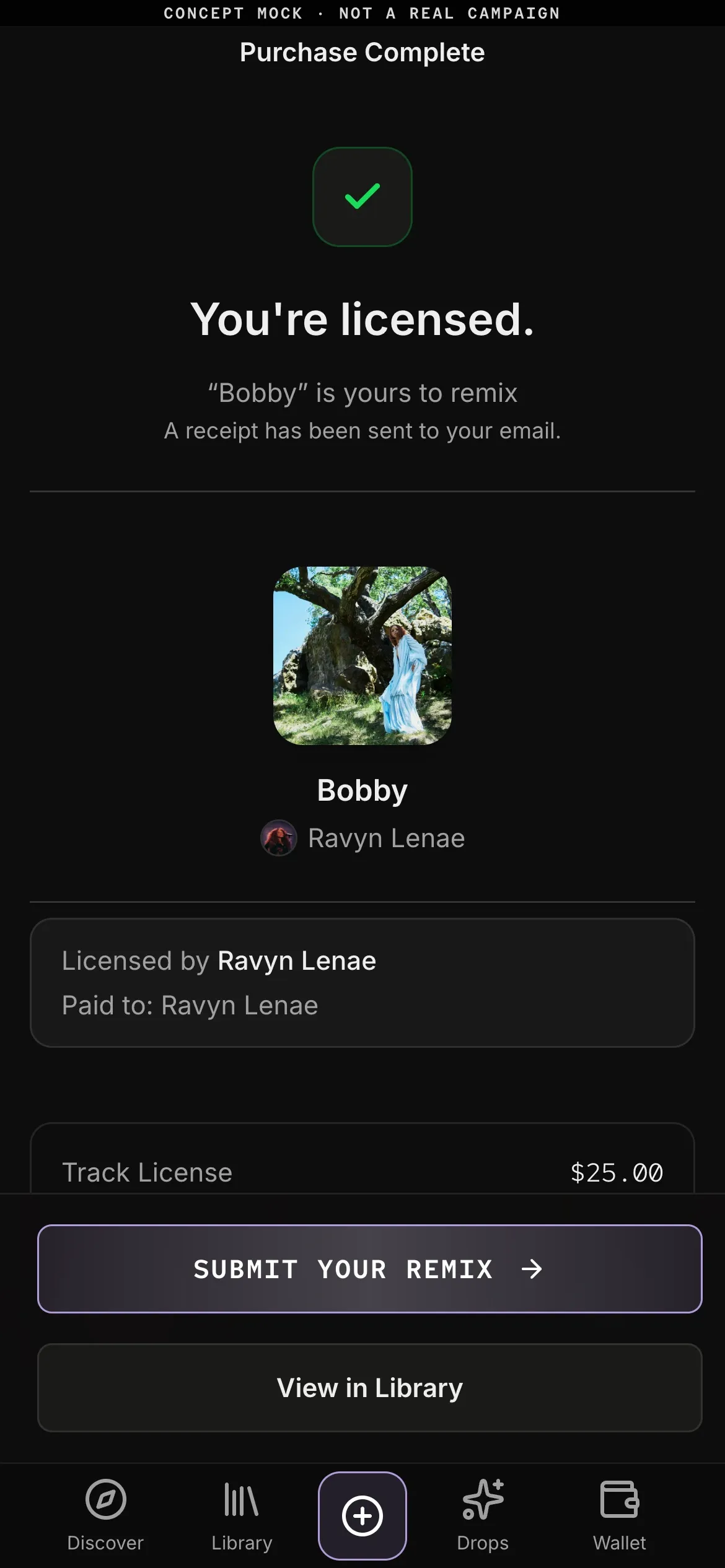 (opens full size)
03The remix rights are yours.
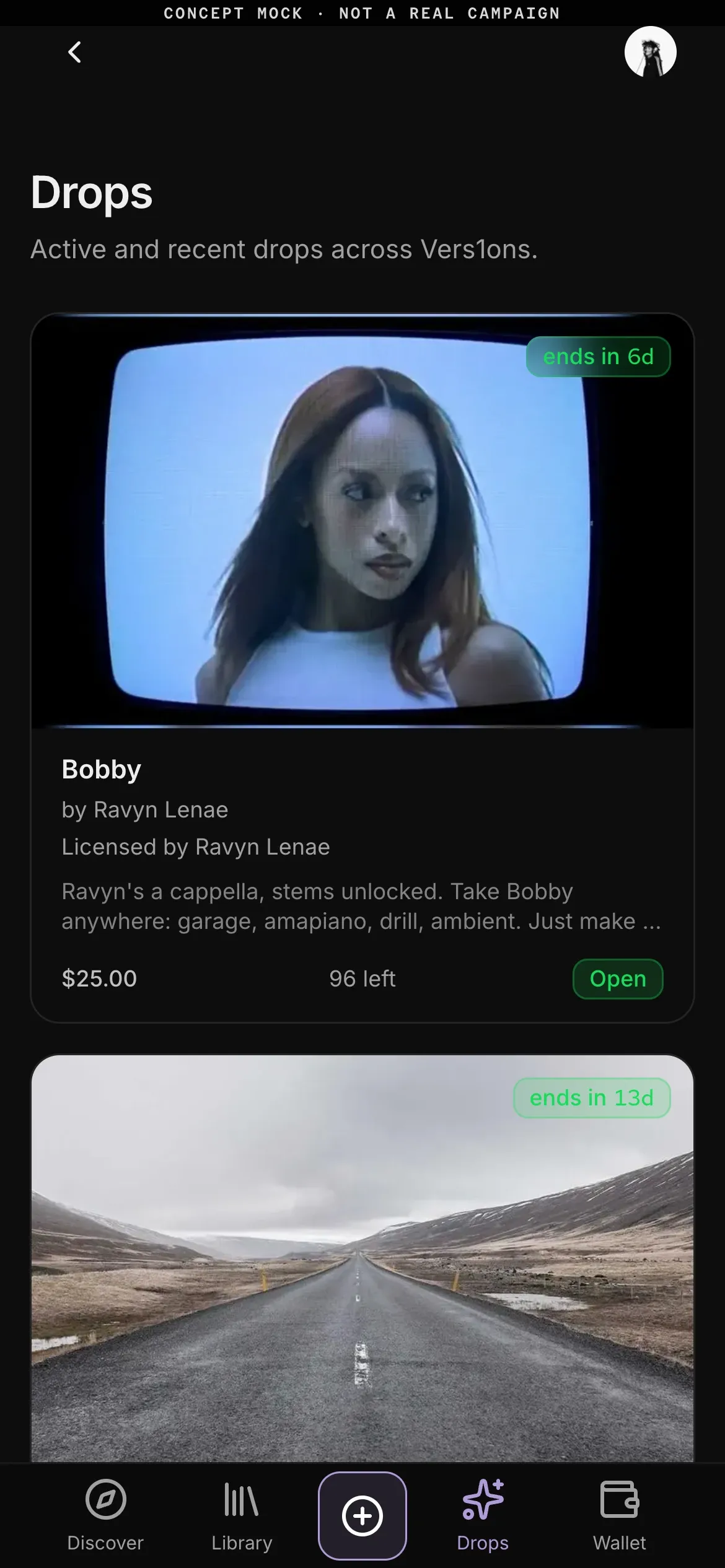
What changed, and why
The same part of the product in an early build and today.
The drop page
The public drop page and the in-app one had drifted apart. Now they're one design, with a side rail you can close and a countdown before a drop opens.
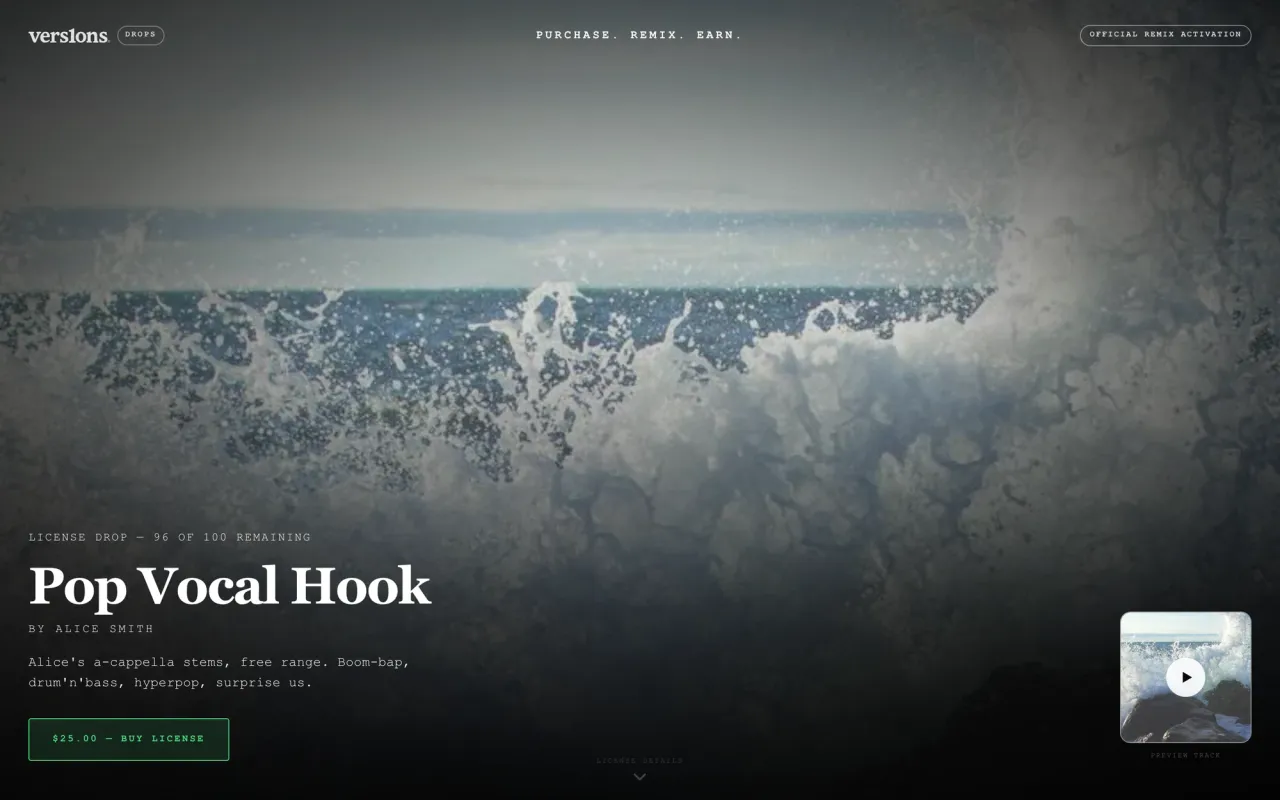
Before · Jul 2026 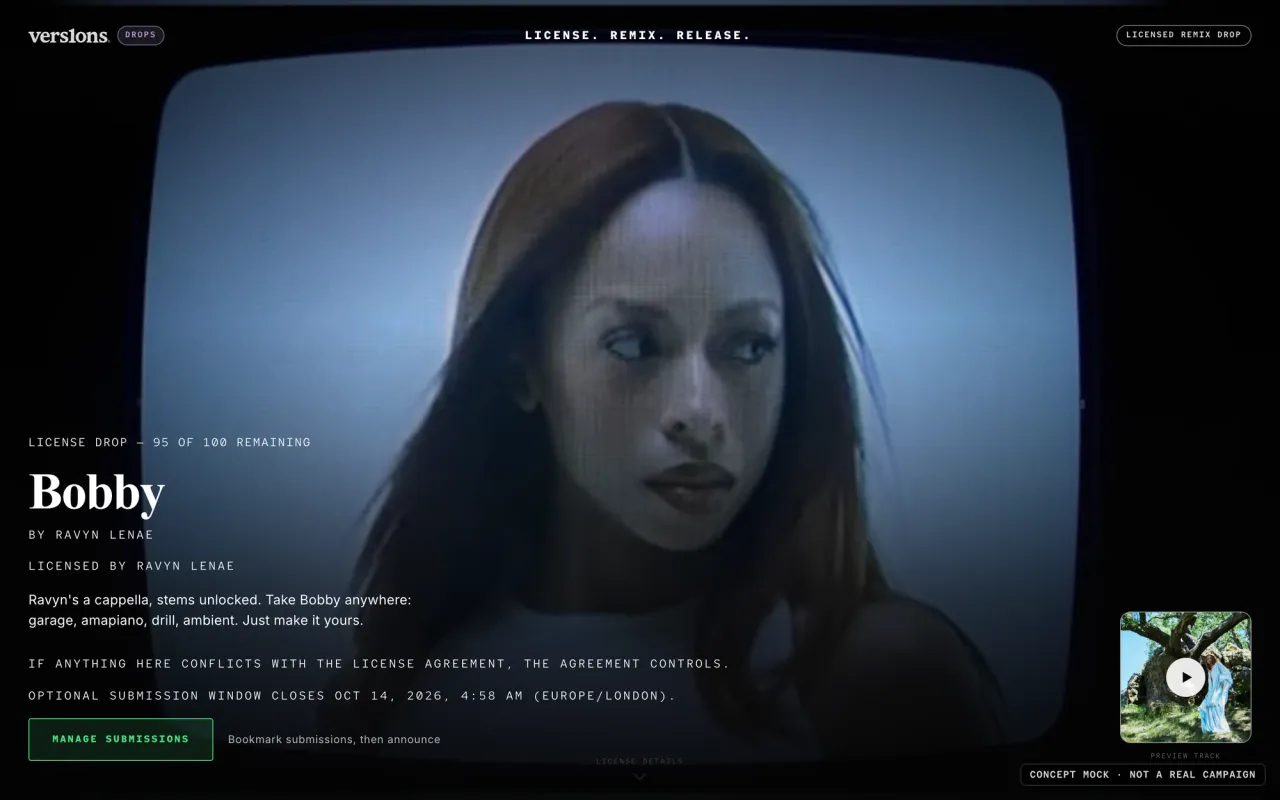
Now · Oct 2026 Judging
The submissions page was a plain list. Now the host can play, star and bookmark entries, and see who they haven't heard yet.
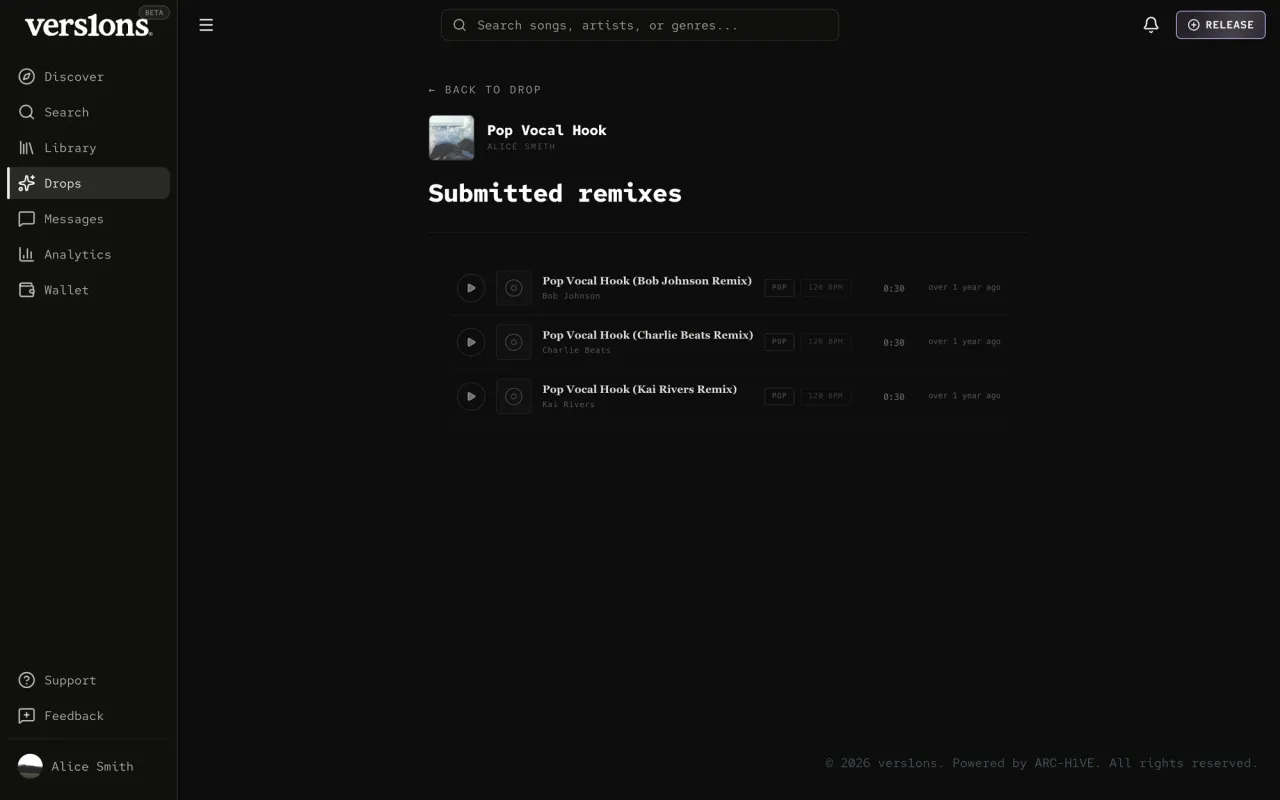
Before · Jul 2026A plain list. 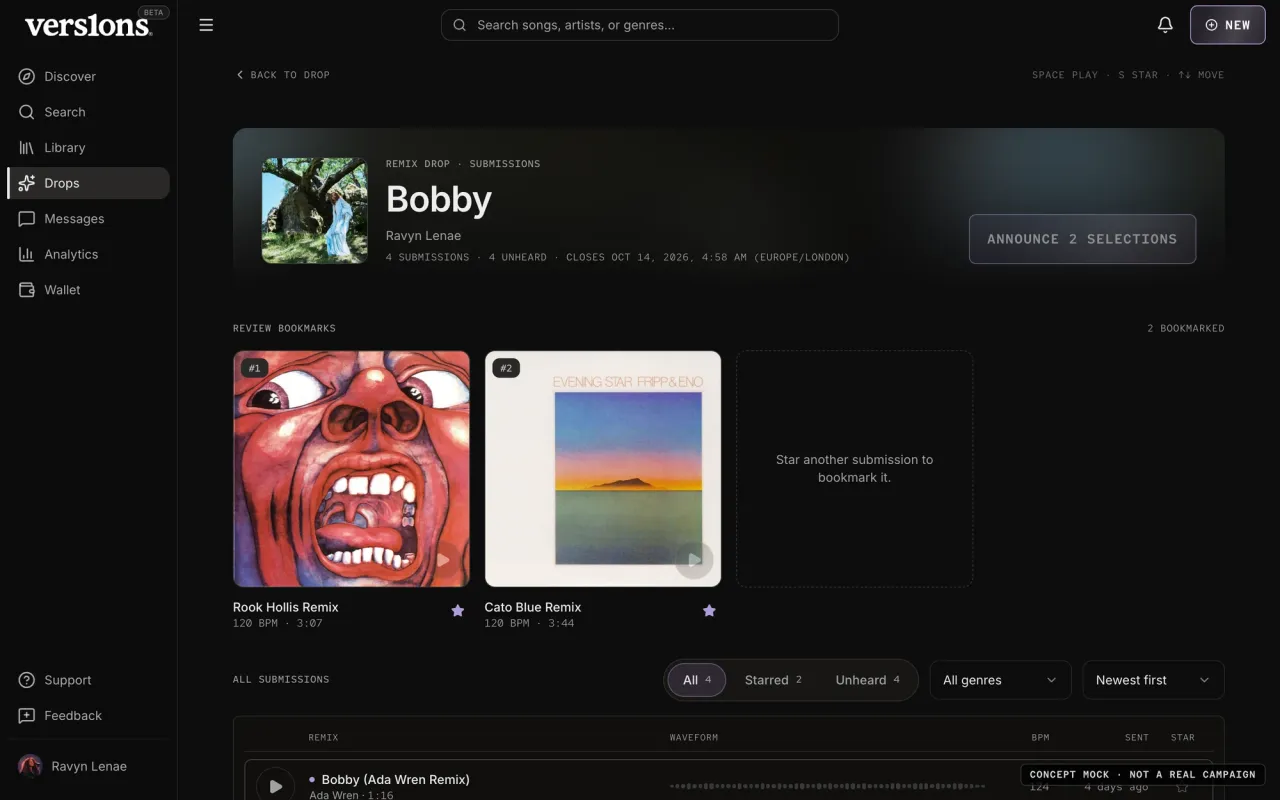
Now · Oct 2026Play, star, bookmark, heard or not.
Outcome
Shipped and working end to end, with the first drops being set up with artists now.
A drop goes from create, invite, buy and submit to judge, winners and release window, on the same licenses as every listing. The buzz of a contest, with the rights already cleared.
Reliability
Every signature binds to the exact text that was signed.
Sending a split sheet for signatures freezes a version of it, with a hash of the agreement and the document, and the server checks against that version when each person signs. Signing links are stored only as hashes. License terms are frozen at purchase, and a revoked grant stops a queued release from going live. Store scope was verified end to end across a three-deep remix chain.