Problem
A license is only worth something if everyone can trust it, and ours couldn't yet be trusted.
What a licensor set on a listing didn’t always match what the system allowed, so a remix could reach a store the license didn’t cover. Once a remix was remixed again, it got hard to tell who the original rights holders were and who should be paid. And setting up a listing, with its contributors, splits and terms, was easy to get wrong.
That mattered for three reasons. A release that breaks its license is a legal problem for vers1ons. Original artists only list their songs if they know they’ll be credited and paid down the chain. And the license is what we sell: if it isn’t true, there’s nothing to sell.
Three parts
From an upload to royalties, and round again
- ready · press run, or hover any part of the system
What I did
I led the product decisions on licensing and built it with our engineering team.
I worked with legal on the agreement, with labels and artists on the terms they needed, and with our founders on the license model. Then we turned the agreement into data the platform runs on. Every purchase issues a rights grant that points back to the grant it came from, so rights and royalties resolve up the chain however deep it goes. The terms a buyer signs are frozen at purchase, and one check decides where a remix may release, the same in the API, the release wizard and the delivery worker.
On the screens, I designed the listing flow so an artist can set contributors, splits, terms and the stores remixes may go to, then sign and publish, without being a lawyer.
The flow, step by step
10 steps, one screen at a time.
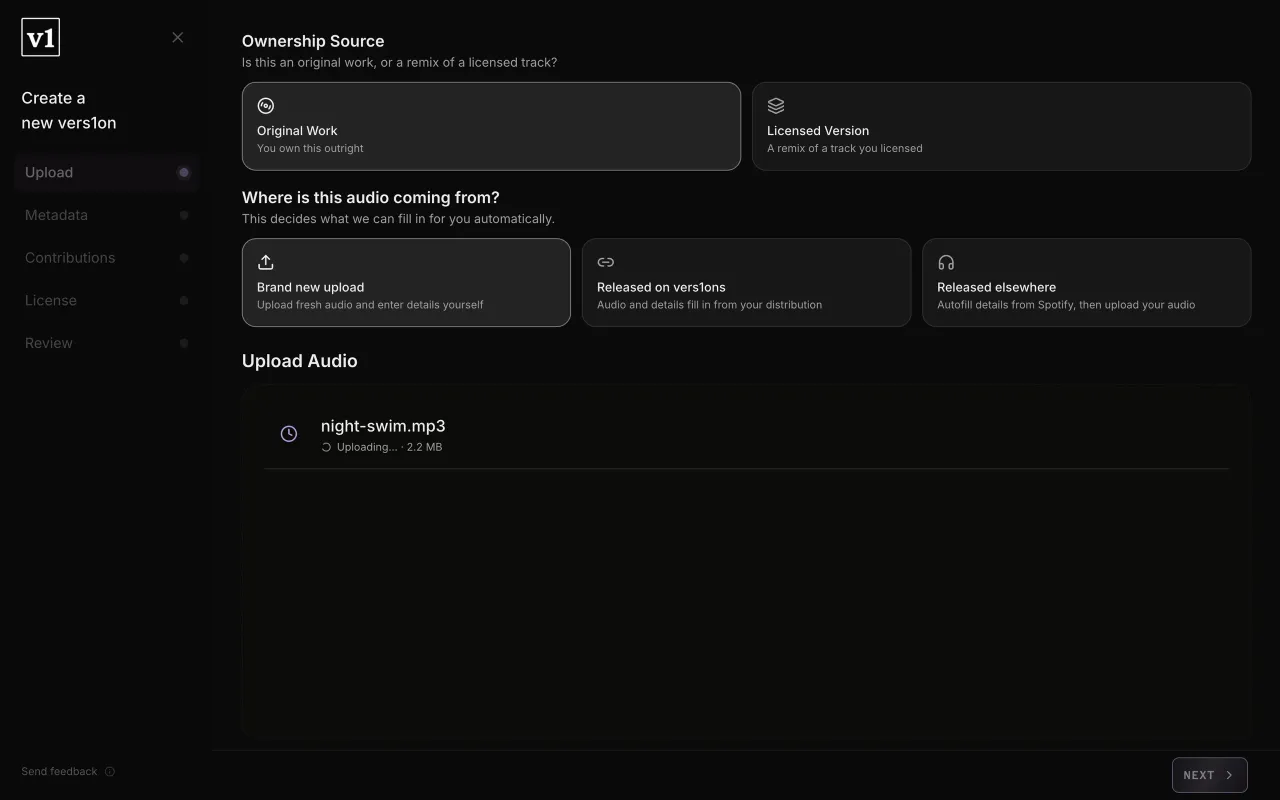
01UploadSay whether you own the song outright or are remixing a license, and where the audio comes from. That choice decides what the listing can fill in for you. 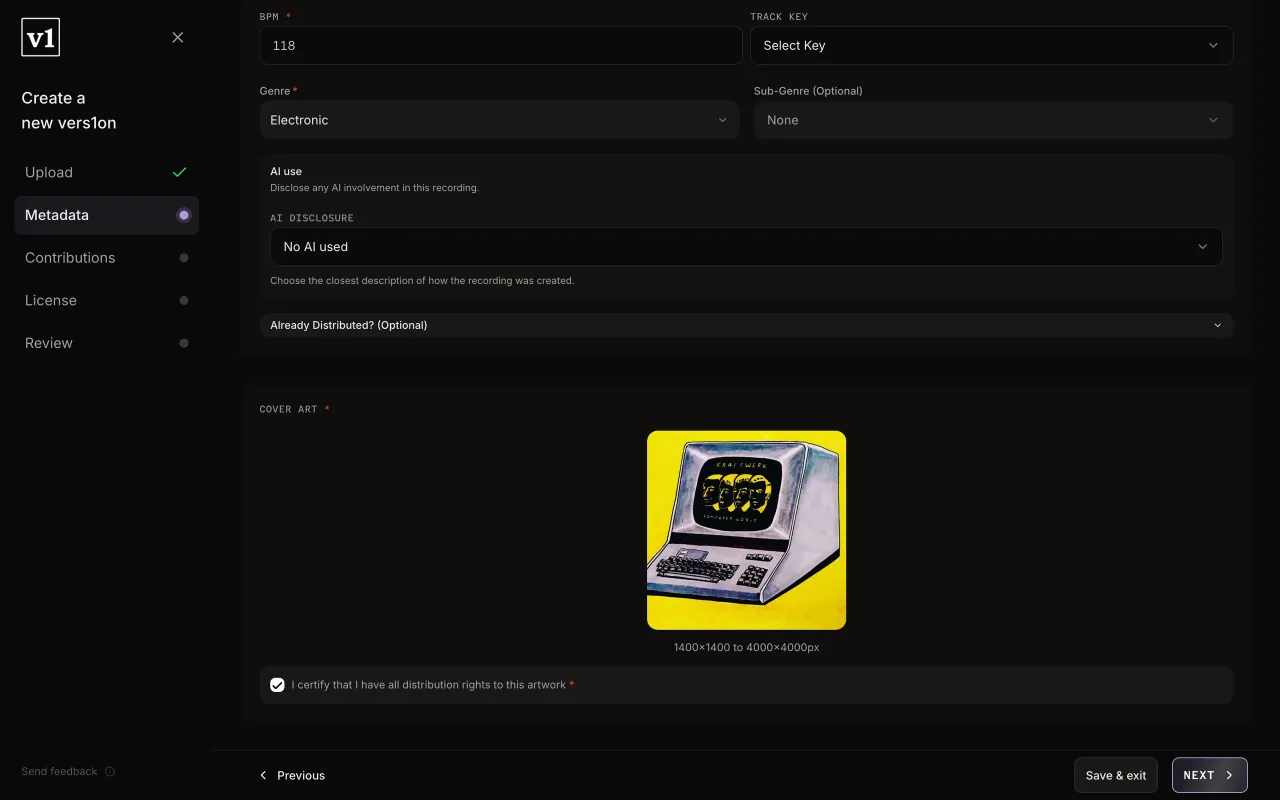
02Details and coverGenre, key, BPM and an AI disclosure, then the cover art, with a box confirming you hold the rights to it. 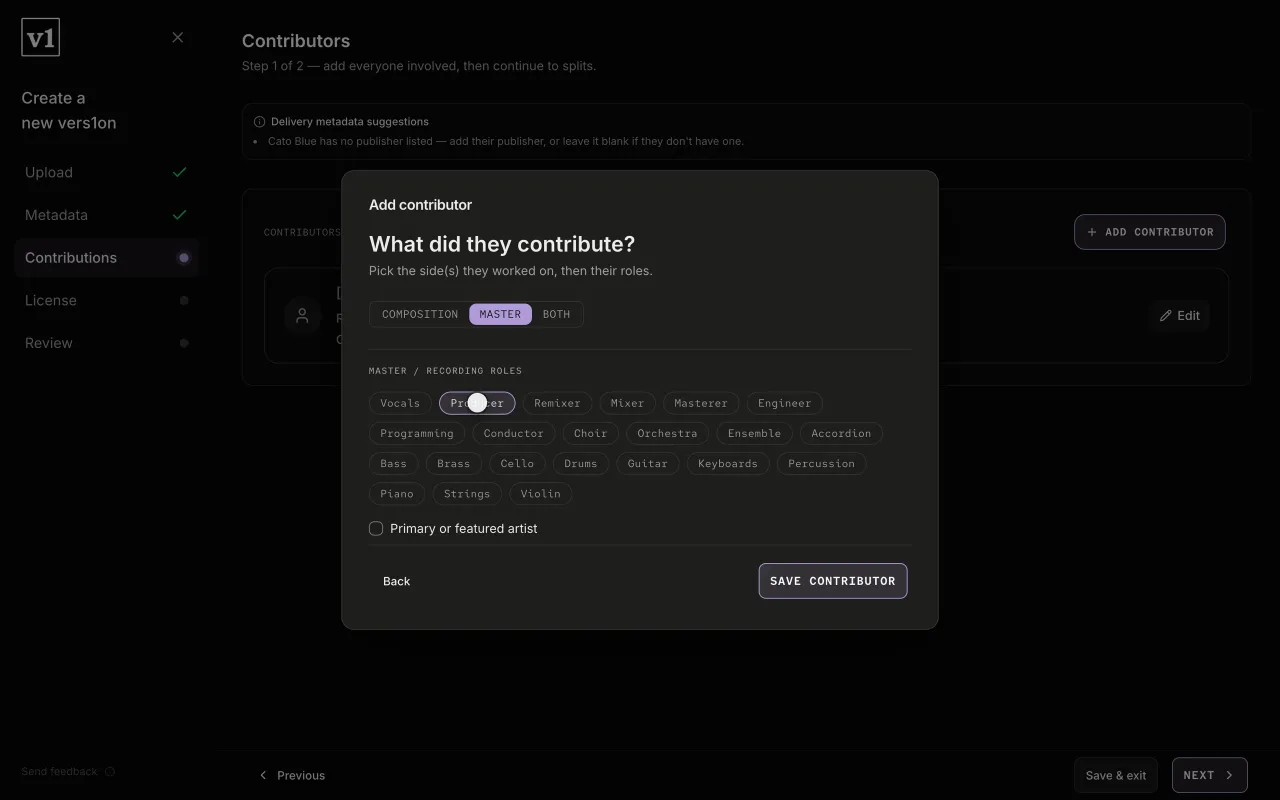
03Who did whatEvery contributor picks the side they worked on, the song or the recording, then their roles. Those are the two sides a license has to pay. 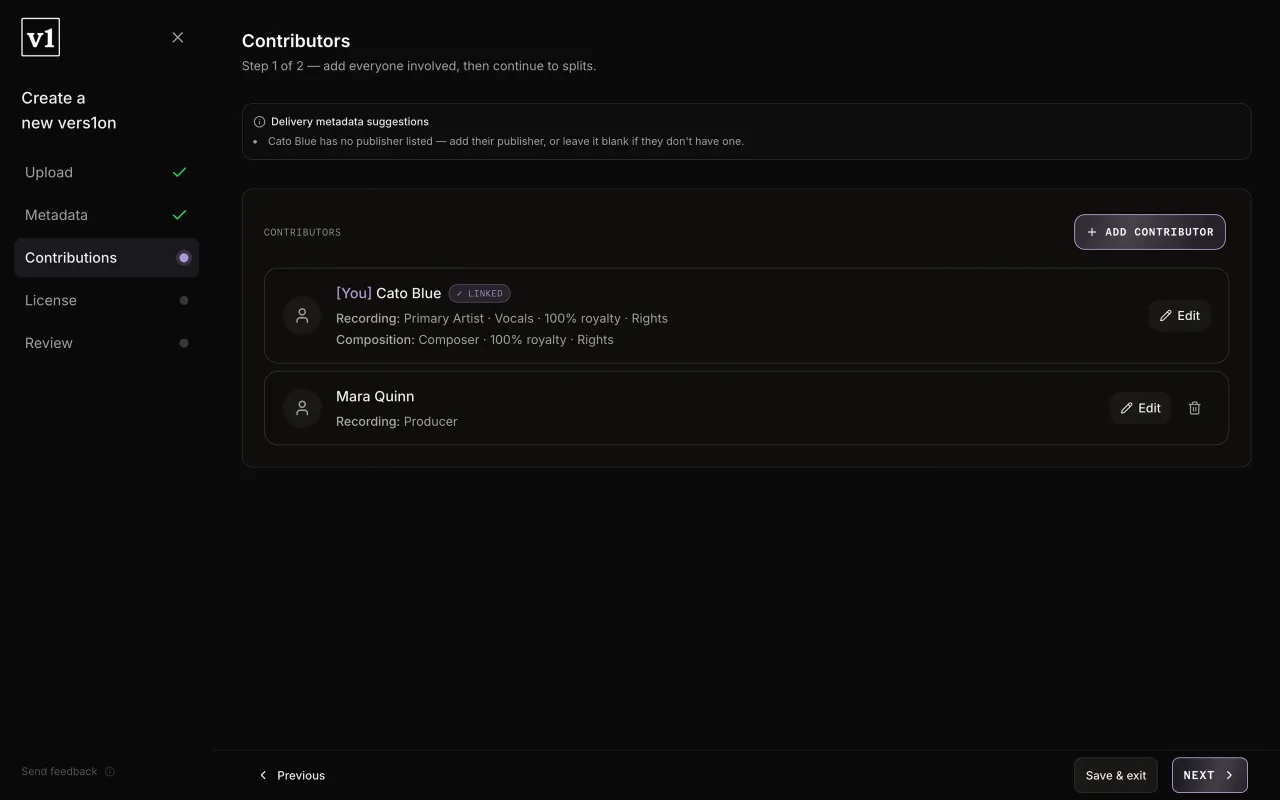
04ContributorsEveryone on the song in one list, with what they did and the share they're owed. 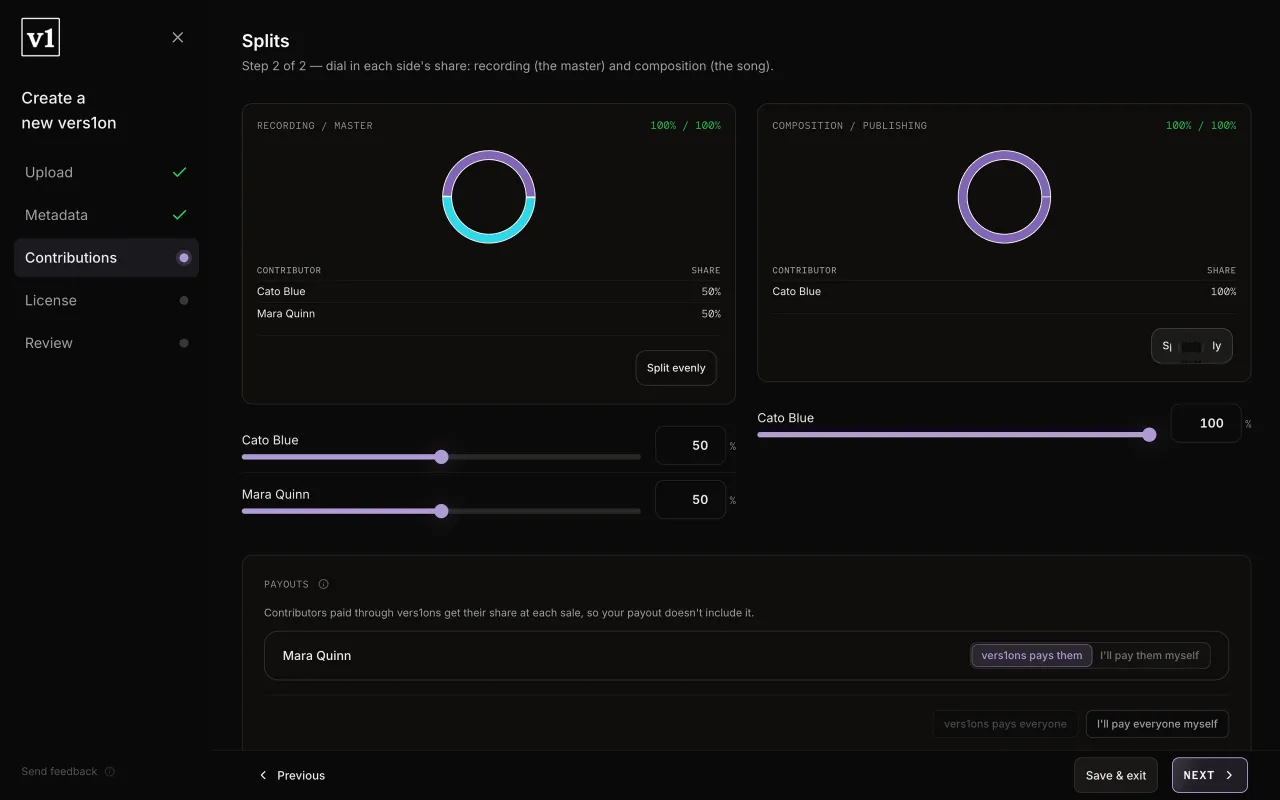
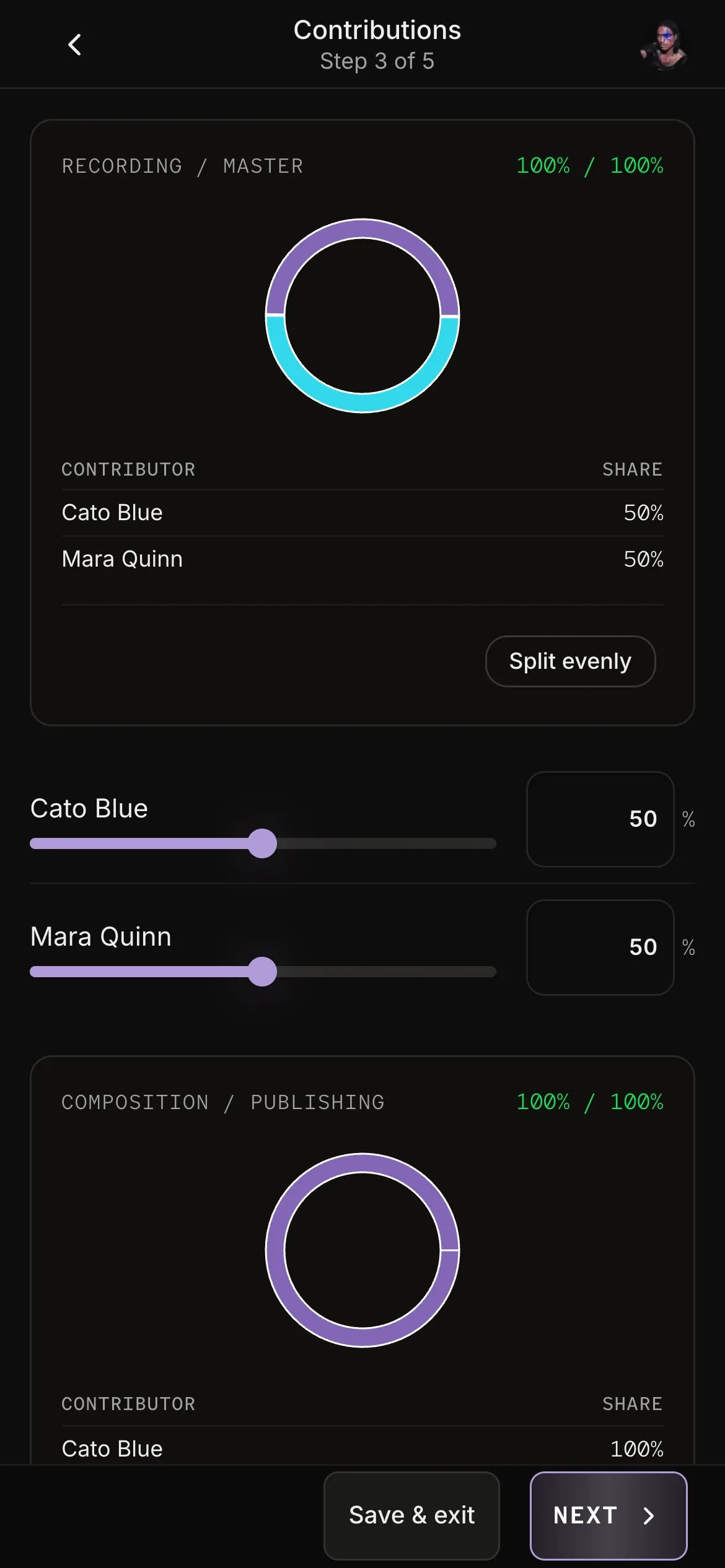
05SplitsThe recording and the composition each have to reach 100% before you can go on. The rings fill as you drag. 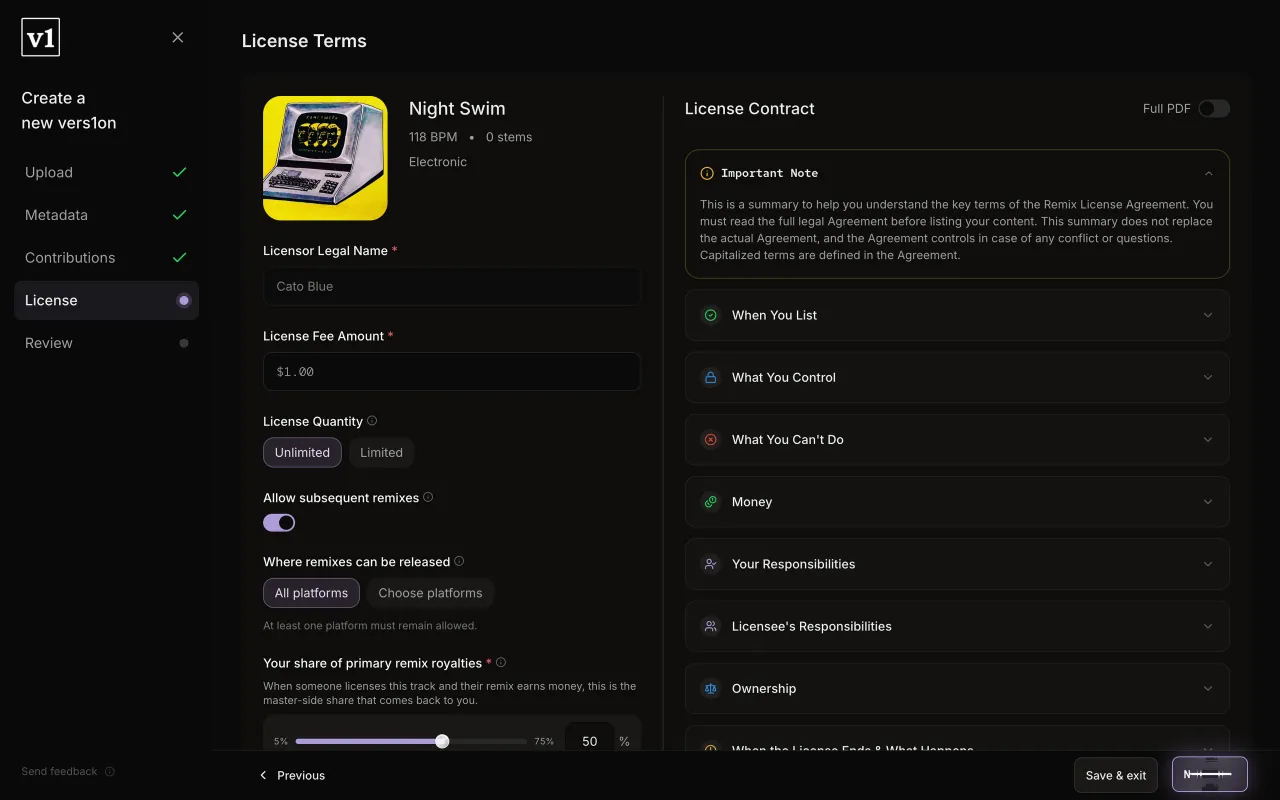
06License termsThe price, how many licenses, whether remixes can be remixed again and which stores they may go to. The contract summary sits beside every field, in plain words. 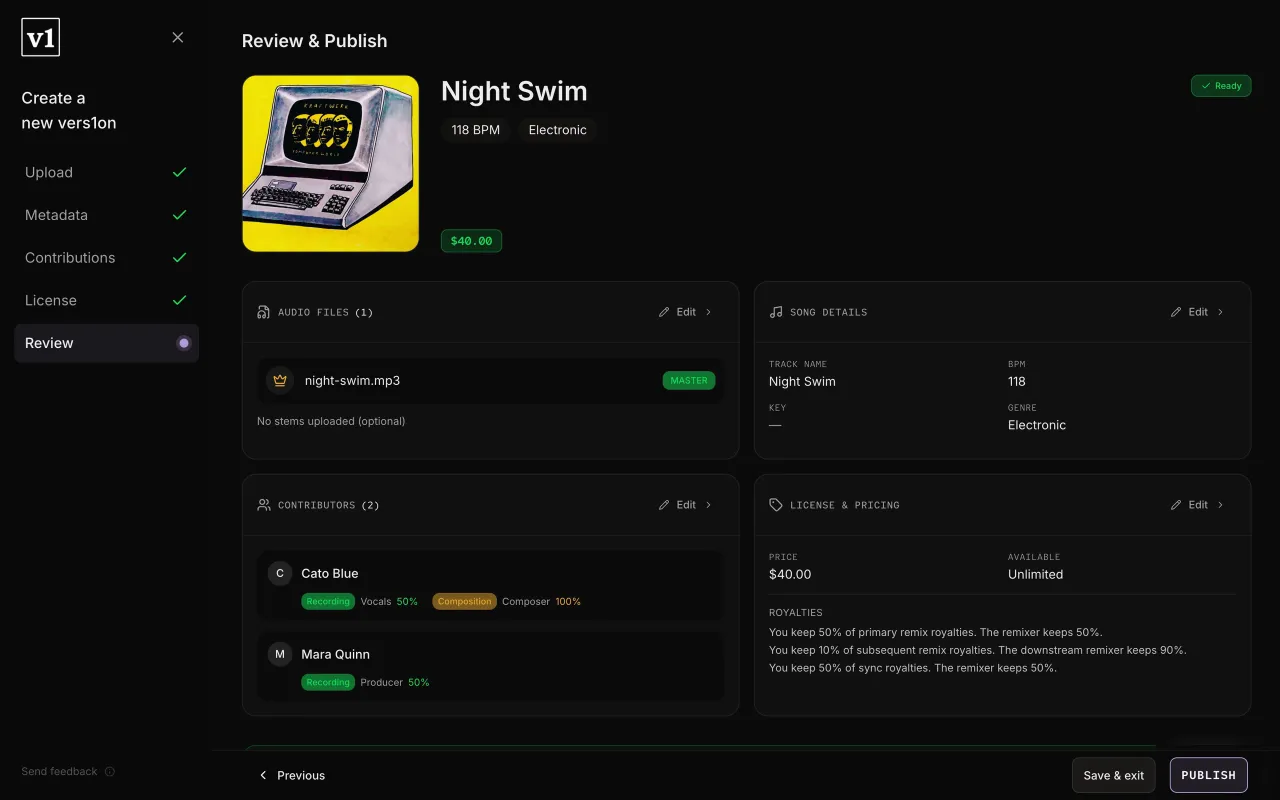
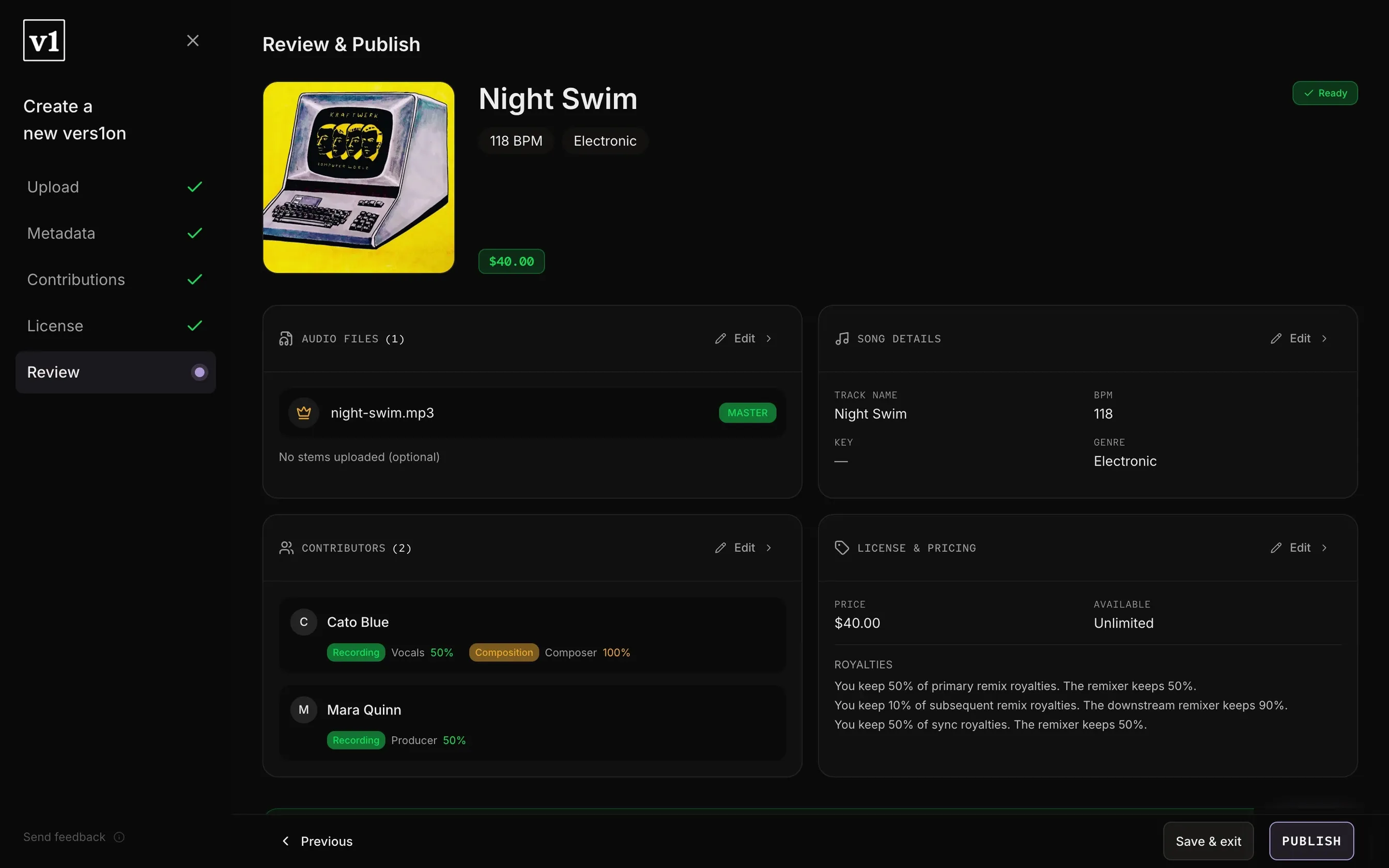
07ReviewEverything a buyer will see, and every split, on one screen before anything is signed. 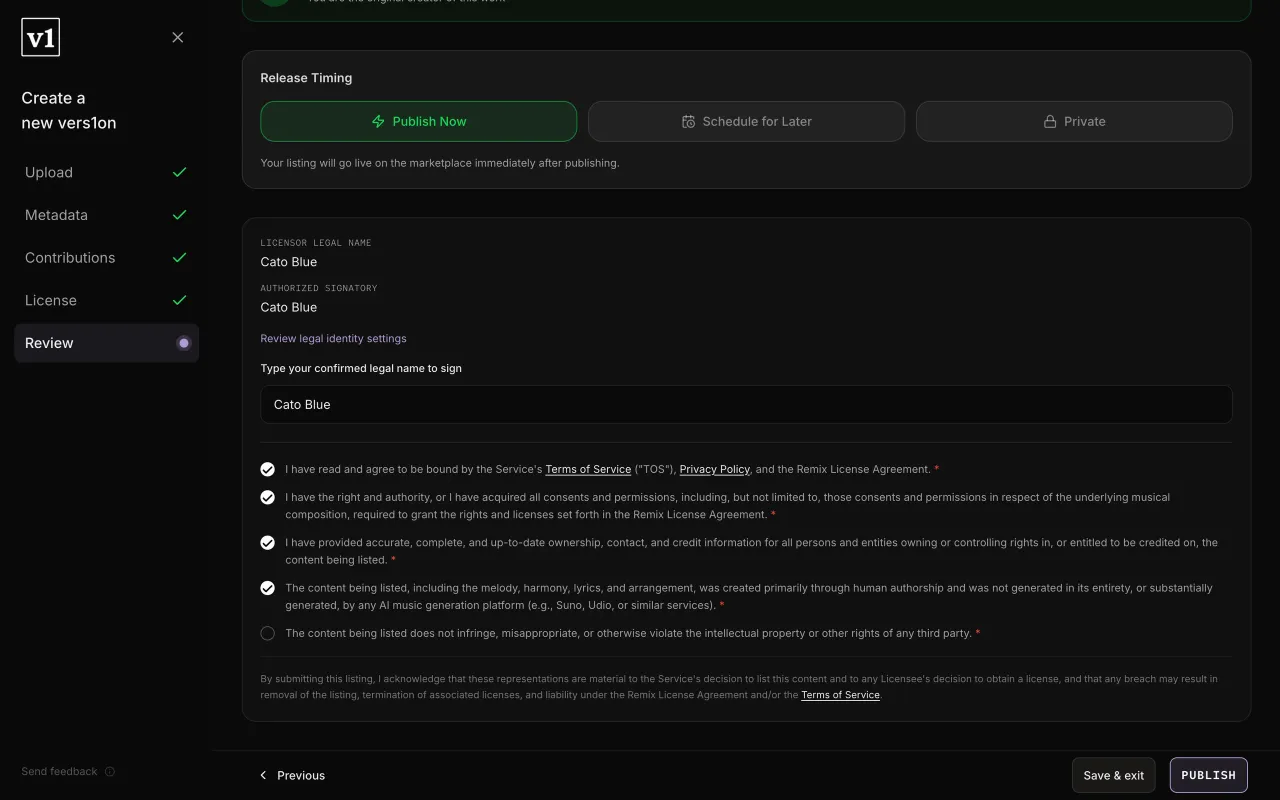
08Sign and publishThe licensor signs with their legal name and accepts each term. Publish stays disabled until every box is checked. 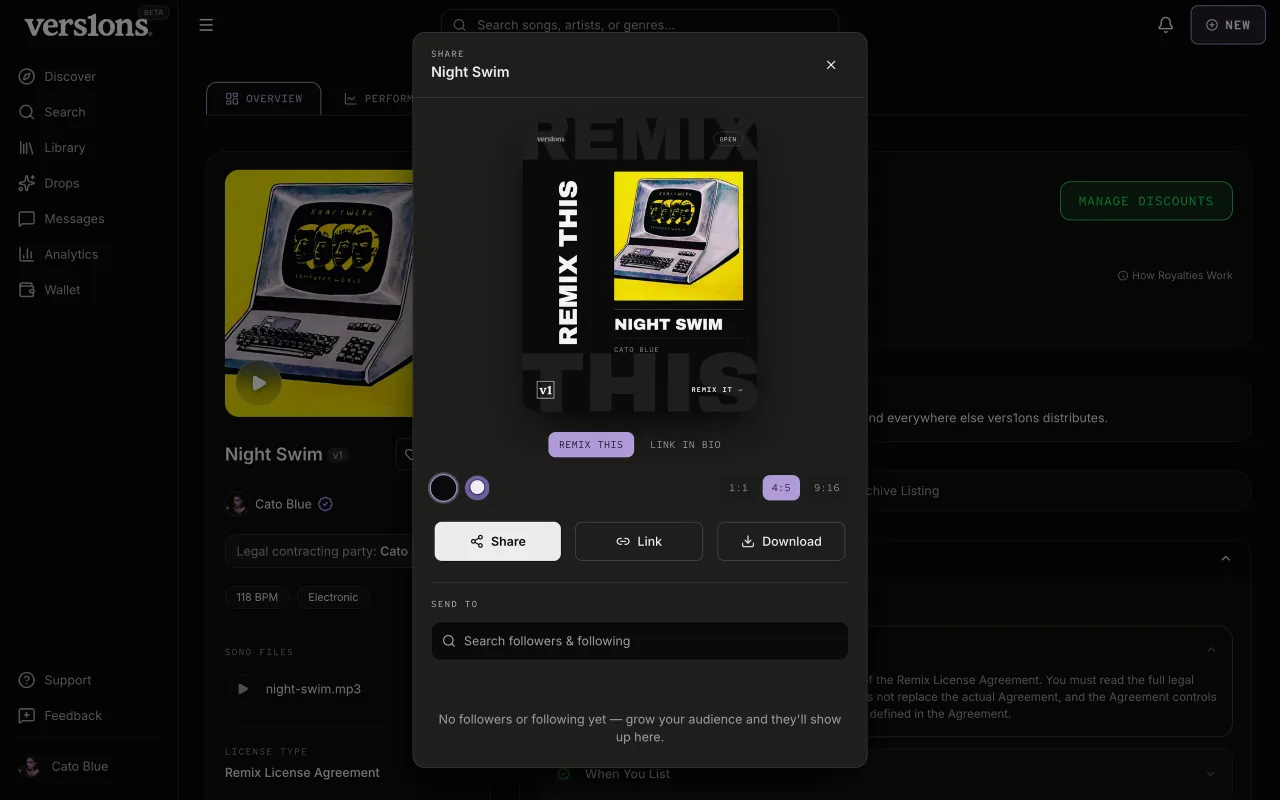
09Share itA share card for the new listing, ready to post. 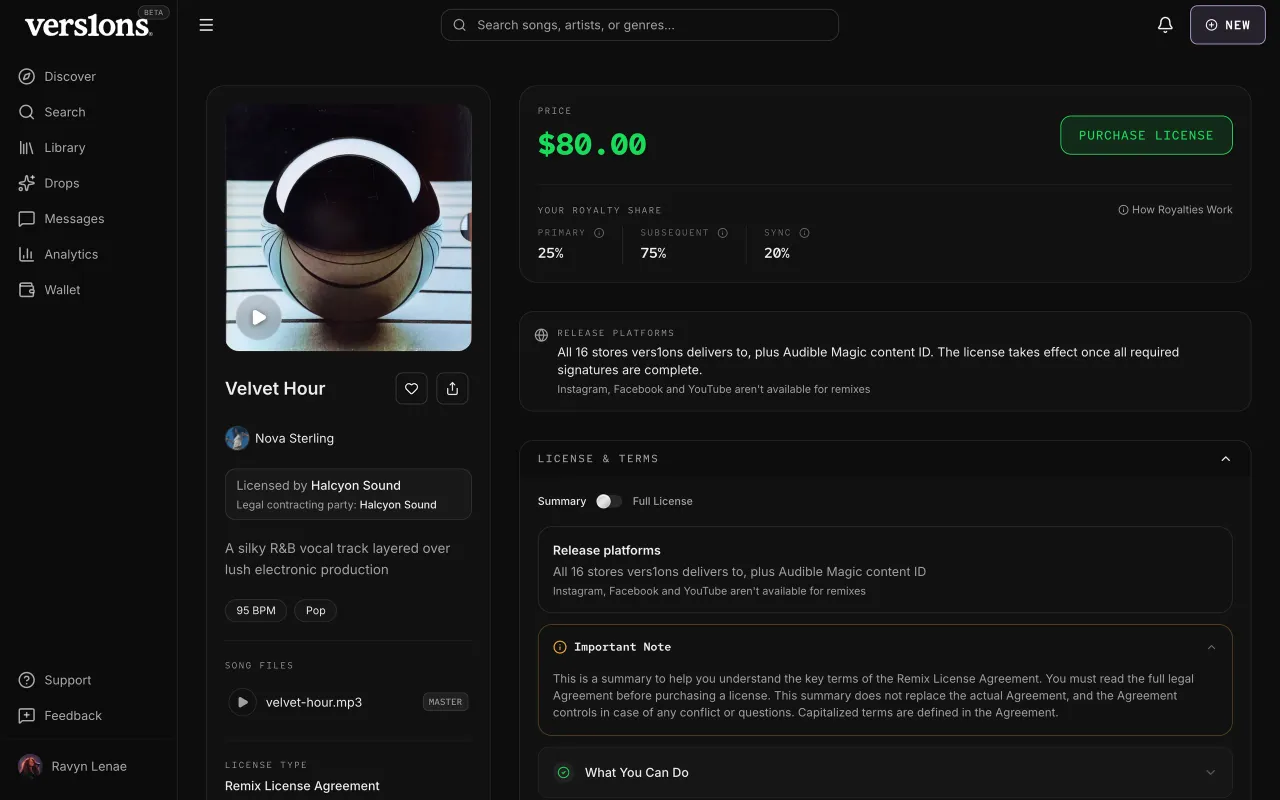
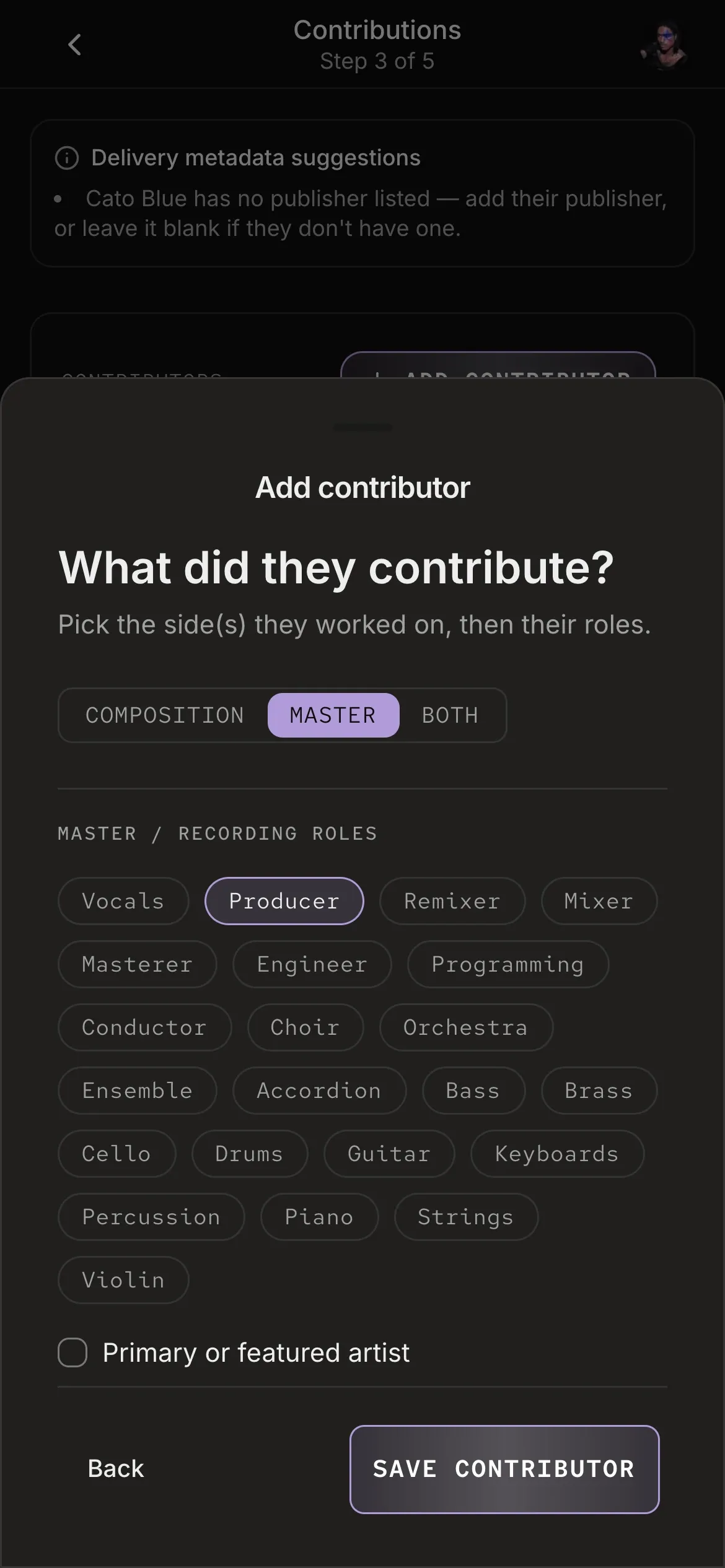
10The listingWhat a buyer sees: the song on one side, the license on the other, with the price and Purchase License at the top.
Mobile design
The same flow on a phone. Click any screen to see it full size.The same flow on a phone. Each screen links to it at full size.
 (opens full size)
01Both sides balance to 100%, one ring each. 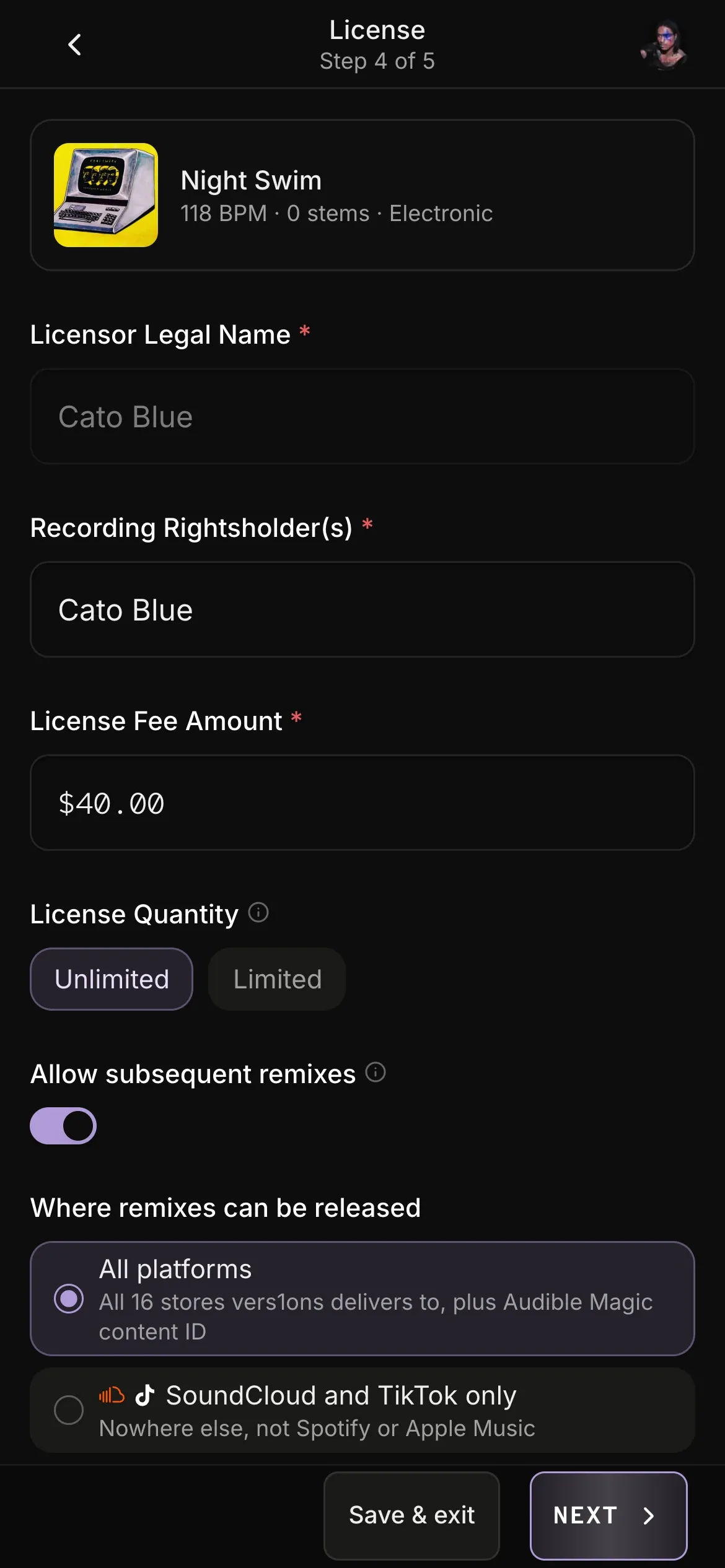 (opens full size)
02Price, quantity and where remixes may release, in one column. 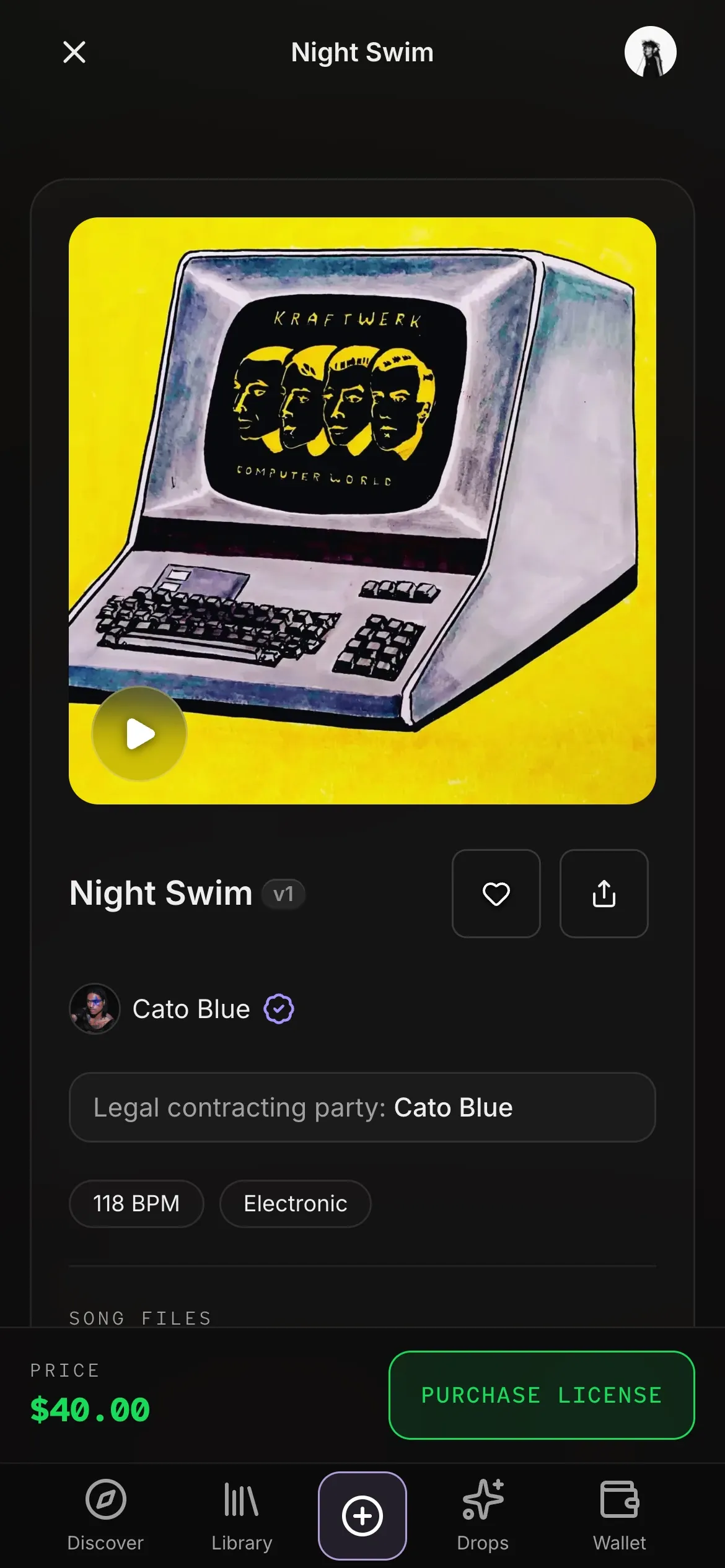 (opens full size)
03The song first, with the price and Purchase always in reach.
What changed, and why
The same part of the product in an early build and today.
The listing page
The listing was one stacked column, with the price halfway down. Now the song is on the left and the license you're buying is on the right, with the price and Purchase at the top.
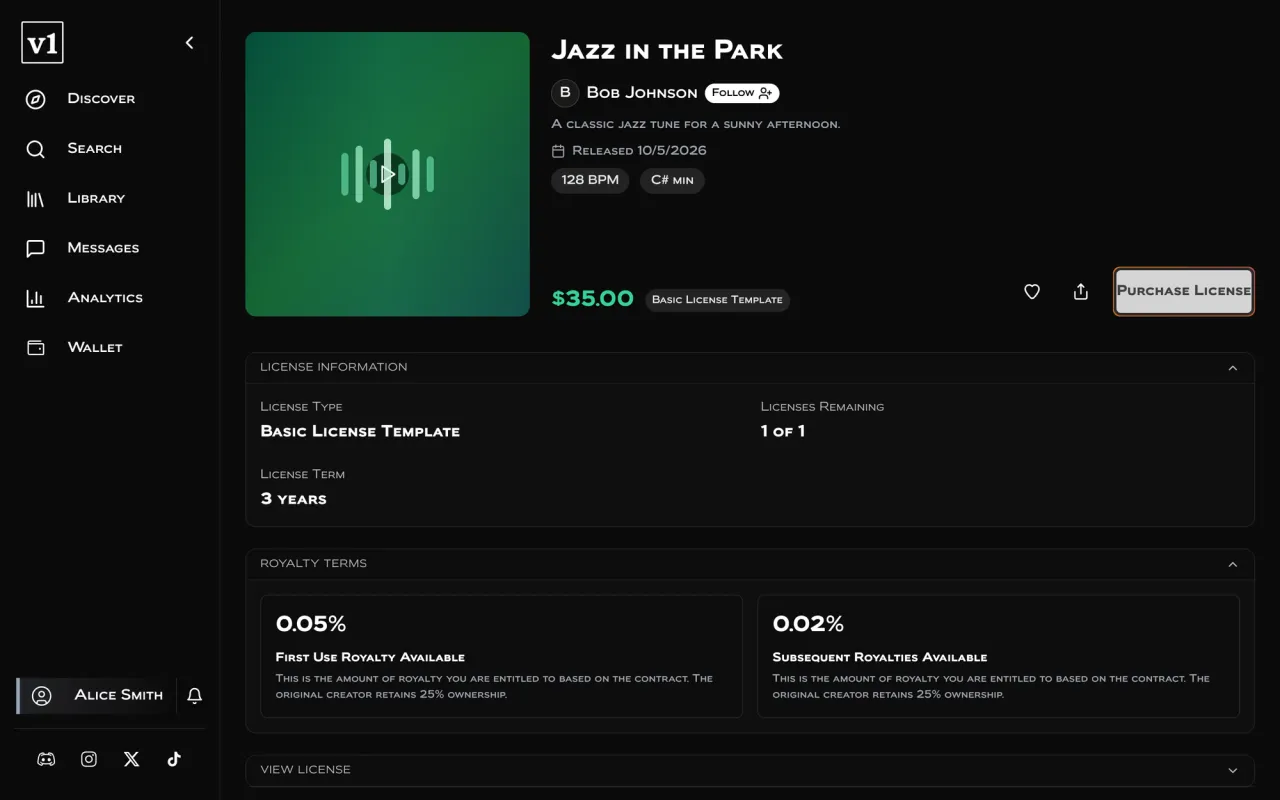
Before · Nov 2025One column, the price halfway down. 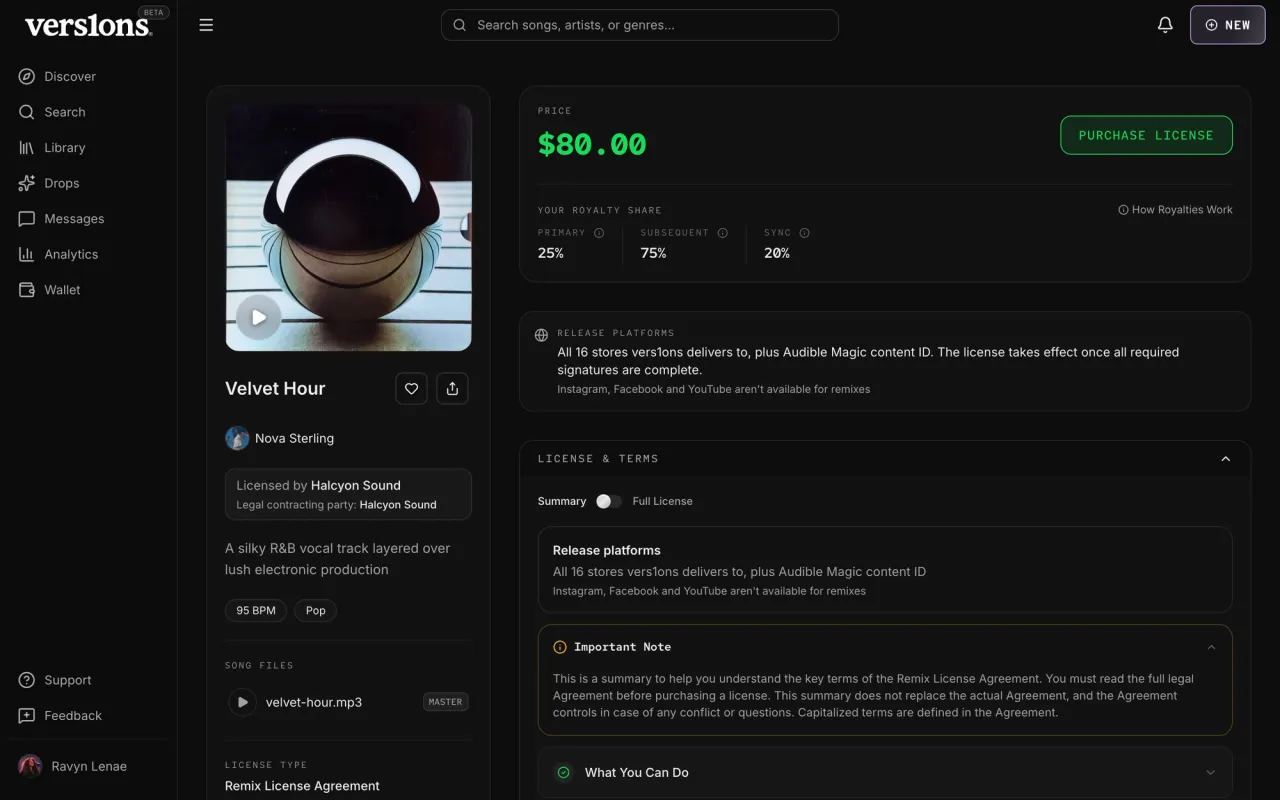
Now · Oct 2026The song on the left, the license on the right. License terms
Artists set terms with the full contract open next to them, in legal language. Now each term is a plain field, with a summary of what it means beside it, and the full PDF one click away.
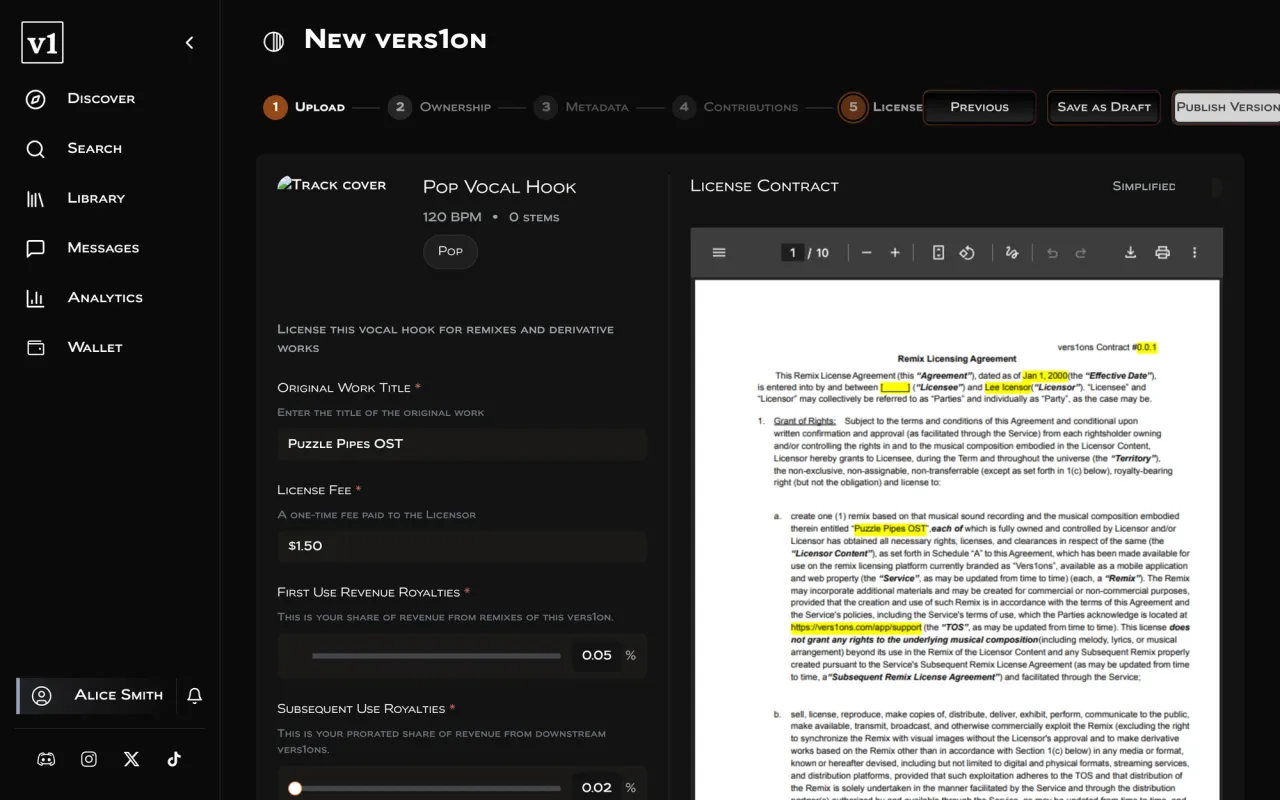
Before · Nov 2025Fields next to the full contract. 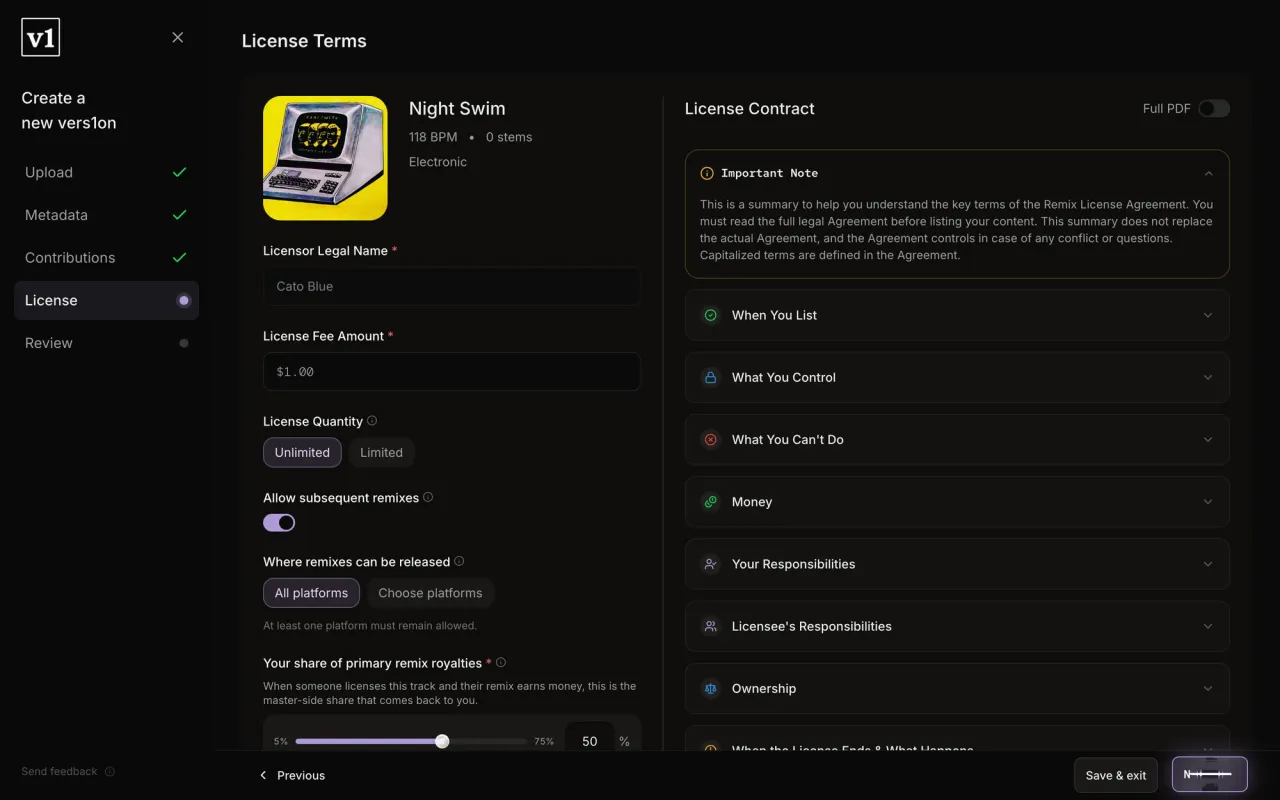
Now · Oct 2026Plain fields, with a summary beside them. Contributors
Contributors were typed into one long form. Now each person gets their side, their roles and their share, in steps, so the splits behind a license come out right.
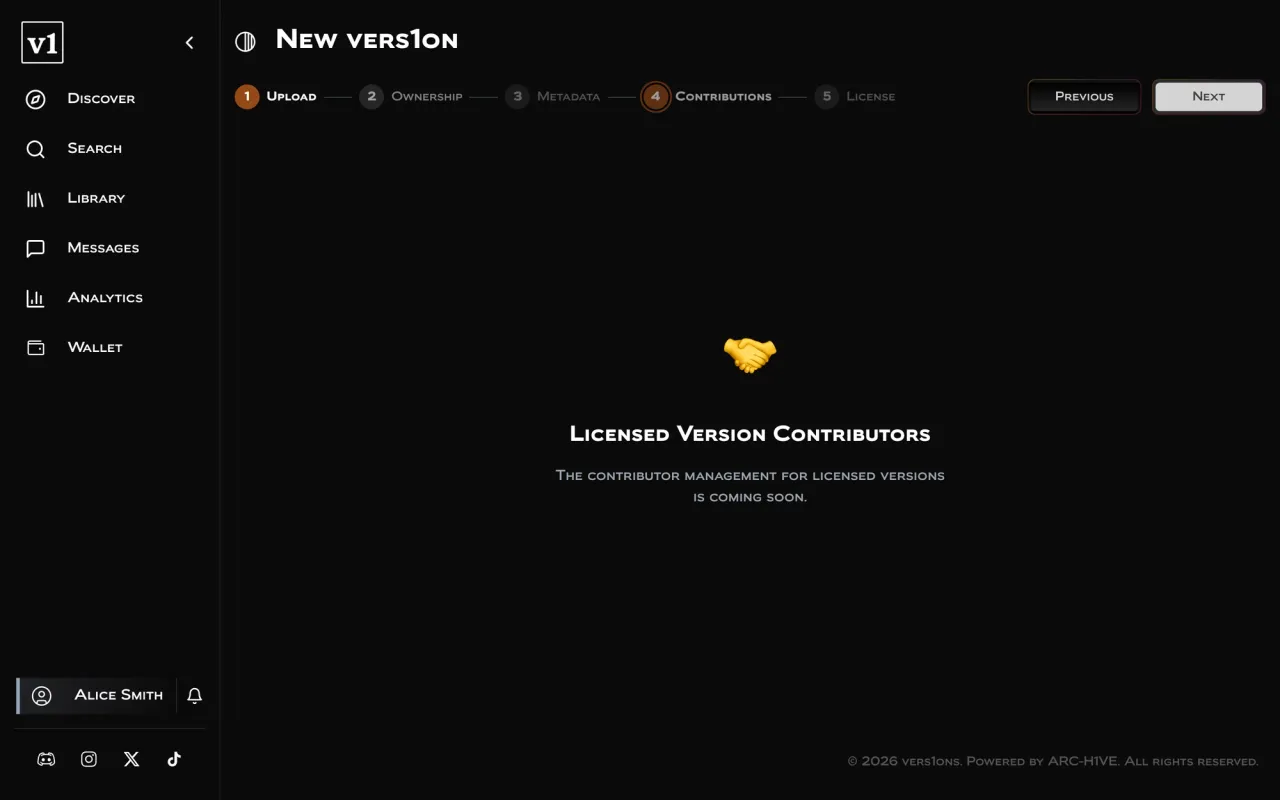
Before · Nov 2025One long form. 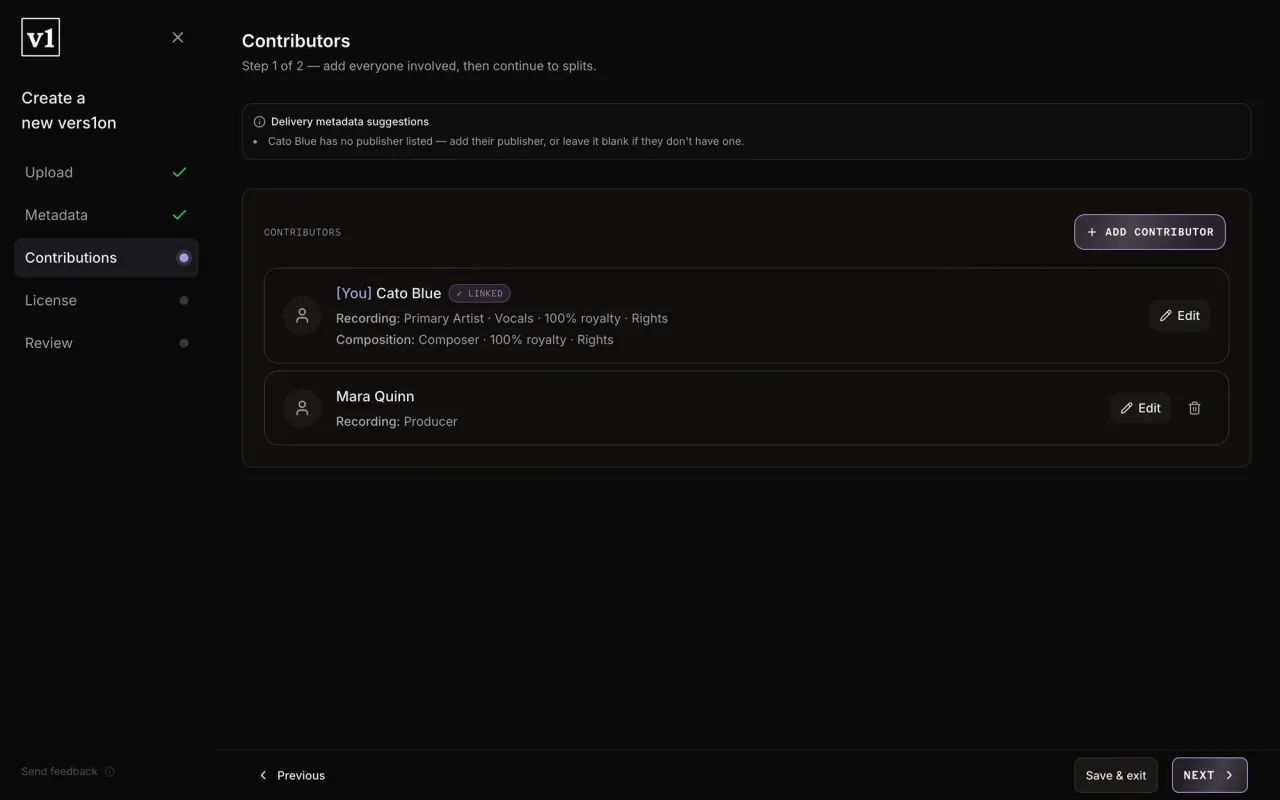
Now · Oct 2026Each person's side, roles and share. The agreement
Buying asked for a checkbox under the terms. Now the buyer reads and signs the agreement before any payment, and each acknowledgement is its own line.
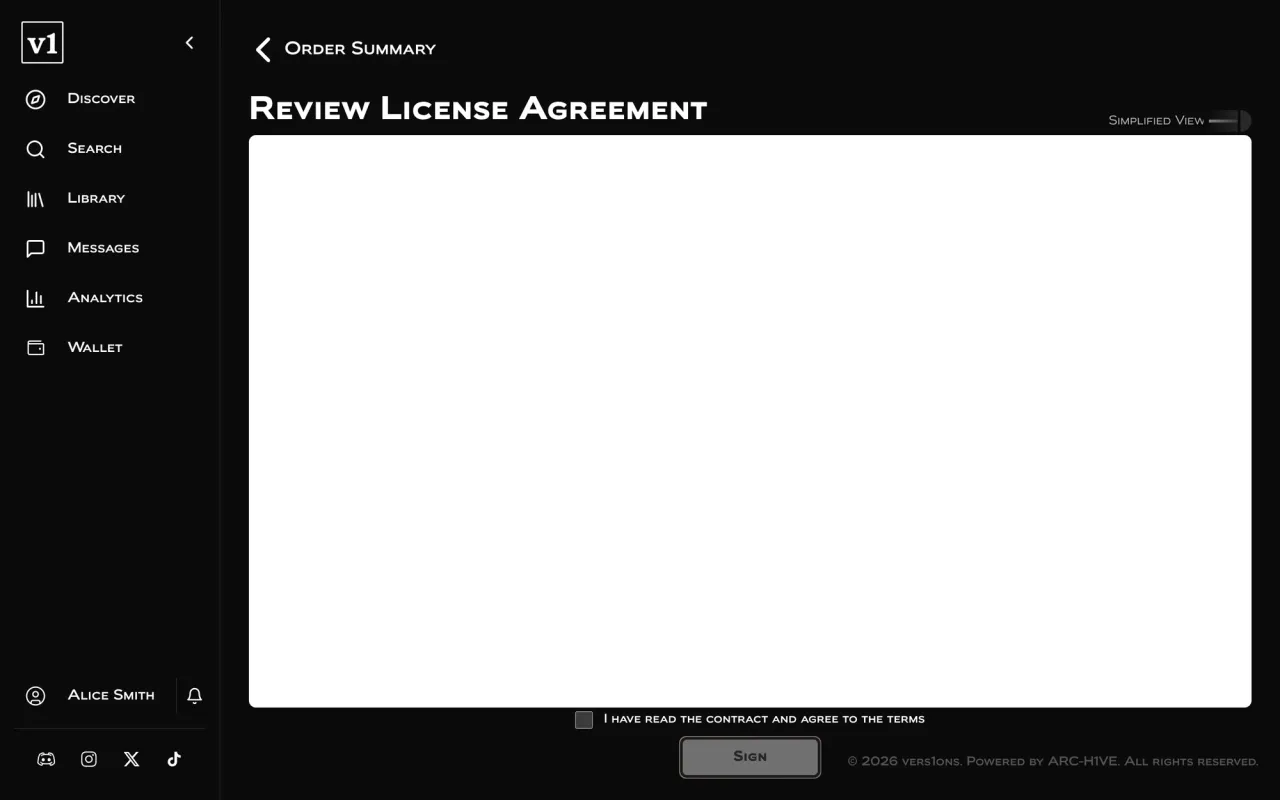
Before · Nov 2025A checkbox under the terms. 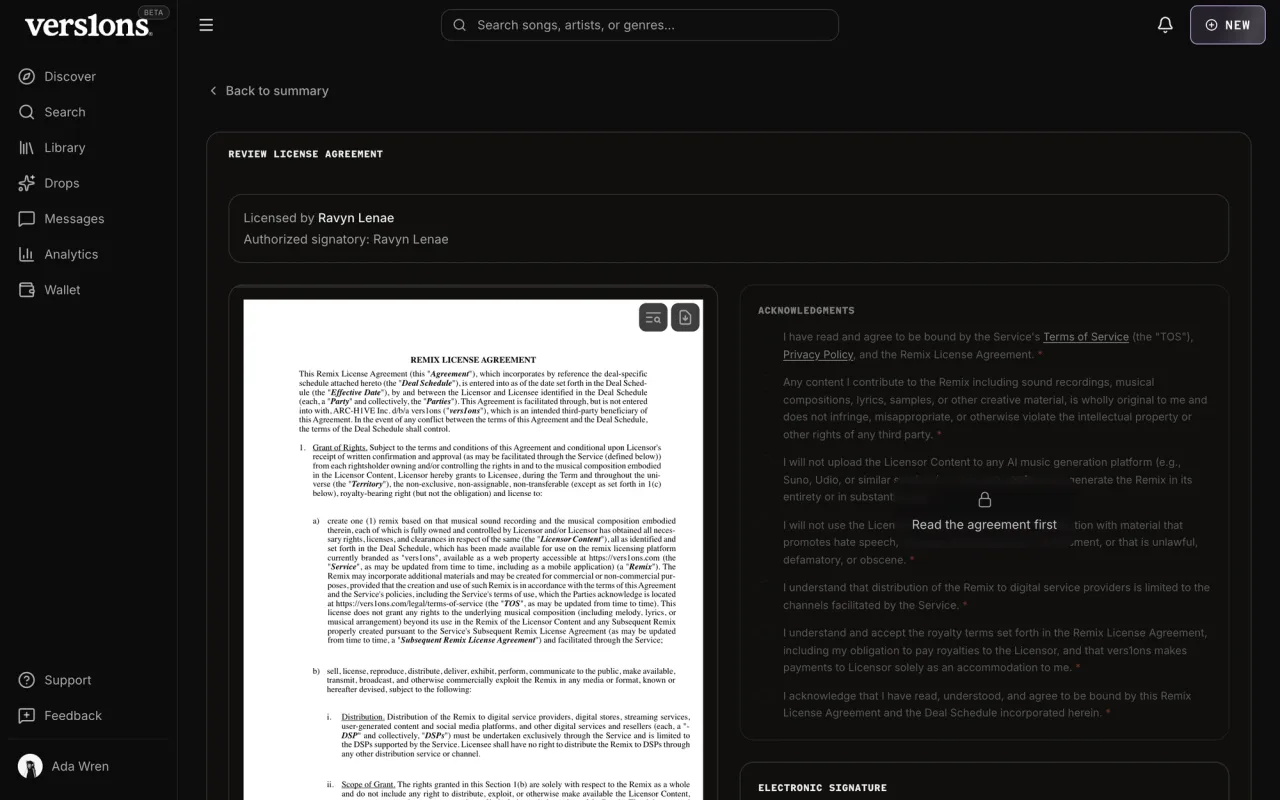
Now · Oct 2026Read and signed before paying.
Outcome
Live in production, with labels and artists selling licenses under these terms.
Major labels, indie labels and established artists list songs on vers1ons. A remix of a remix still credits and pays the original artist, and only goes to the stores its license allows.
Reliability
Every signature binds to the exact text that was signed.
Sending a split sheet for signatures freezes a version of it, with a hash of the agreement and the document, and the server checks against that version when each person signs. Signing links are stored only as hashes. License terms are frozen at purchase, and a revoked grant stops a queued release from going live. Store scope was verified end to end across a three-deep remix chain.