The problem
The rights followed the chain. The money didn't.
A license knew everyone who owned a share of a song, but when it sold, the money went to one artist as a lump sum to split by hand. New artists were asked for bank details before they’d made anything, and many left right there. And a giveaway couldn’t be a coupon, because transferring rights takes a real transaction.
What I did
I made the product and UX calls, and built platform credit myself.
On a teammate’s payout groundwork, I made the call to pay every contributor directly and designed how artists see it, from the wallet to withdrawing. I moved Stripe Connect out of sign-up to where selling starts. Platform credit was mine end to end. The team wired up the Stripe API, and I worked closely with it.
Money follows the rights
- ready · press run, or hover any part of the system
The wallet
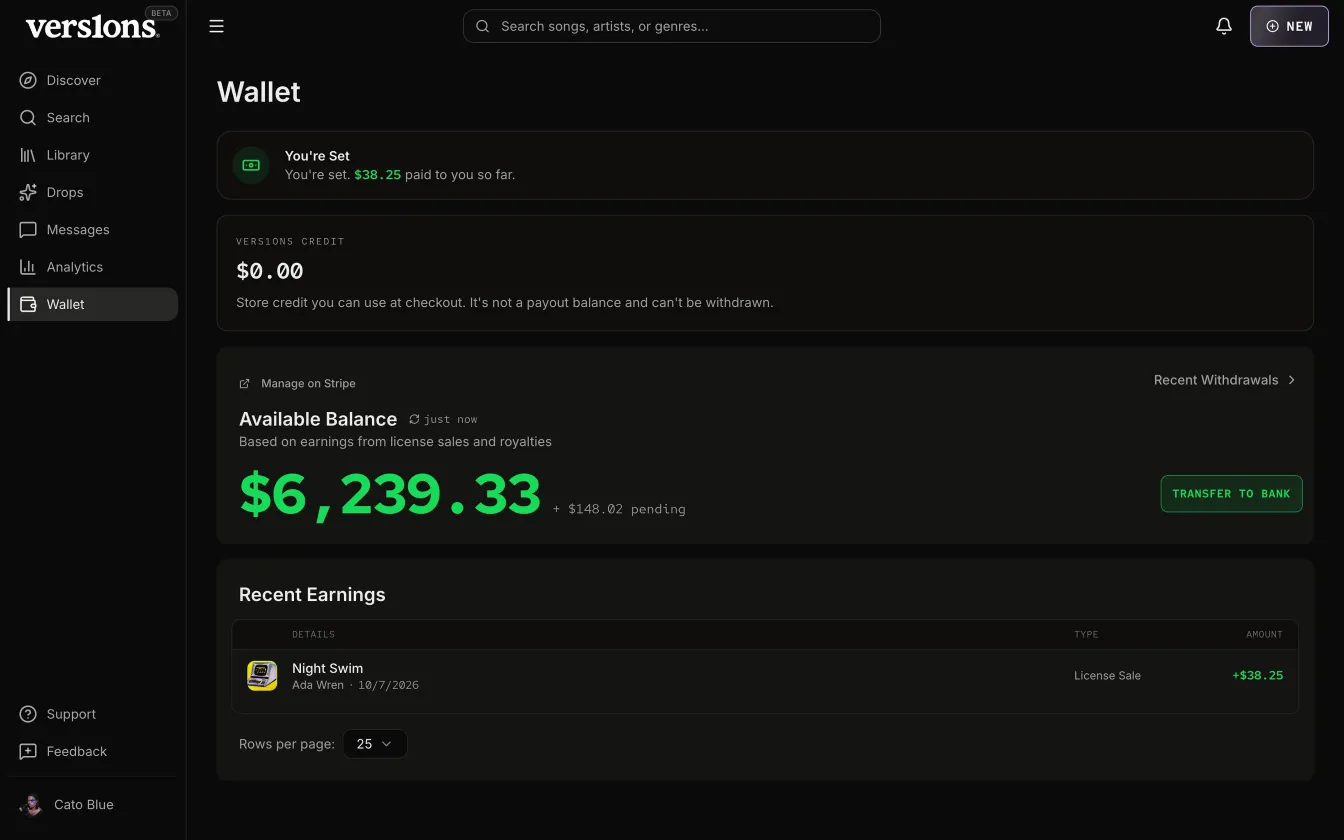
What you've earned, and from which sale.
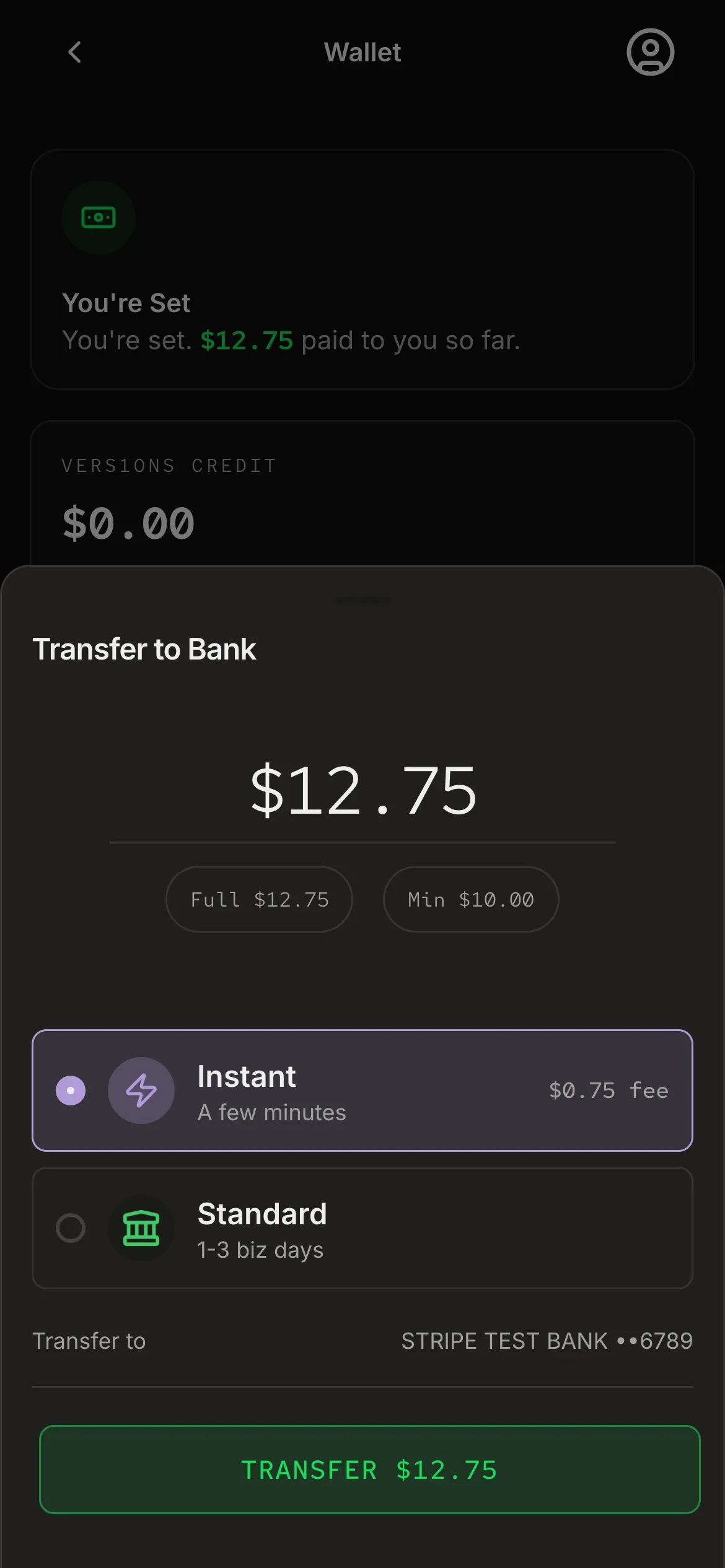
Artists see their balance and where it came from, and withdraw it, instant or standard, with the fee and what will arrive shown before they confirm. Credit is kept separate. You can spend it at checkout, but you can’t withdraw it.
Bank details, later
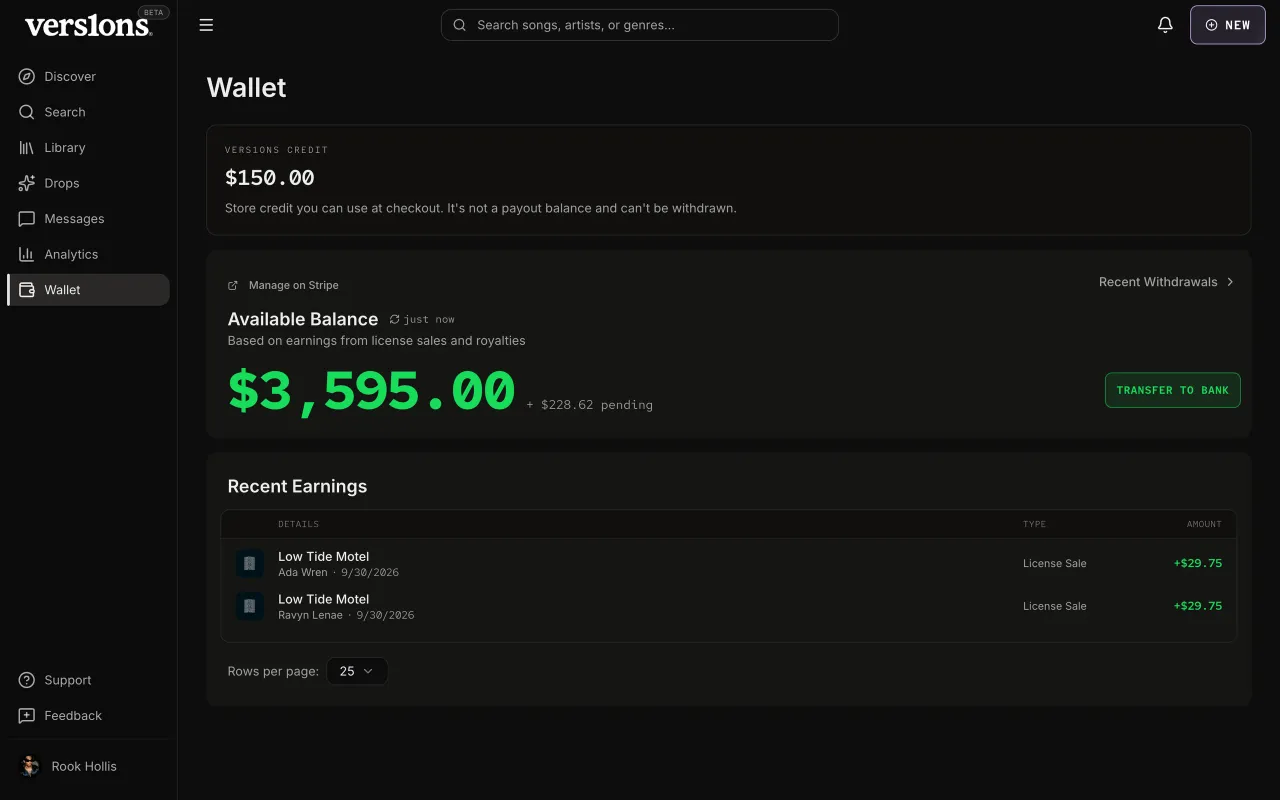
No bank form to sign up.
“Get paid” used to be a sign-up step, and many new artists left right there. Now payout setup waits until you first publish a listing or distribute, or you can do it from your wallet.
Under the hood · Shares
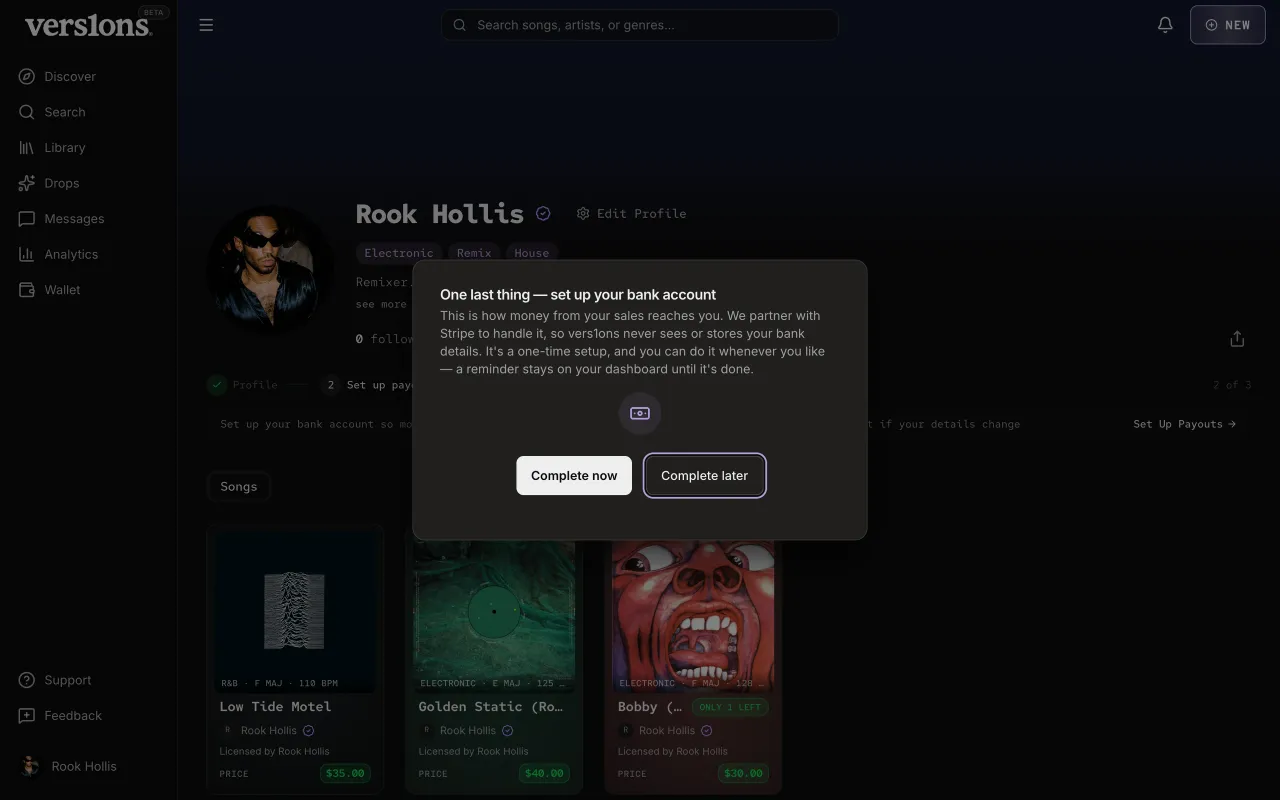
Each sale is split the way the license says.
vers1ons pays every contributor their share directly by default, and uploaders can opt out per contributor. A contributor without an account has their share held until they claim it, and once their payout account is ready, an hourly sweep pays anything still held.
Under the hood · Claiming
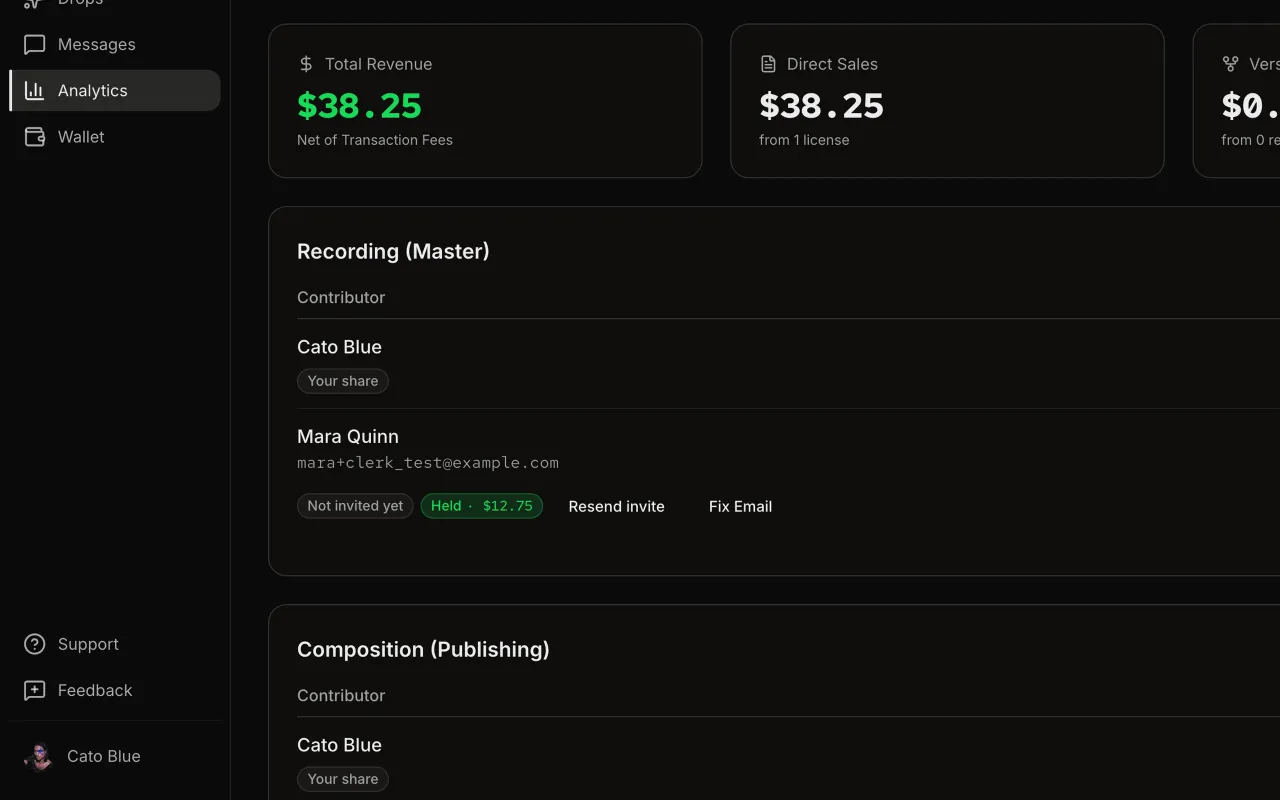
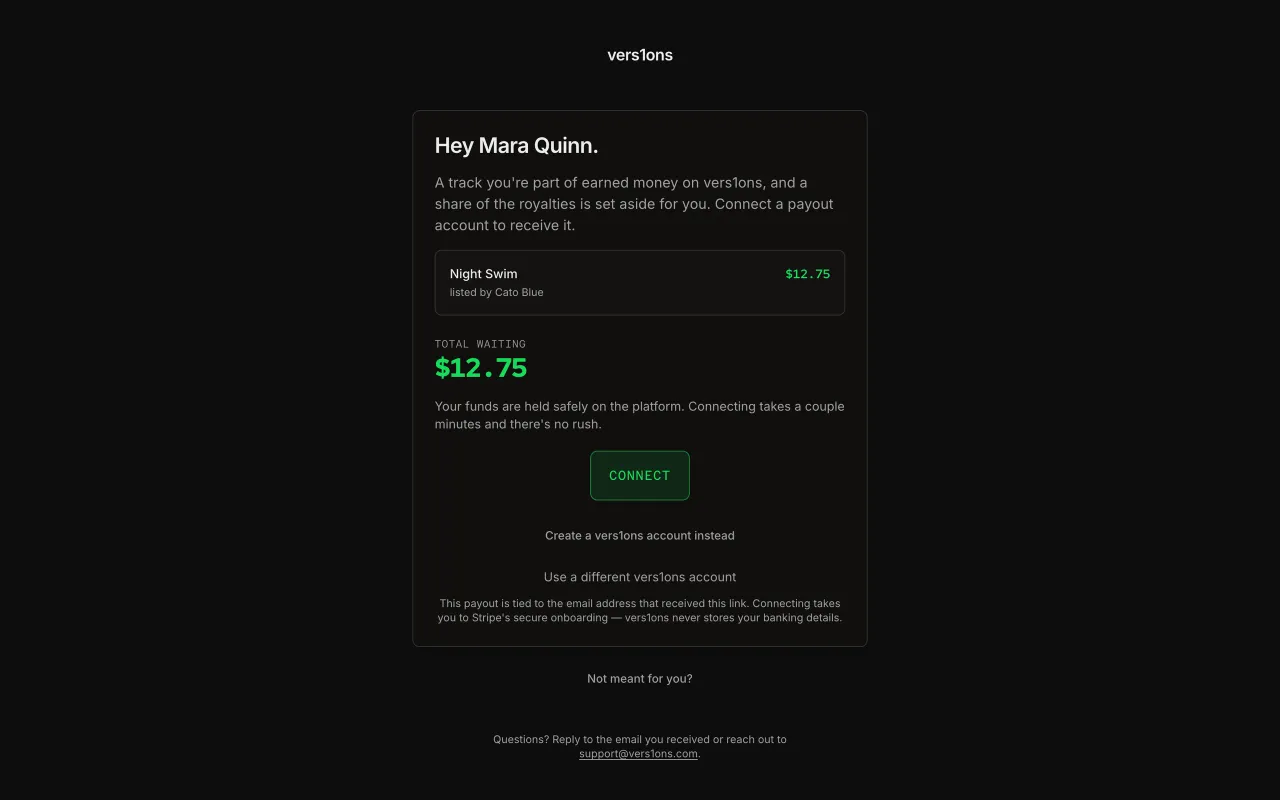
Owed money, before you have an account.
My part, 26 commits on the payout code, is the contributor who’s owed money but has no account. They get a daily email whose unsubscribe link an email scanner can’t trigger, and claim into a new or existing account with a code sent to the email they were credited under. A wrong email can be fixed and the held money moves with it. If someone says it wasn’t meant for them, the money is frozen and the uploader is told.
Under the hood · Credit
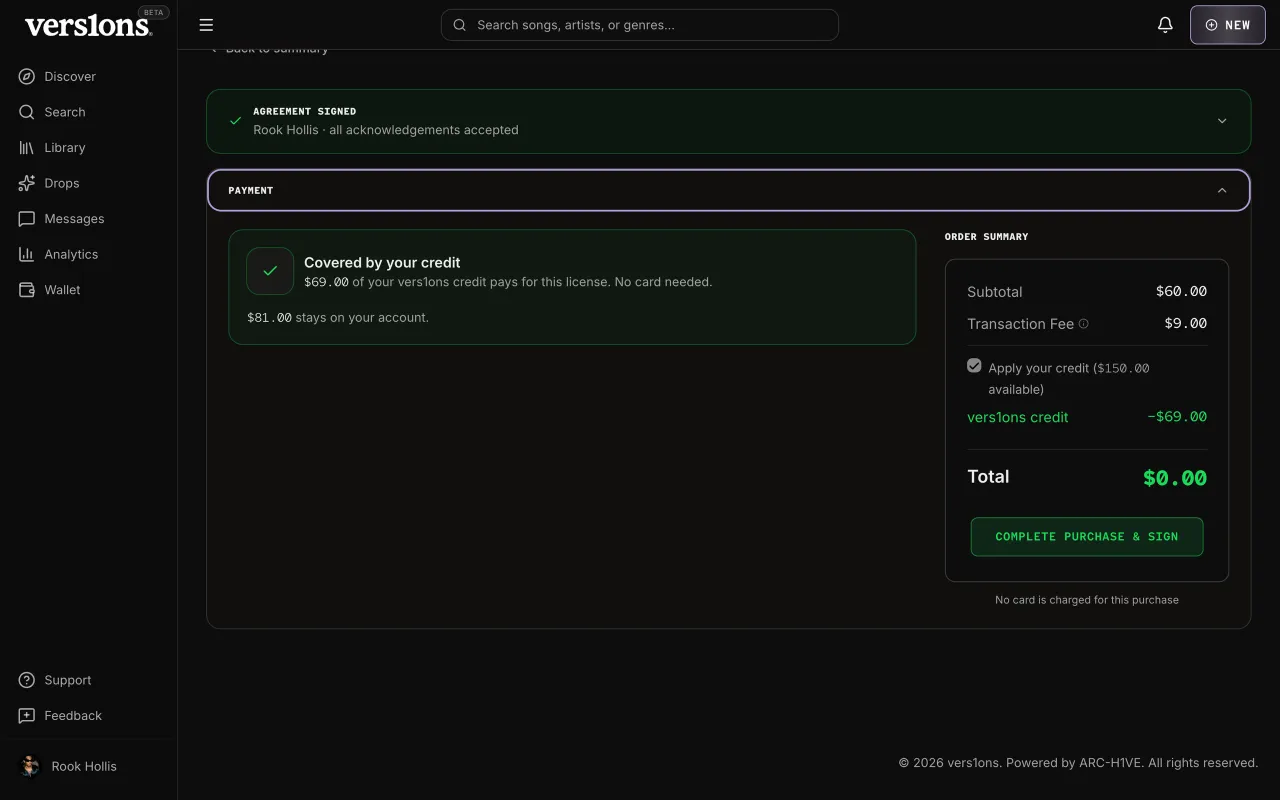
A giveaway is a real sale, paid from a ledger nobody can edit.
Ten free drop licenses had to transfer rights, and a card can’t charge under 50 cents or take a full discount. So credit pays for an actual purchase. The buyer signs, the sale settles and the seller is paid. I built it end to end, all seven commits. Entries are only added, never edited, and the balance is their sum. A sum has no row to lock, so every write that can lower a balance locks the owner first, and a unique index stops one sale spending twice. The whole money system, end to end.
Feature by feature
7 steps, one screen at a time.
01WalletWhat you've earned, and from which sale. Credit is kept separate: you can spend it at checkout, but you can't withdraw it. 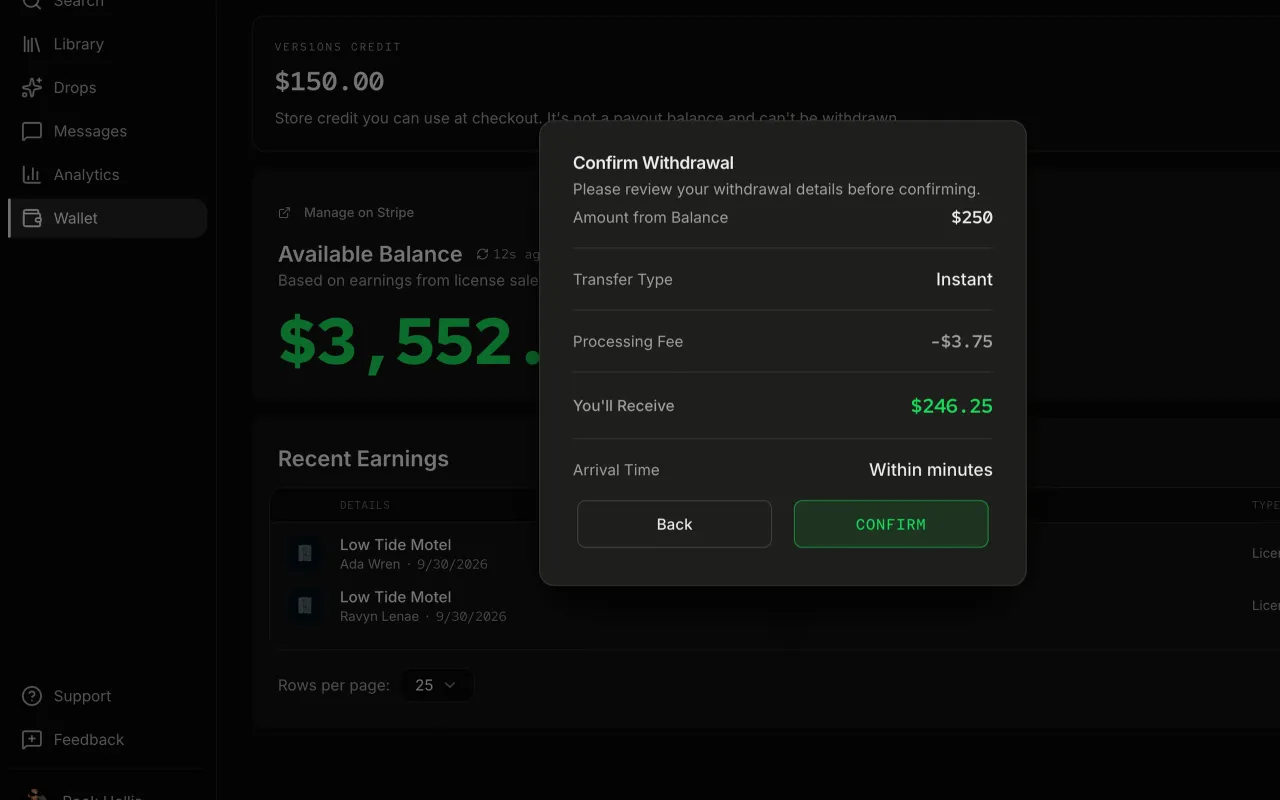
02WithdrawPick an amount, instant or standard, and see the fee and what will arrive before confirming. 03Every contributor's shareEach sale is split the way the license says. A contributor without an account has their share held, and the artist can send the invite again. 04Claim by emailFrom the email, a contributor sees what's waiting and claims it: a new account, or one they already have, confirmed with a code. 05Bank details, laterSign-up has no bank step. Payout setup can wait until you first publish a listing or distribute, or you can do it from your wallet. 06Platform creditCredit is a balance, not a coupon. When it covers a purchase, there's no card form, and it's still a real sale, so the rights transfer. 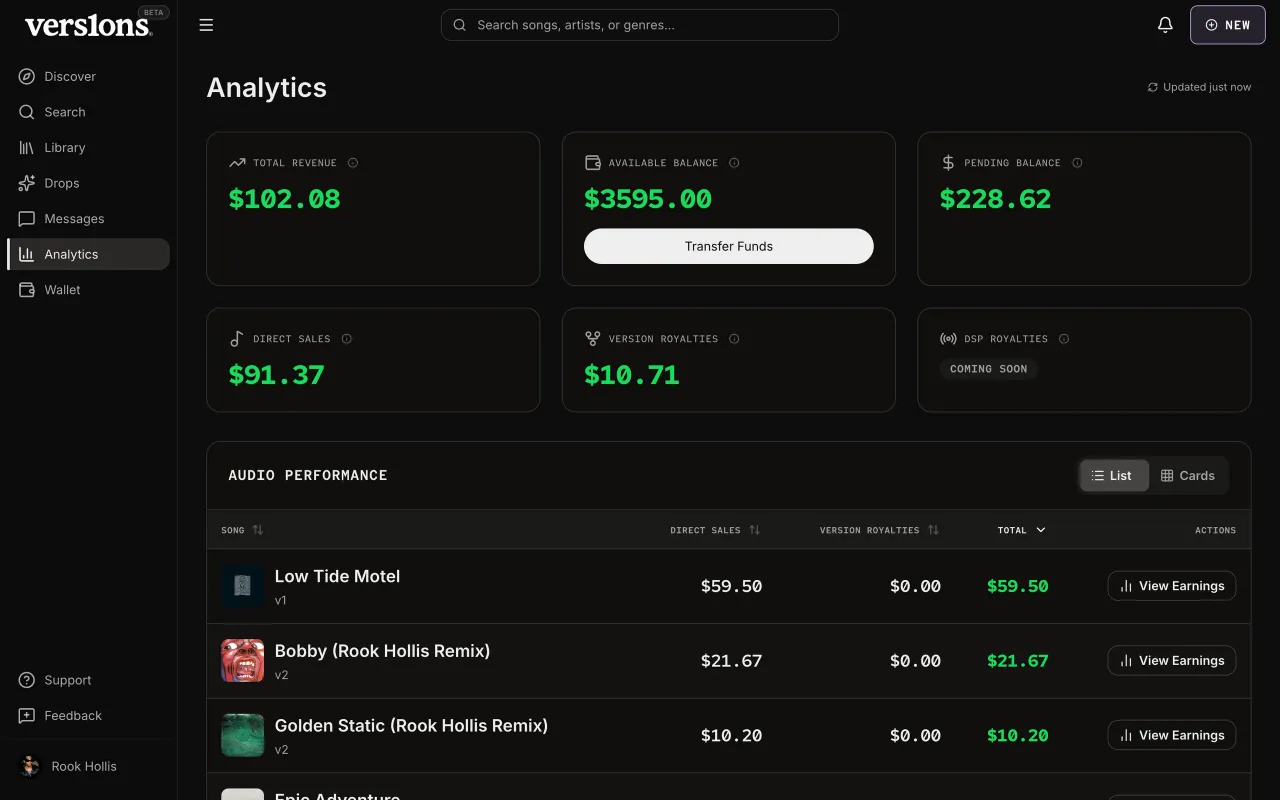
07Earnings by songRevenue, sales and royalties at a glance, and every song's earnings one click away.
Mobile design
The same flow on a phone. Click any screen to see it full size.The same flow on a phone. Each screen links to it at full size.
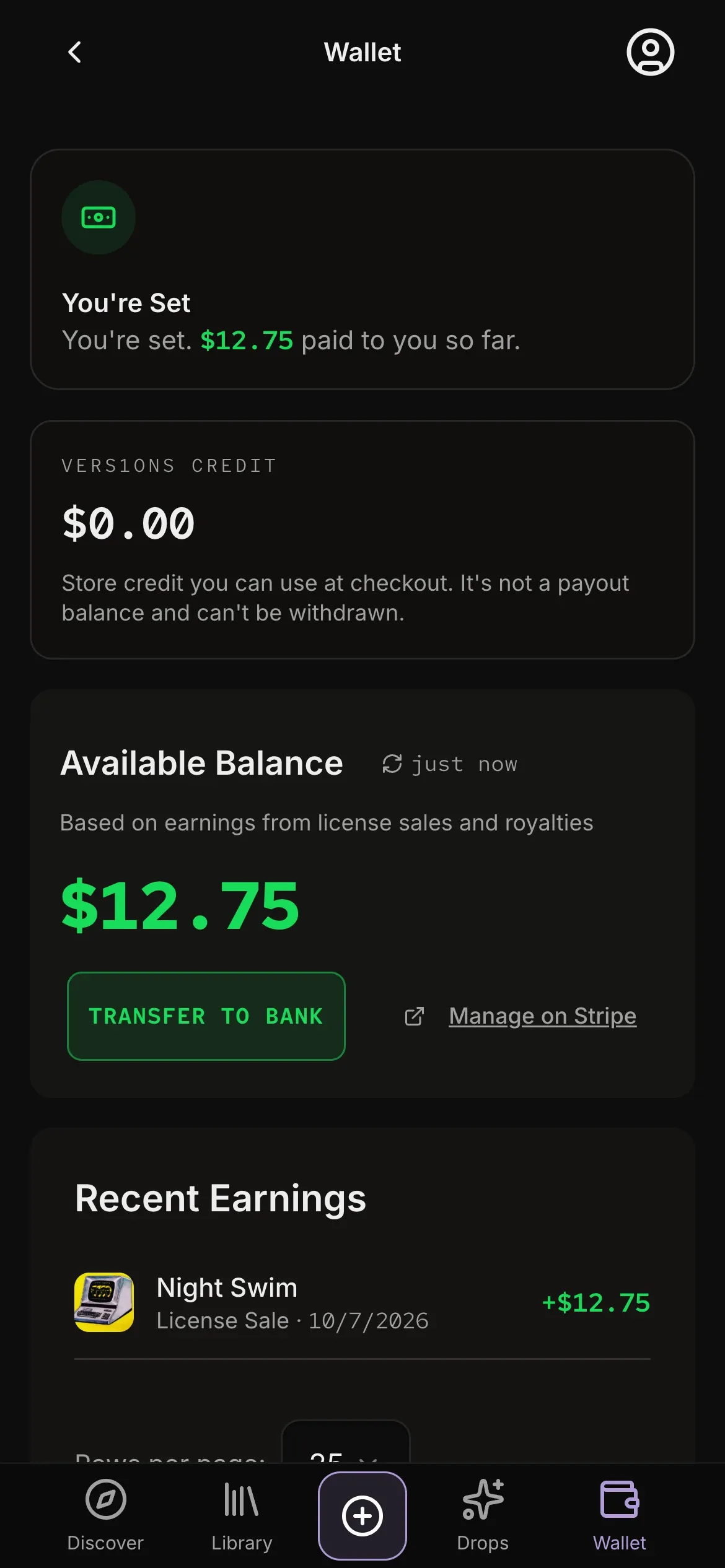 (opens full size)
01A contributor's own share, in her own wallet. 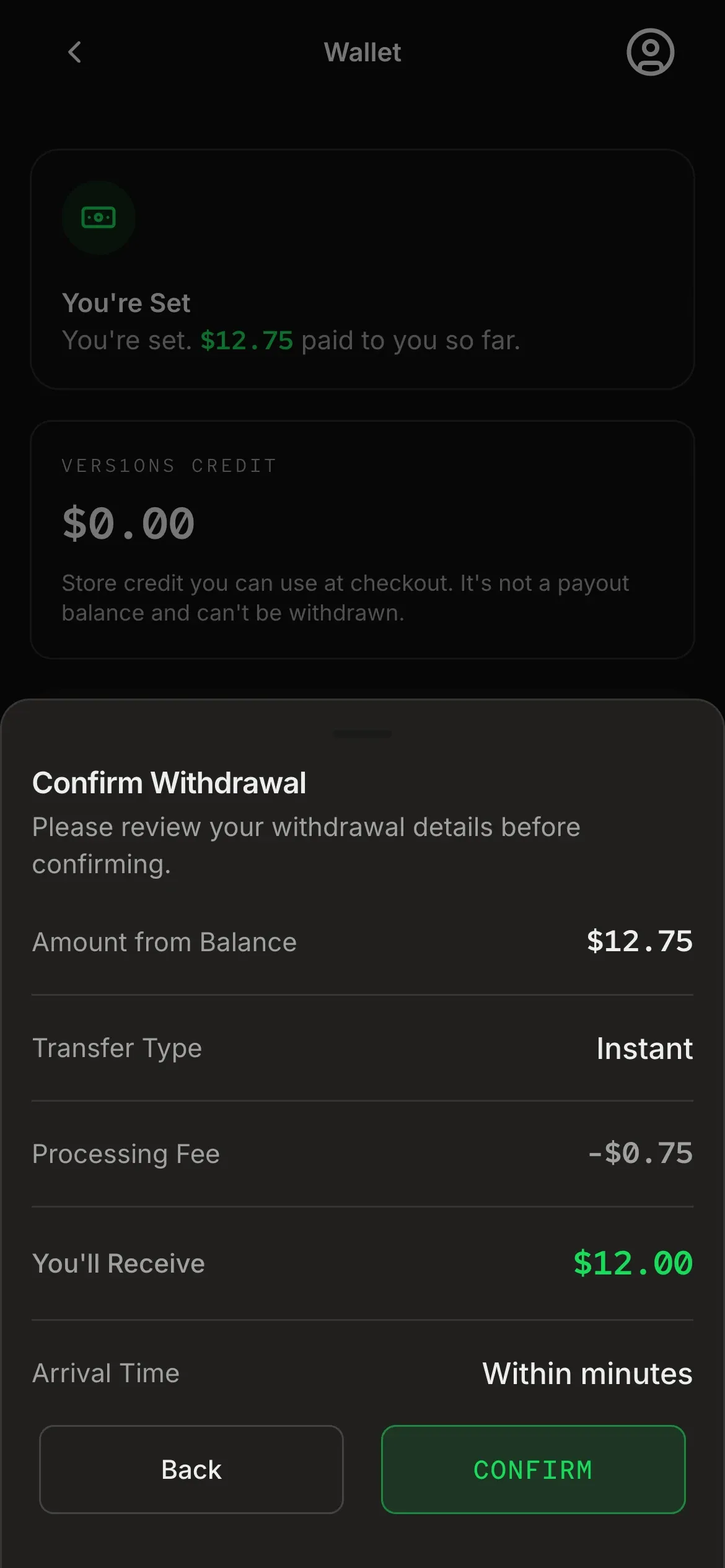 (opens full size)
02The fee and what arrives, before confirming. 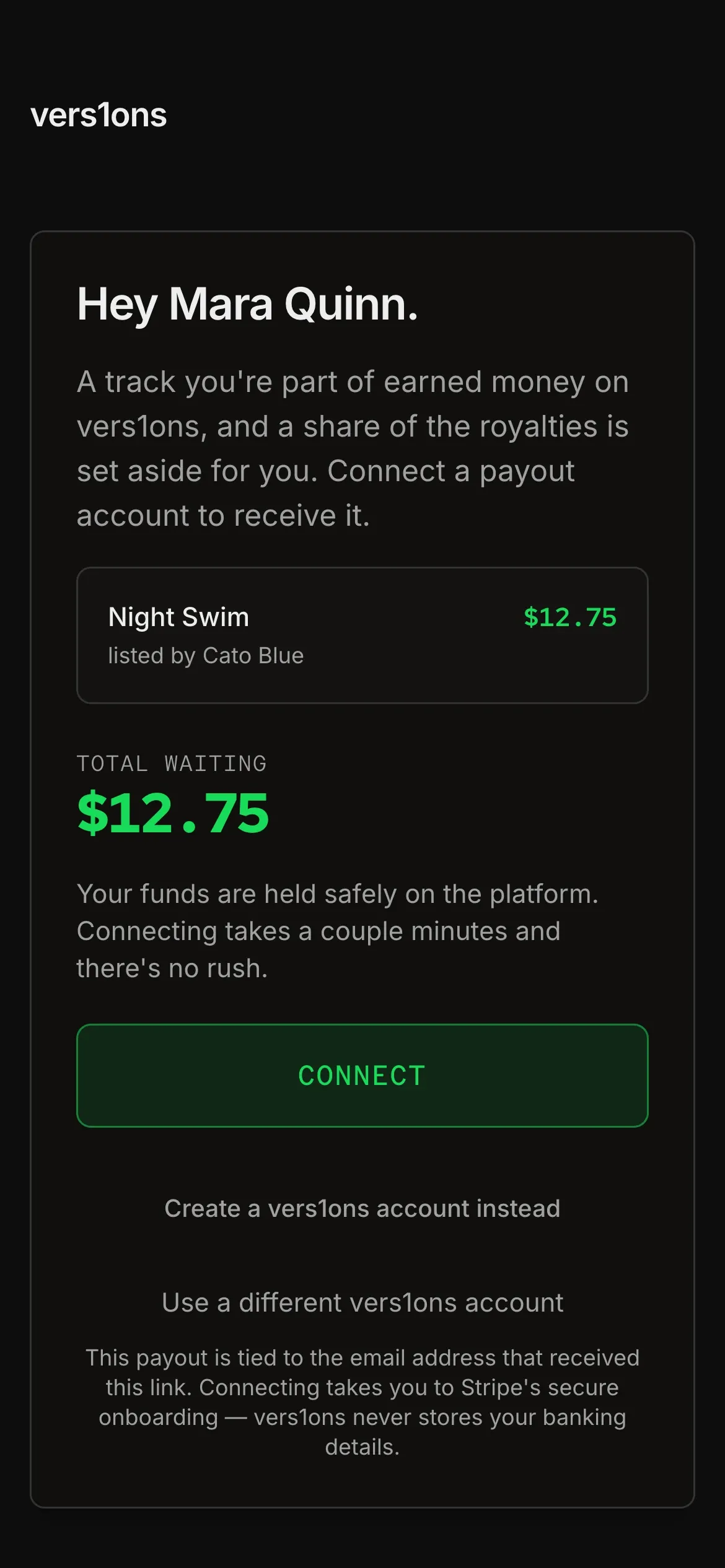 (opens full size)
03Claiming a share from the email.
What changed, and why
The same part of the product in an early build and today.
Signing up
In December 2025, "Get paid" was a sign-up step: connect Stripe before you'd made anything. Today sign-up ends without it, and payout setup waits until you first publish a listing or distribute.
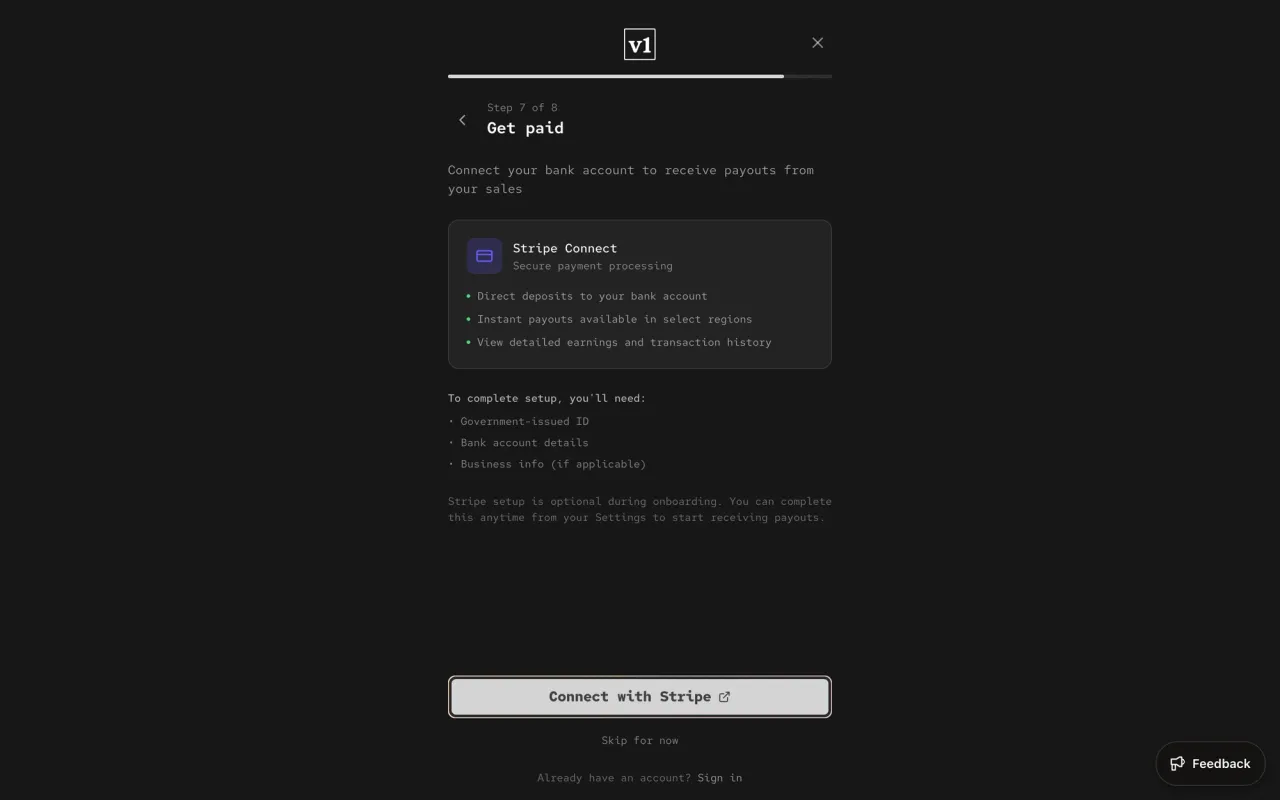
Before · Dec 2025"Get paid" during sign-up. 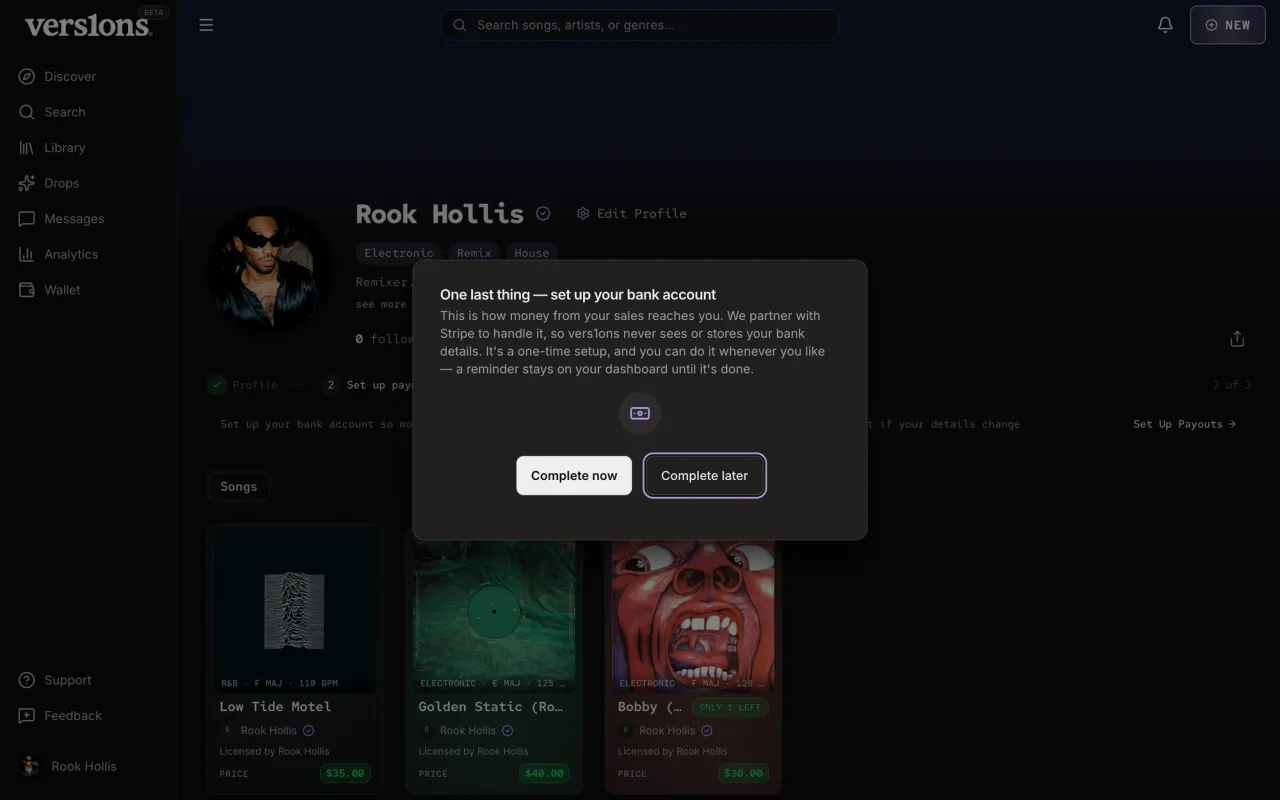
Now · Oct 2026Optional, after sign-up. A first listing
In July 2026, choosing New Listing hit a wall until bank details were in. Now the wizard opens straight away; payouts are asked for when the listing goes on sale.
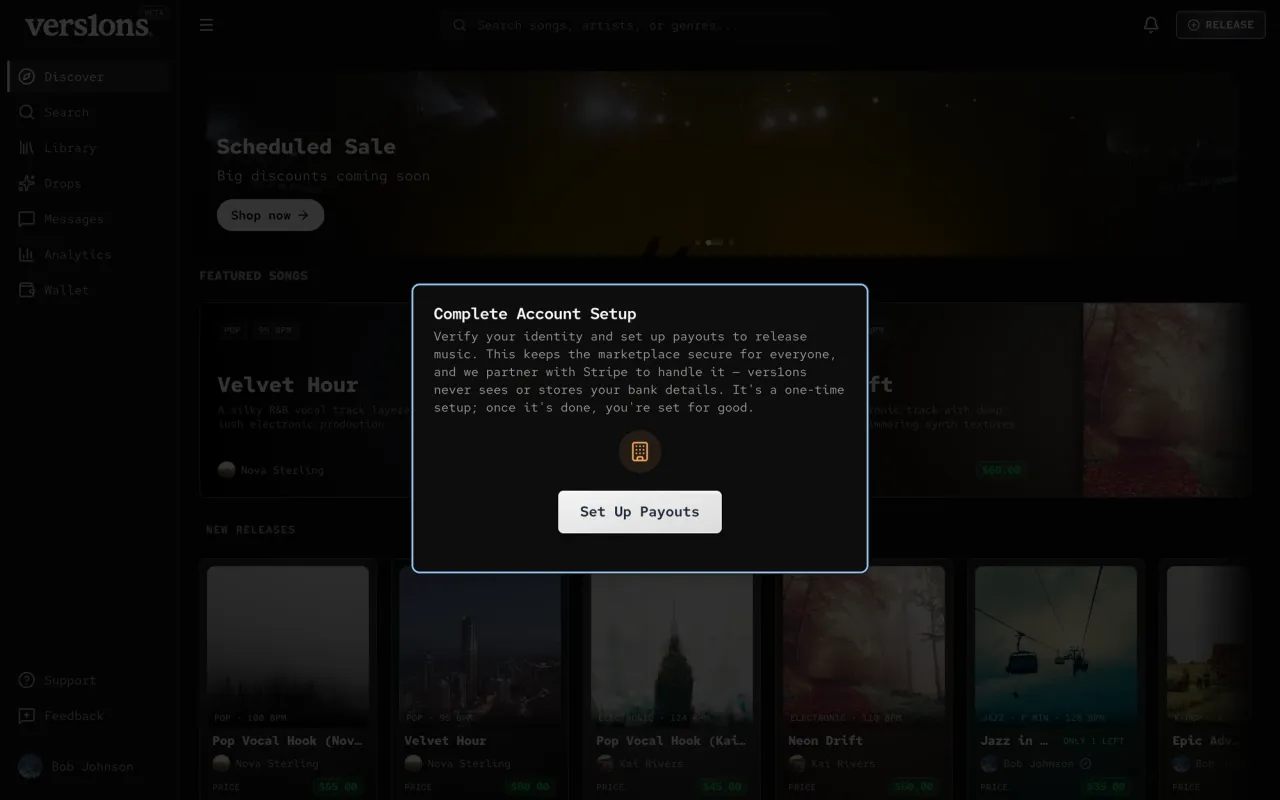
Before · Jul 2026Blocked until payouts were set up. 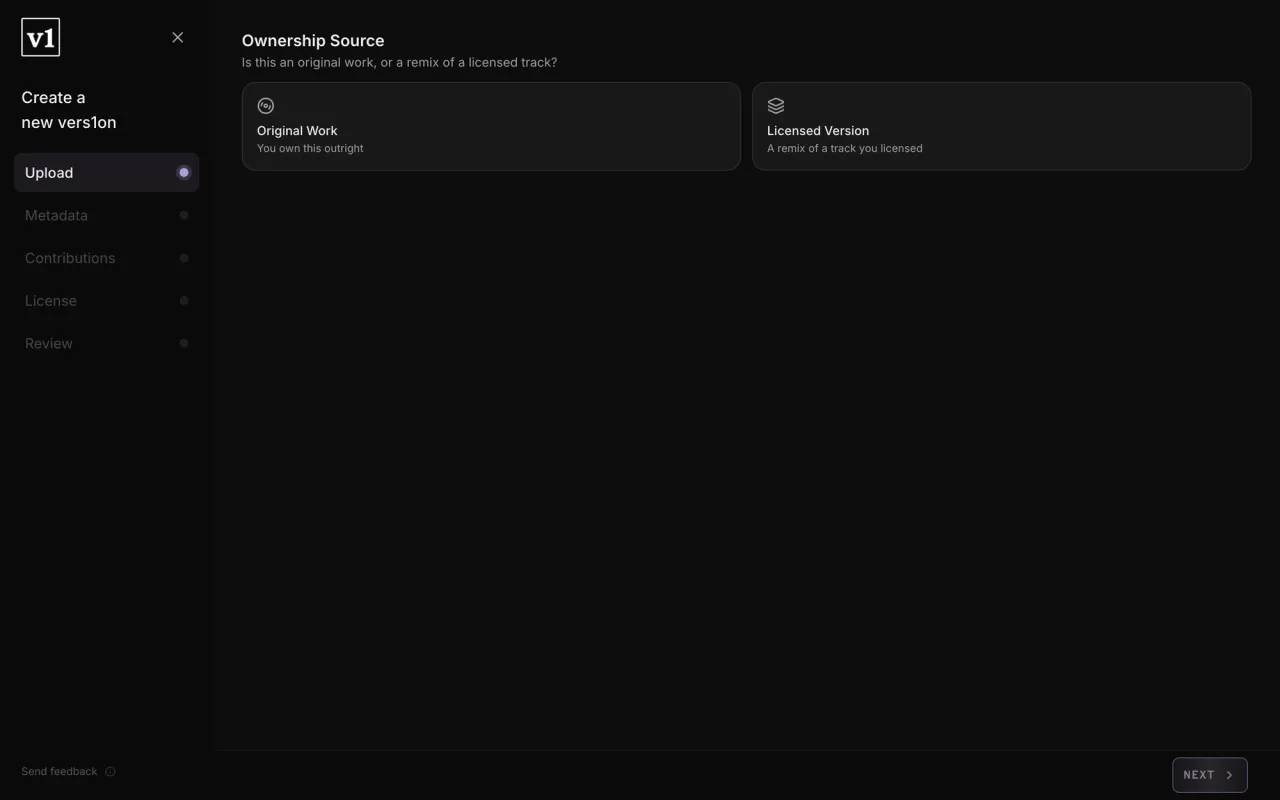
Now · Oct 2026Straight into the wizard. The wallet
The wallet was a balance and a transfer form. Today it separates credit from money you can withdraw, shows pending earnings, and lists every sale and royalty it came from.
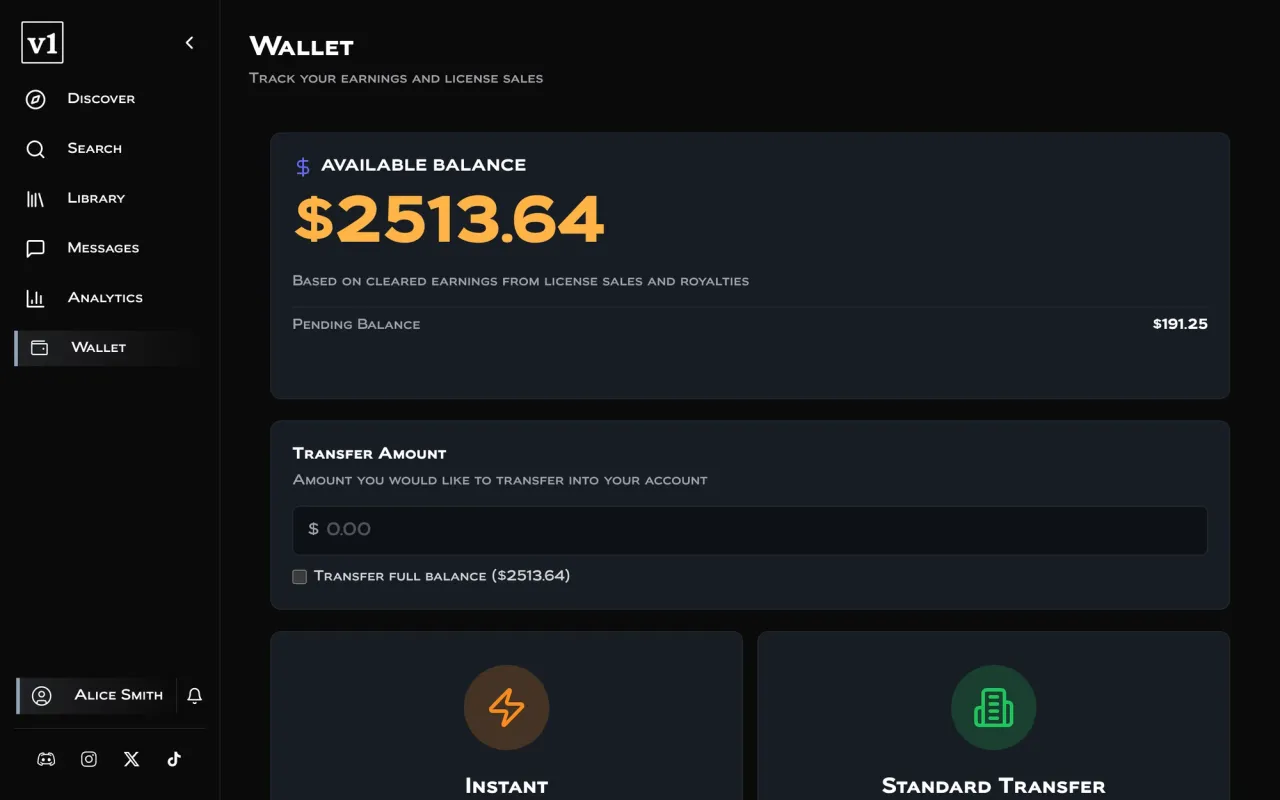
Before · Nov 2025A balance and a transfer form. 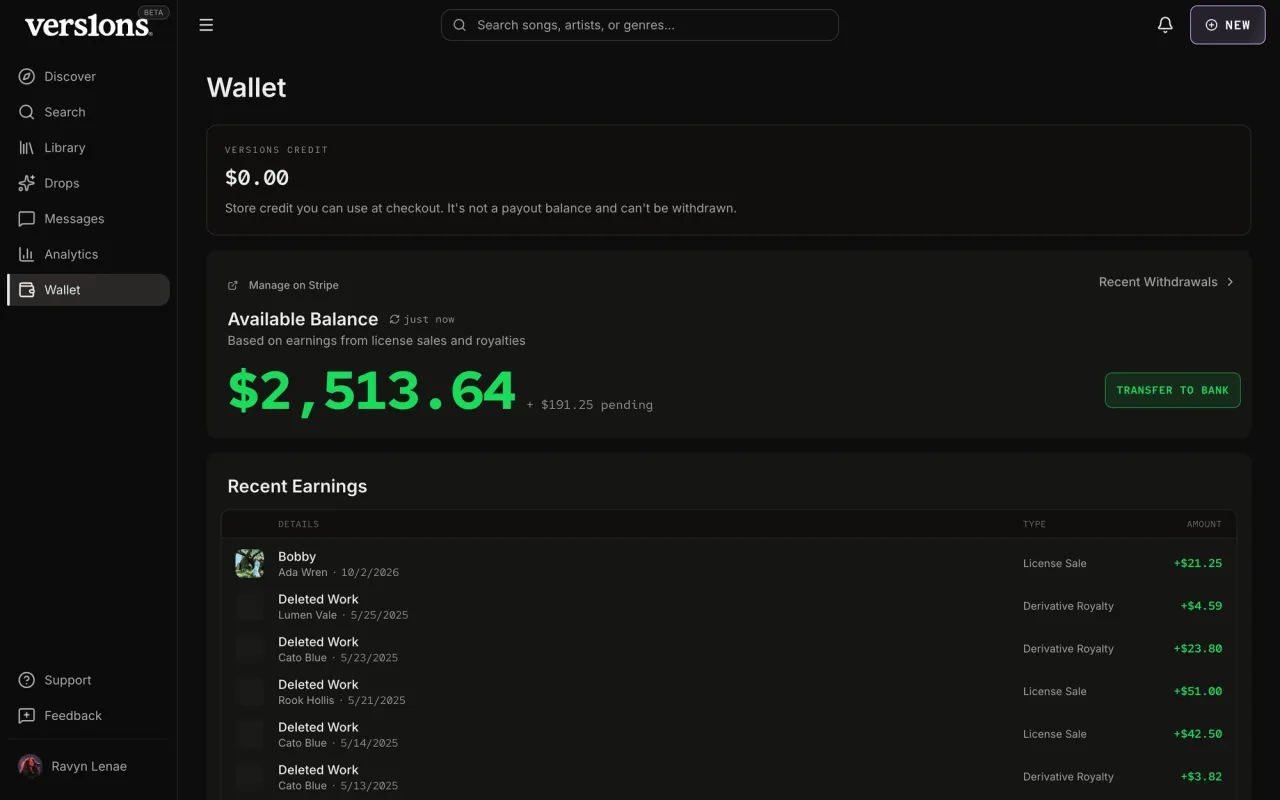
Now · Oct 2026Credit, balance and every earning.
Reliability
Every money check runs on the server, and fails safe.
Payouts go to one Stripe account per person, and if a lookup ever finds two, it refuses instead of guessing. Payout setup is checked on the server everywhere money moves, and the app responds to a stable reason, not to the wording of an error. A sale that dies before settling hands back the exact credit, to the pool it came from, in the same transaction that cancels it. A spend records its pool, not the profile that spent it, so a sibling profile can’t spend the same money again.