The rule I broke
I fell in love with the solution, not the problem.
My rule is to fall in love with the problem, not the solution. With Bespoke I did the opposite. The real problem was artisans connecting with the people who’d buy their work. Both versions chased an idea that looked great, without checking that anyone wanted it.
Then and now
The idea
Start from artisans who already have a style.
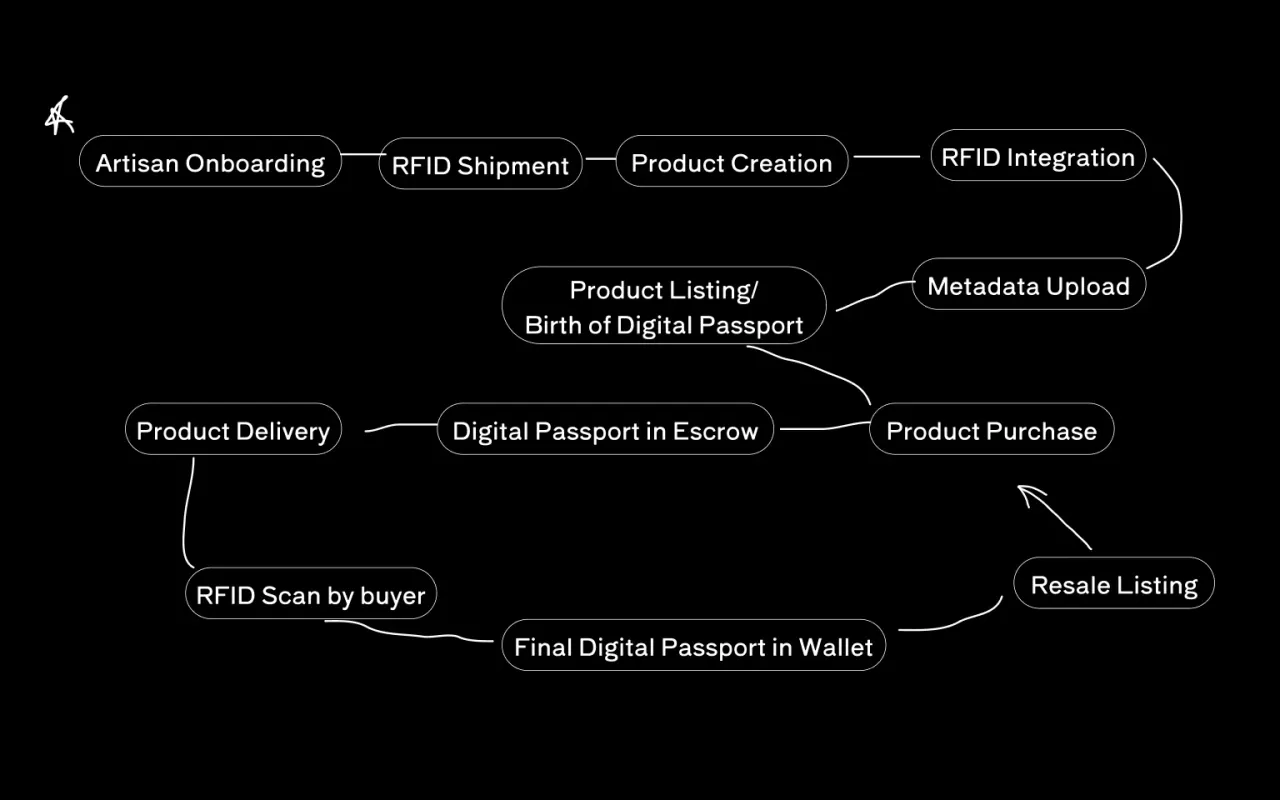
The second Bespoke built for the other side. Artisans who already make high-end work list it, and buyers find it. Each piece gets an NFC tag before it’s sold. Scanning the tag opens its digital passport, with the maker, the piece, and every owner since. When it sells, ownership moves to the buyer through a smart contract, and a share of every resale goes back to the maker and earlier owners.
A piece and its passport
- ready · press run, or hover any part of the system
What I was thinking
Handmade becomes the luxury.
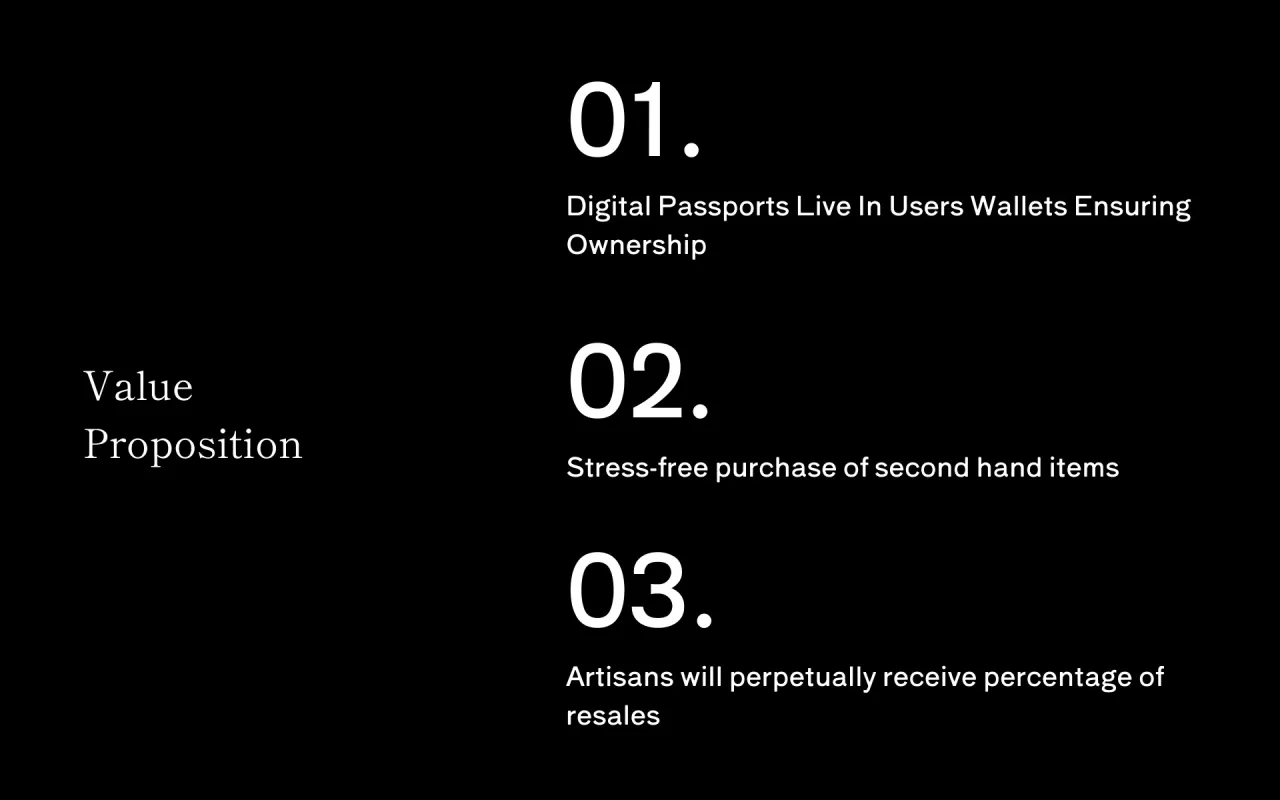
As more things get made by machines, handmade work becomes what people pay more for. Many artisans already have a style and a following. What they don’t have is a way to prove a piece is theirs. An NFC tag on each piece gives it a passport. A smart contract sends the maker a share every time it resells.
Mobile design
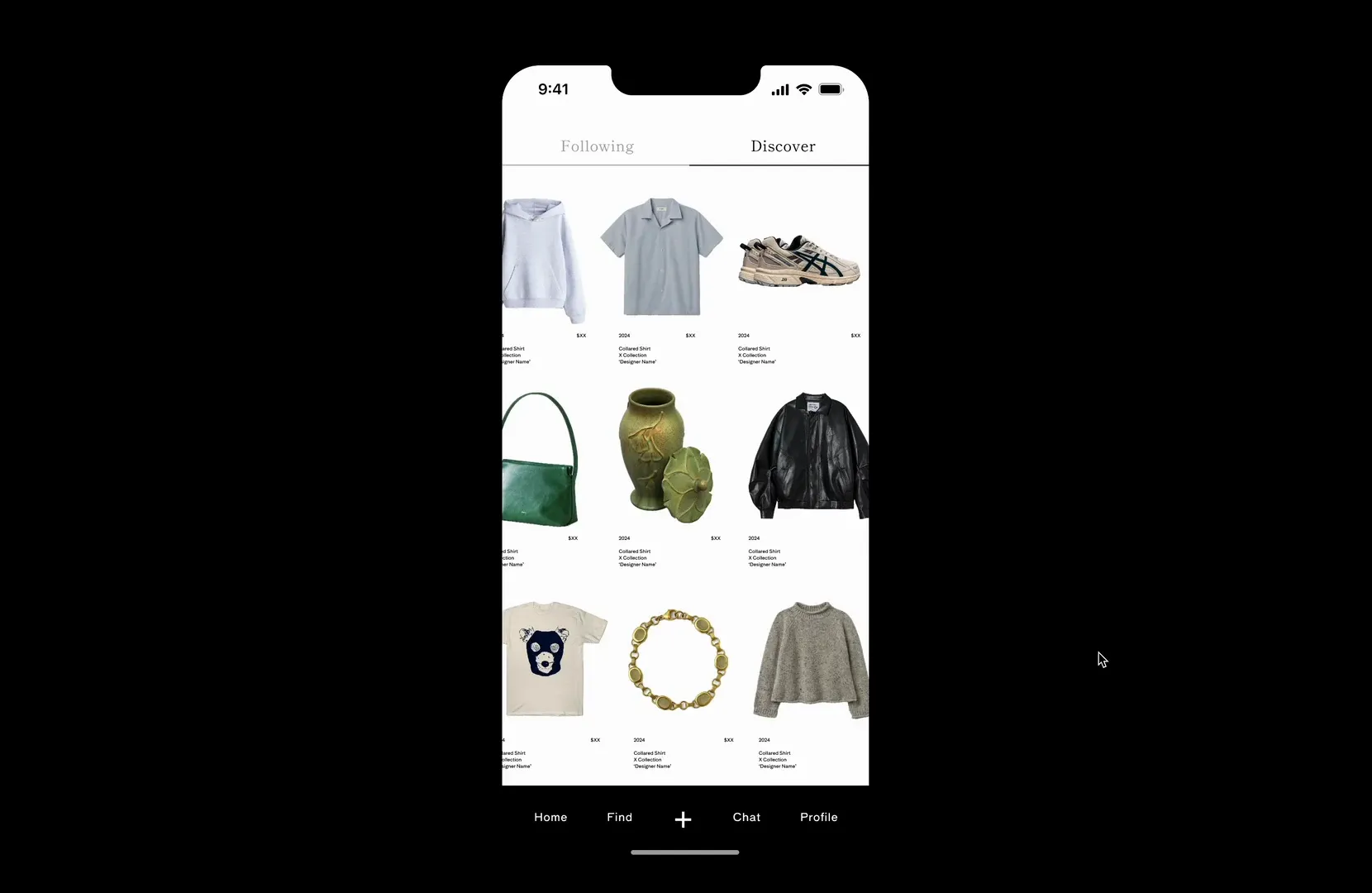
The flow on a phone, from Discover to the wallet. Click any screen to see it full size.The flow on a phone, from Discover to the wallet. Each screen links to it at full size.
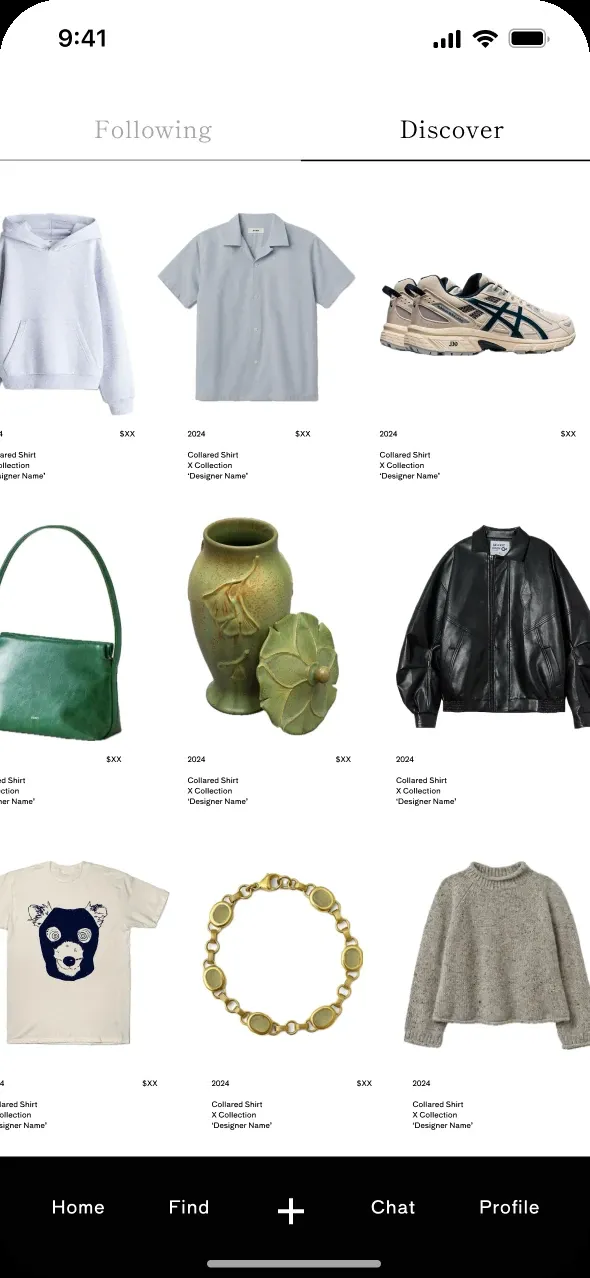 (opens full size)
02Discover 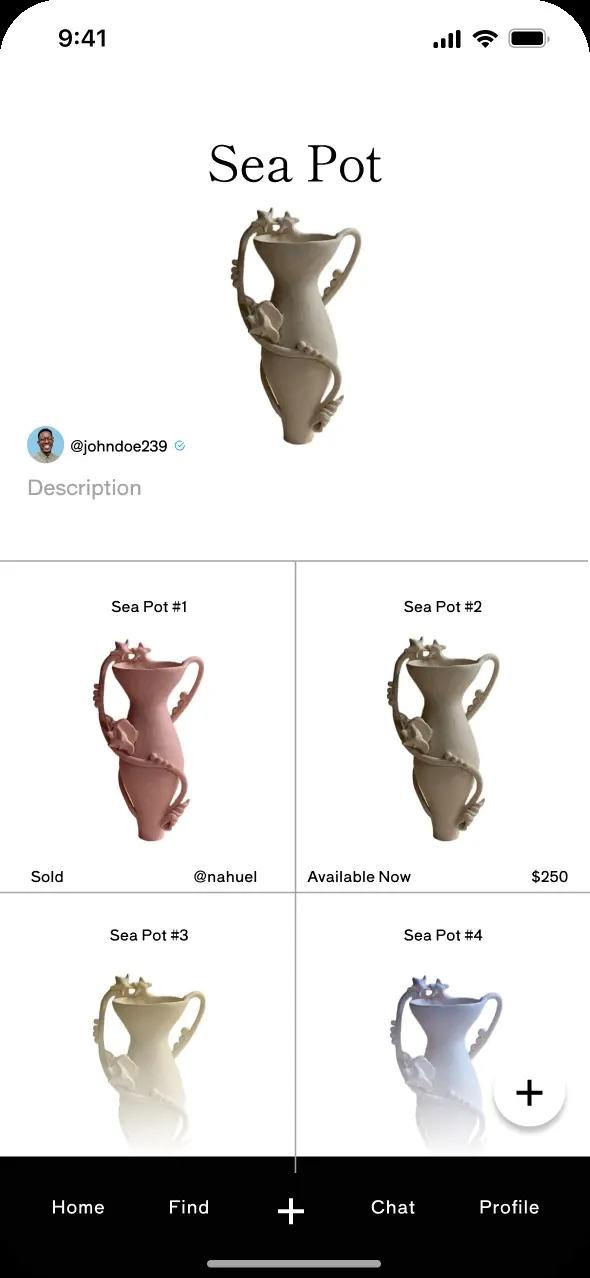 (opens full size)
04A collection 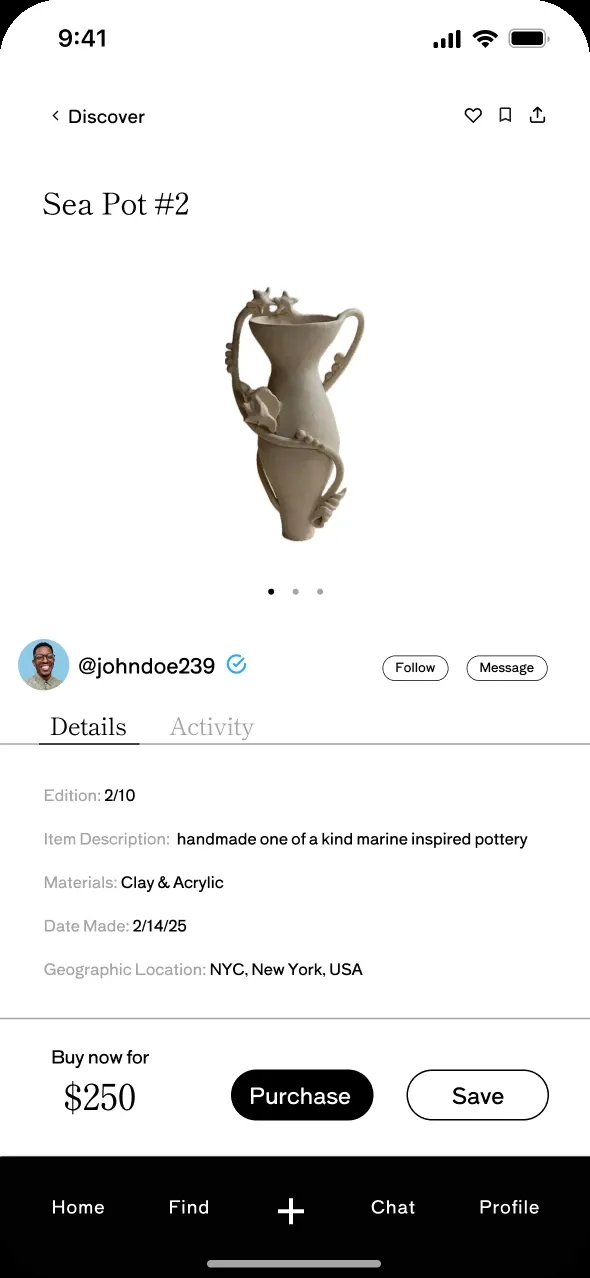 (opens full size)
05A piece and its details 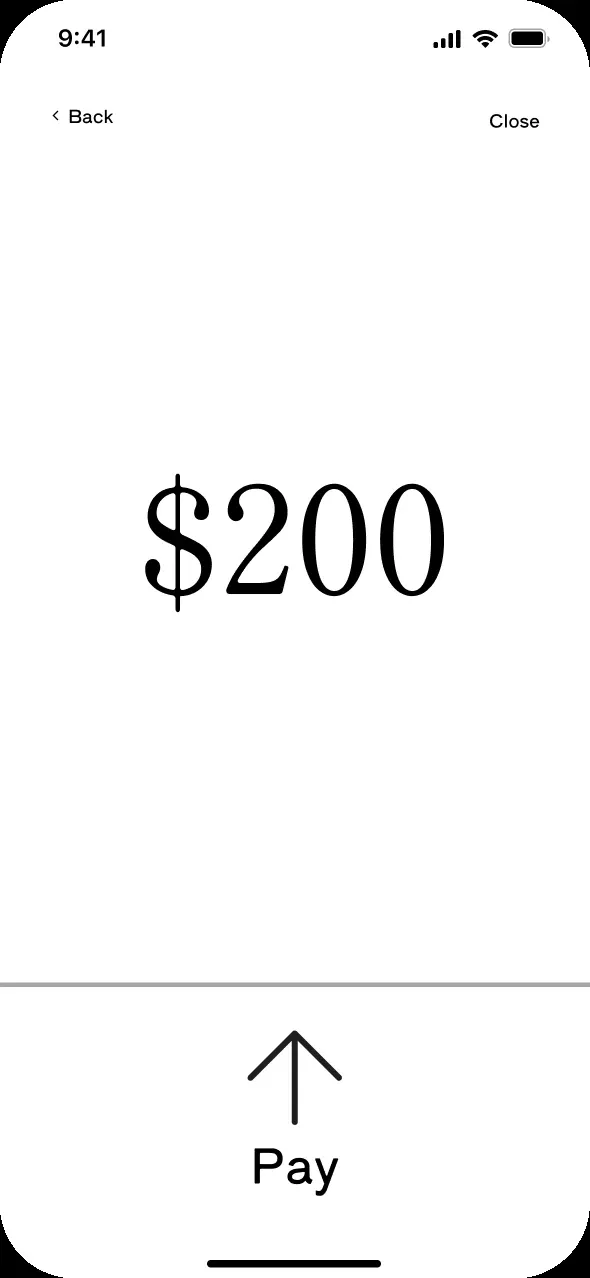 (opens full size)
08Pay 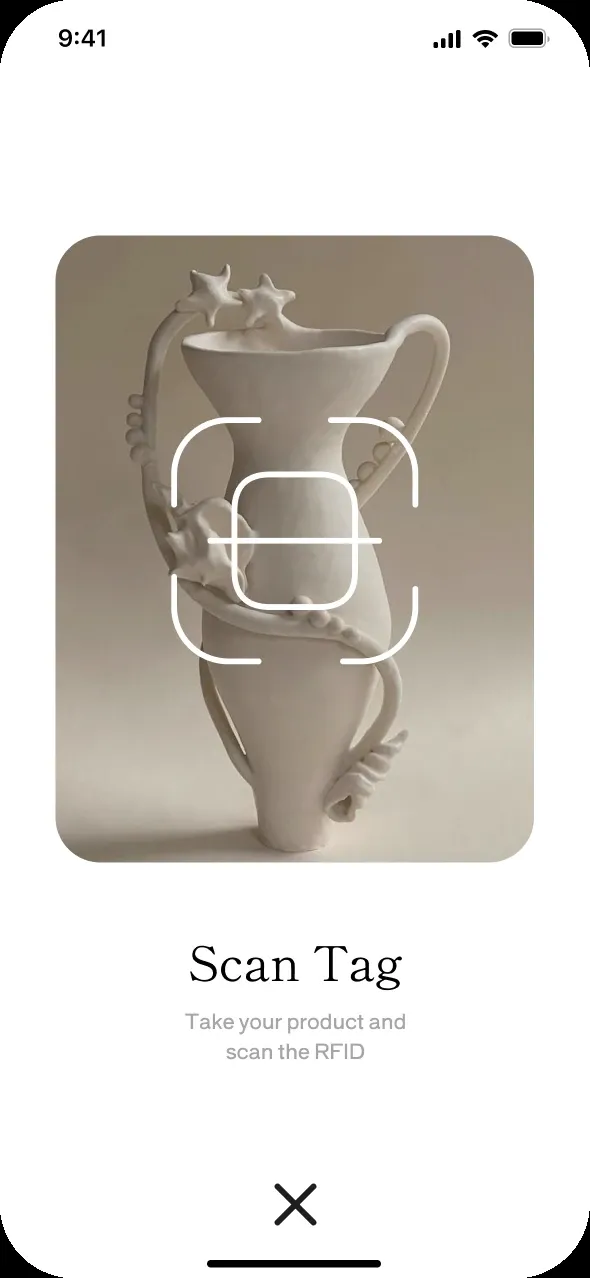 (opens full size)
10Scan the tag 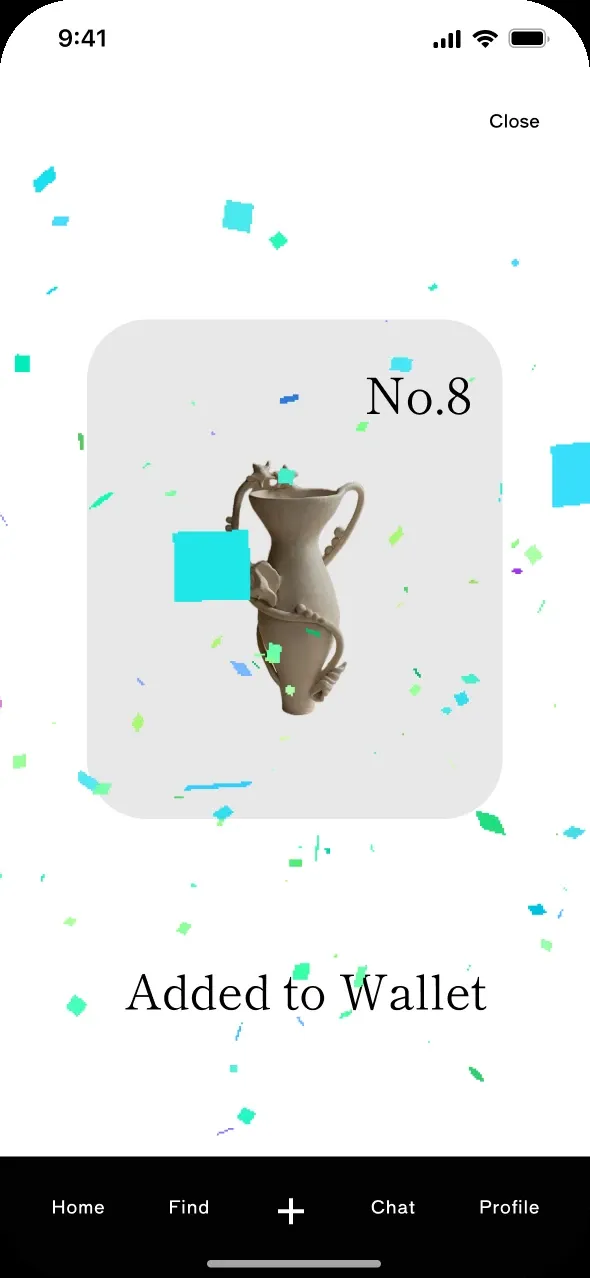 (opens full size)
12Added to your wallet
Wireframe to design
The wireframes I started from, and the screens they became.
Discover
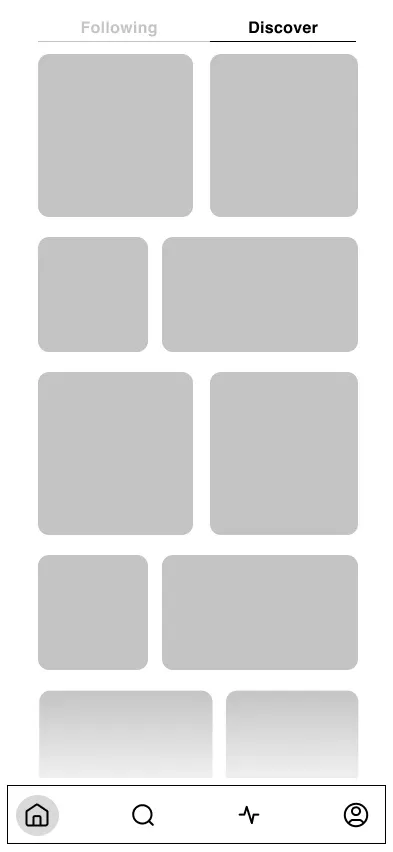
Before · Wireframe Now · Design A piece
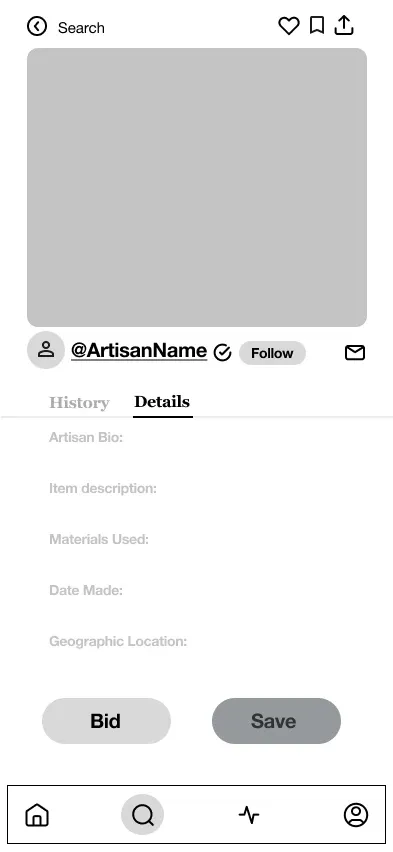
Before · Wireframe Now · Design The wallet
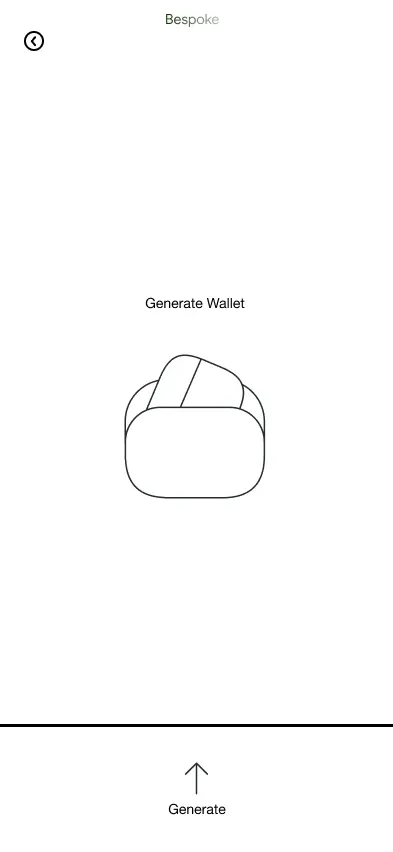
Before · Wireframe Now · Design
Why it wouldn't work
The blockchain asked too much of buyers.
The marketplace was the closest we got. Established artisans did want more people to find their work. But NFC tags, NFT twins, and smart contracts asked buyers to adopt something people don’t use in everyday life. We also built the resale loop before anyone had made a first sale. A certificate of origin would have done the job.