Nahuel D'Elias · Product engineer

(S01)Study · 2024Concept

Bespoke

An artisan marketplace, from AI-designed commissions to authenticated handmade pieces.

Role
Co-founder
Dates
2024-01 – 2024-12
Stack
Figma
Status
Designs and prototypes

A look at how I thought about product in 2024, before the AI boom and before vers1ons. I designed both versions by hand, and they're shown as they were. Each tab covers how a version was supposed to work and why it wouldn't have. The last one is what I'd build today.

The decision

Halfway through 2024 we had two directions for Bespoke.

Chose
Build for artisans, with NFC tags and digital passports.
Rejected
A creative AI tool for buyers.
Cost
We gave up the buyer side we'd already designed. And we picked between two ideas without asking artisans what they needed, so both started from a solution.

The rule I broke

I fell in love with the solution, not the problem.

My rule is to fall in love with the problem, not the solution. With Bespoke I did the opposite. The real problem was artisans connecting with the people who’d buy their work. Both versions chased an idea that looked great, without checking that anyone wanted it.

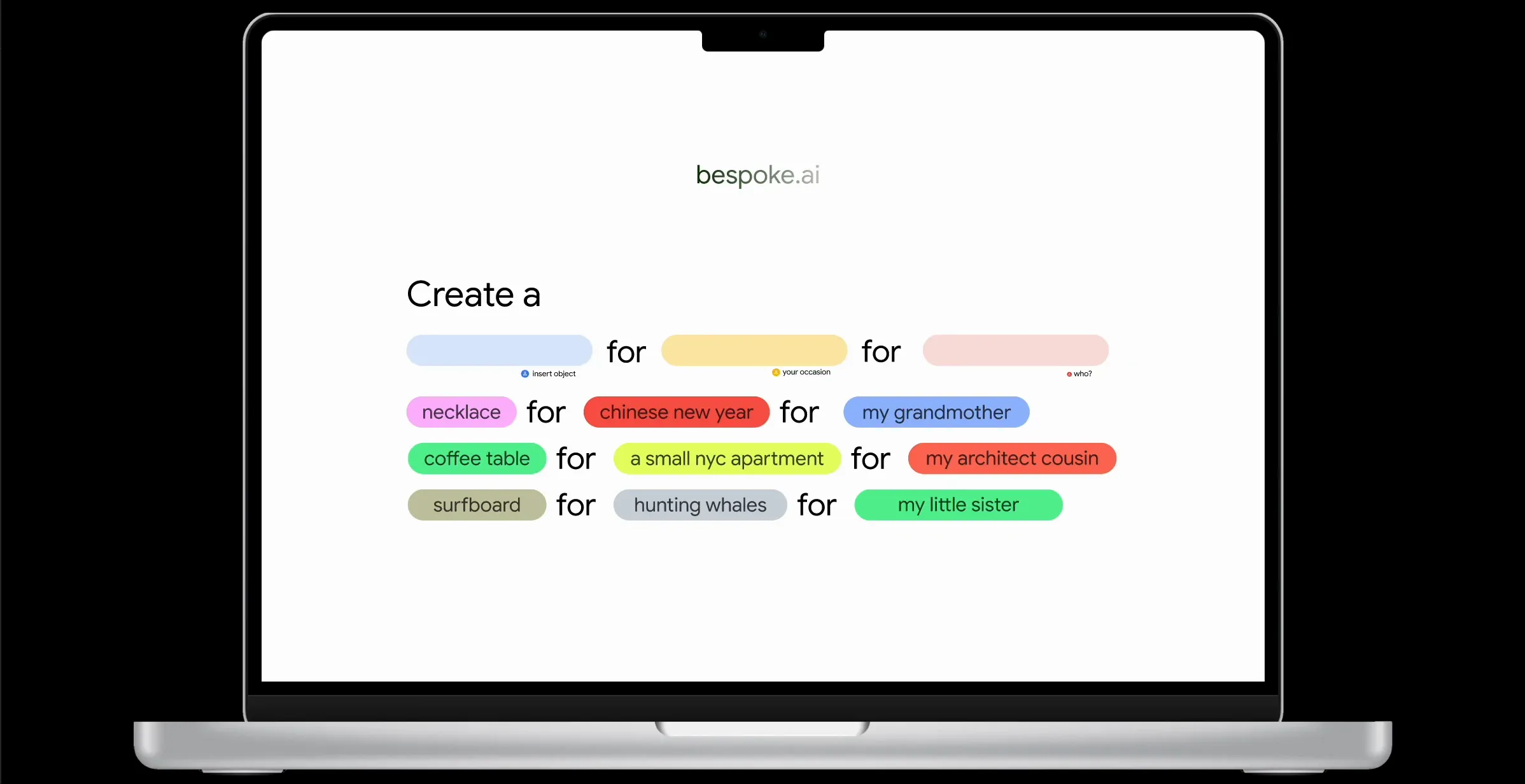
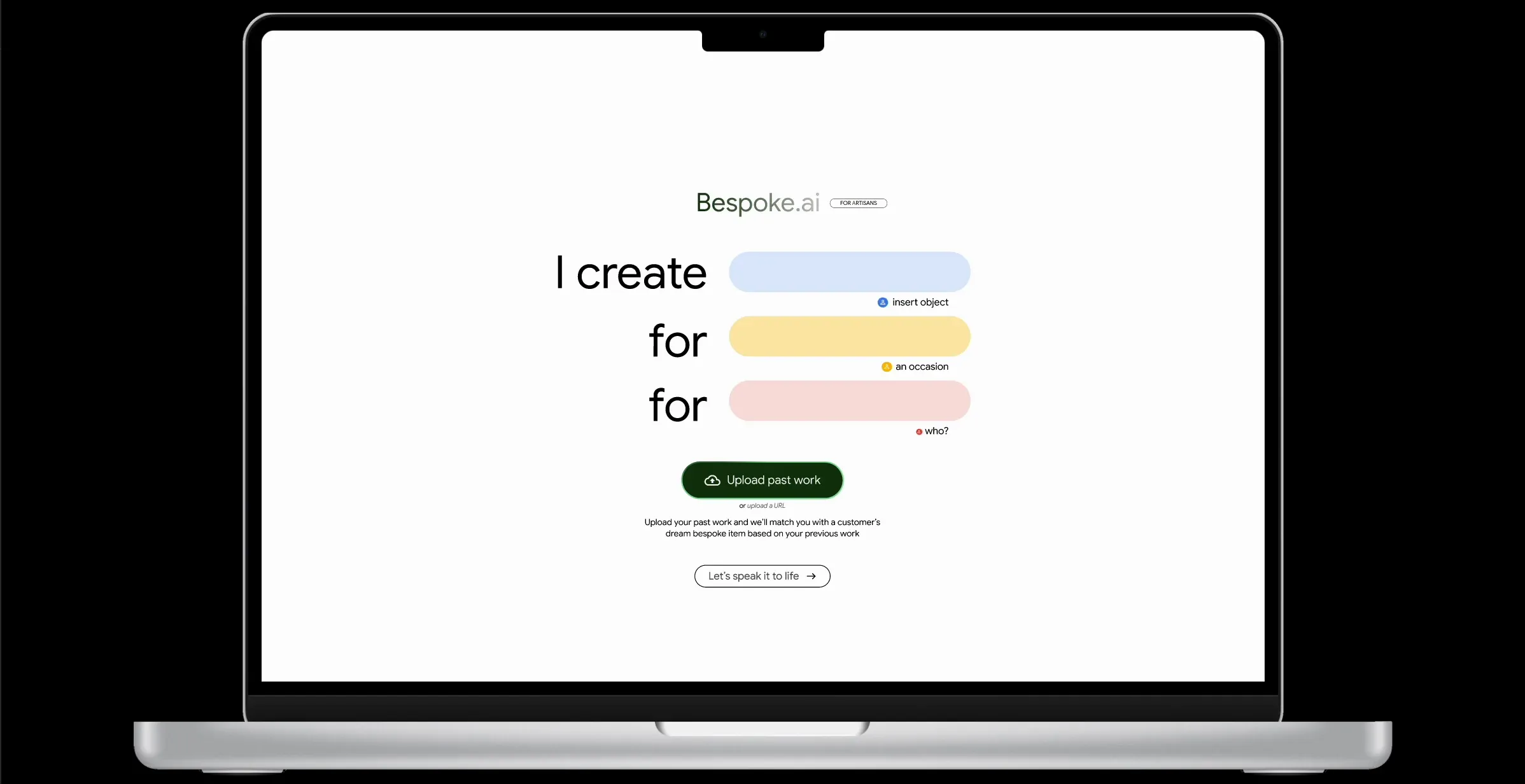
Bespoke AI on a laptop: the one-line prompt, Create a, for, for, with examples below.
The buyer's side, from one line to the one · muted0:56

The idea

Pick what you like, and an artisan makes it.

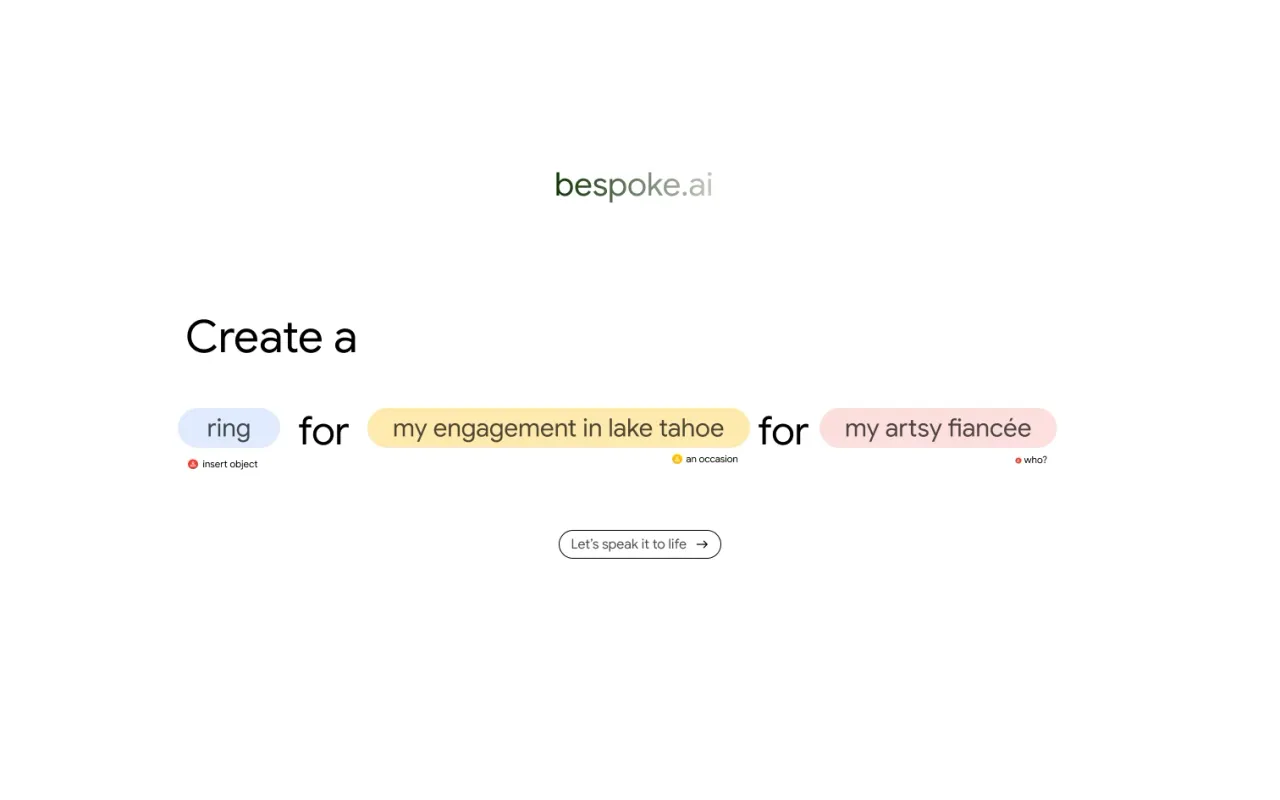
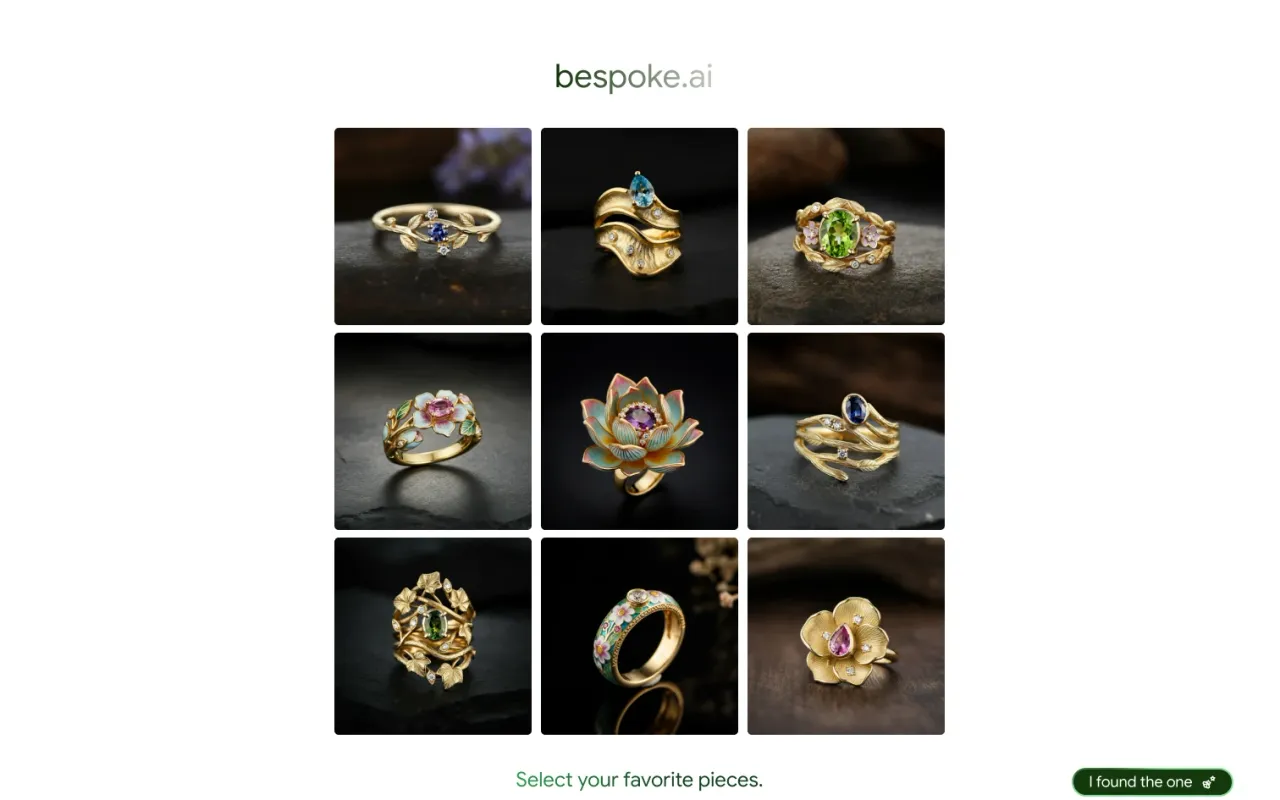
The first Bespoke started with one line. A ring, for my engagement in Lake Tahoe, for my artsy fiancée. It made nine images and you X’d out the ones you didn’t like. Between rounds it asked questions like “Do you not like silver?” and kept a list of what you wanted and didn’t, which you could edit. Every answer went back into the prompt. When you found the one, you sent it out and artisans bid to make it.

How it worksFrom one line to the oneA buyer describes a piece in one line and narrows it down by reacting to AI images. Every answer rewrites the prompt. The final image goes out to artisans, who bid to make it.

From one line to the one

buyerOne linea ringfor an engagementfor my artsy fiancée
aiNine imagesgenerated from the prompt
buyerReactX out what you don't like“Do you not like silver?”
My tastelikes and dislikesthe buyer can edit it
aiA sharper promptthe taste list, written in
buyerI found the oneone imagesent out to artisans
artisanArtisans bidmatched by what they makea price for the piece
artisanMade by handfrom the buyer's image
  1. ready · press run, or hover any part of the system

What I was thinking

React to images instead of writing a brief.

People know what they like when they see it, even when they can’t describe it. So instead of writing a brief, you’d type one line and react to images. Every X and every answer sharpened the prompt until you found the one.
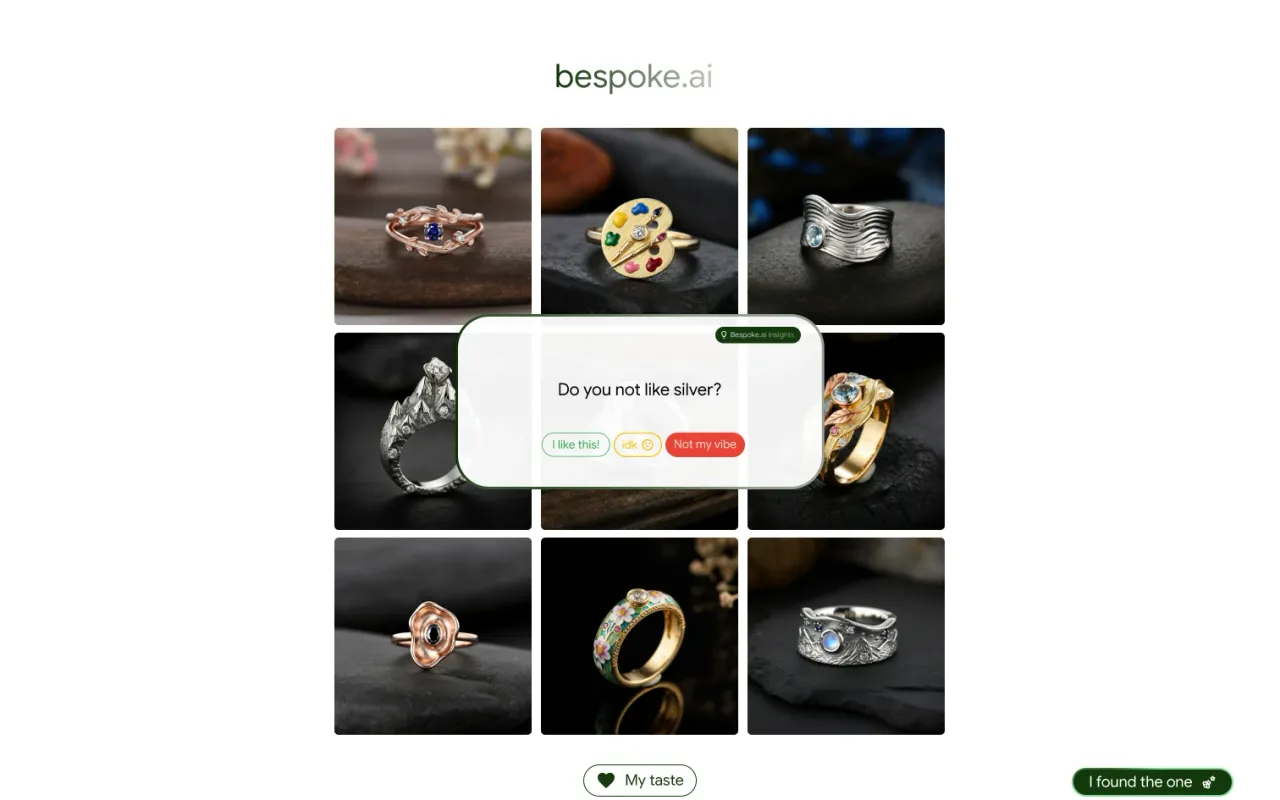
Do you not like silver? over the ring grid, with I like this, idk, and Not my vibe.

Wireframe to design

The wireframes I started from, and the screens they became.

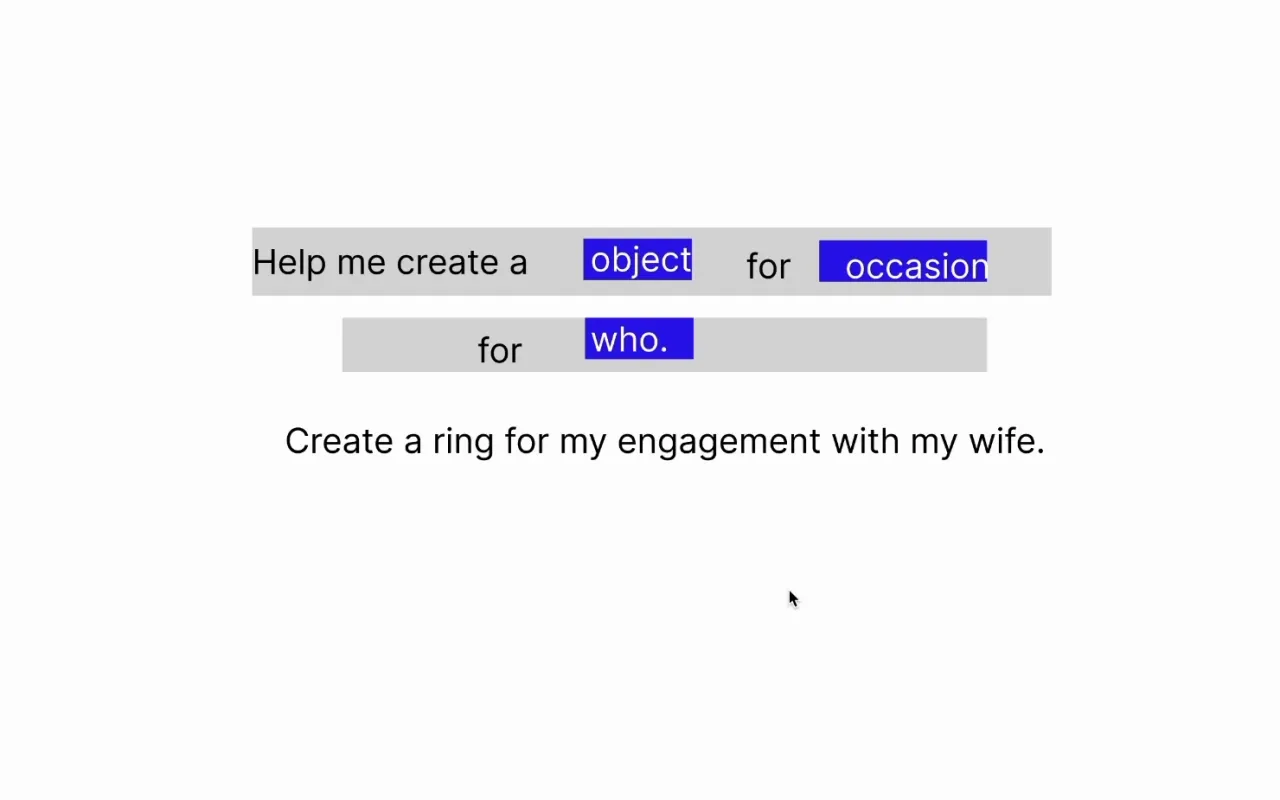
  1. The prompt

    Wireframe: Help me create a object for occasion for who, in grey and blue boxes.
    Before · Wireframe
    Design: Create a, for, for, with three colored blanks to fill in.
    Now · Design
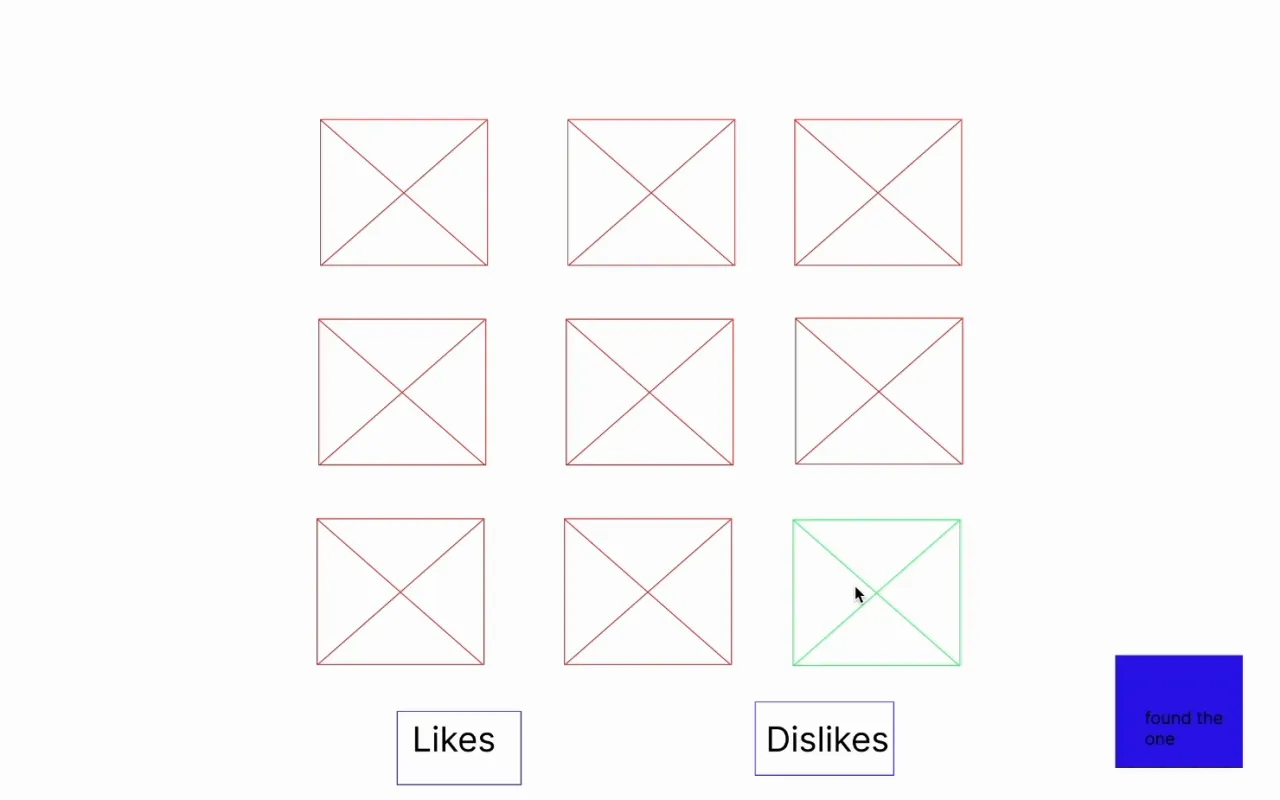
  2. Narrowing it down

    Wireframe: nine placeholder images, with Likes and Dislikes below.
    Before · Wireframe
    Design: nine gold rings, and Select your favorite pieces below.
    Now · Design
  3. Asking as it goes

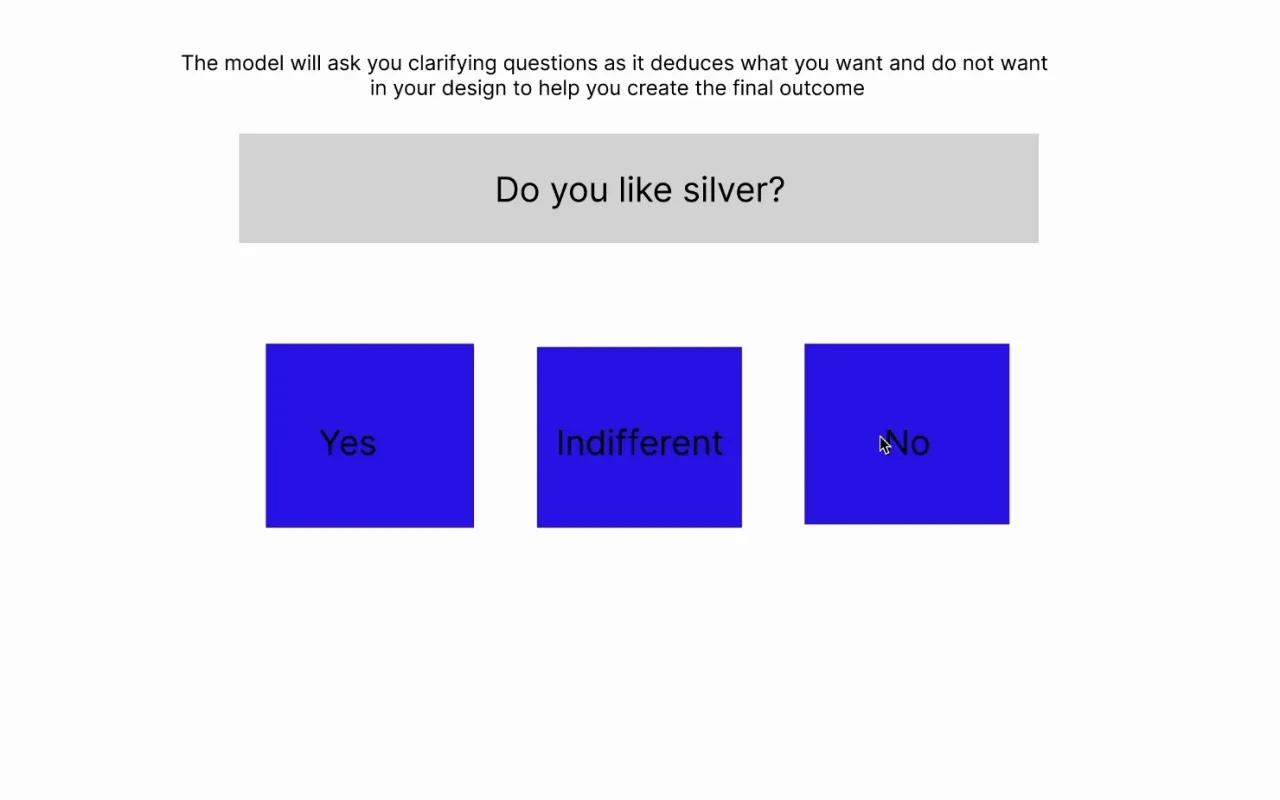
    Wireframe: Do you like silver? with three blue answer boxes.
    Before · Wireframe
    Design: Do you not like silver? over the ring grid, with I like this, idk, and Not my vibe.
    Now · Design
Bespoke AI for artisans on a laptop: I create unique rings for weddings for creative people.
The artisan's side. Say what you make, pick a request, and bid on it (0:27)

Why it wouldn't work

It took the artisan out of the design.

Artisans make the things they enjoy making, and then sell them. Sometimes a client is part of the process, but the design is still theirs. Bespoke AI handed them a buyer’s finished idea and asked them to build it, which takes away the creative freedom that makes their work worth buying. And the images came from AI, which knows nothing about an artisan’s materials, tools, or limits. It wasn’t realistic to expect a piece that looked like the picture, or even close.
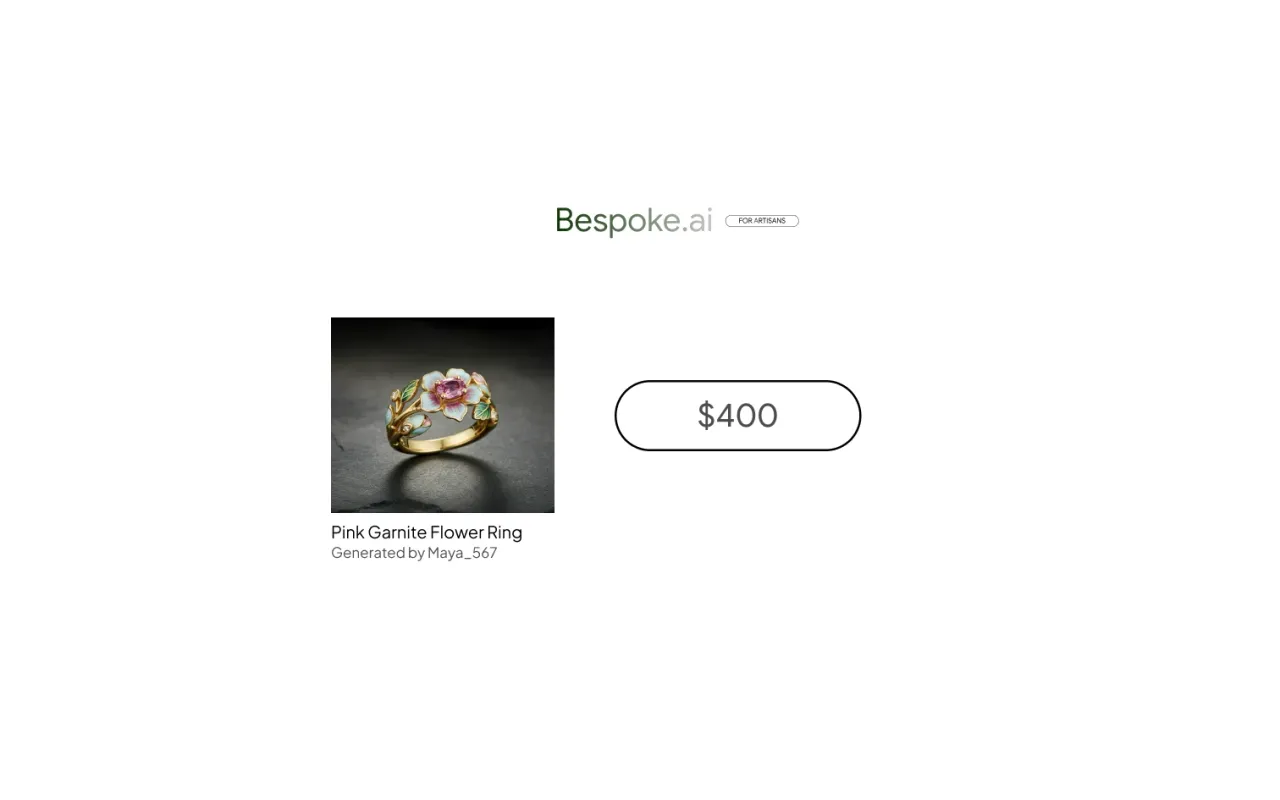
An artisan's bid of $400 on a Pink Garnite Flower Ring, generated by a buyer.
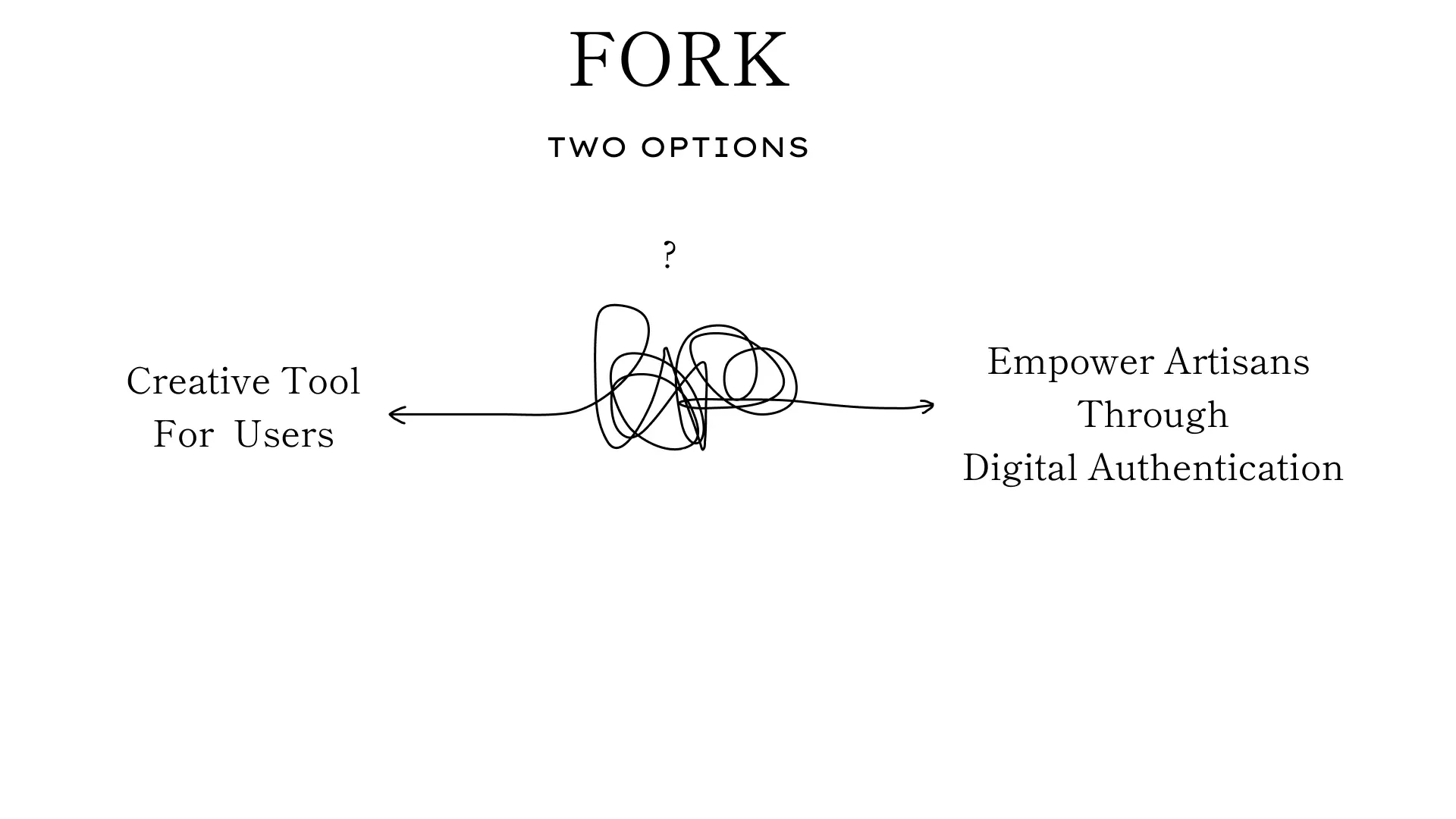
The Fork slide: two options, Creative Tool for Users and Empower Artisans Through Digital Authentication.
The fork that led to the second version, from our deck

Designs from 2024, shown as they were. The rings in Bespoke AI are AI generated. Product photos in Bespoke are stand-ins, and no affiliation is implied. The Today tab is a concept, not something built.